AsorA Bahn

A couple of weeks have rolled by and a bit of progress has been made.

IMG_20260303_162433638_HDR.jpg
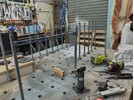
A few catenary masts just about finished, I just need to paint the insulators black and varnish them.
Next job will be to make a batch of "concrete" foam bases for them.
These lot are modeled on the older style RhB masts that were set direct in the concrete base, no separate base and bolt on mast like they do now.
Look how clean that work bench is:rofl:.

Next big challenge will be the large gantries the RhB use at stations to cross multiple tracks.
I have bought some materials, 12mm steel square rod for the masts and 16mm x 20mm ally channel for the gantry.
I will have a crack at a trial one this fortnight, that can then be used at the temporary end of the cat system if it works out ok.
Also salvaged some more nice straight 2x4's from scrap pallets for the Arosa station extension. They just need de-nailing.

IMG_20260302_151401827_HDR.jpg
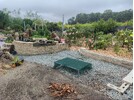
The area for Arosa station is now clear, all the firewood that was here has been split and stacked :)
Half the cuttings that I grew here have been planted out on the railway.
Work should start here next week, if all goes to plan.
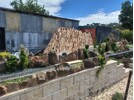

IMG_20260301_150934311_HDR.jpg
I wasn't happy with the amount of rock between the tracks here, it just wasn't what I had envisioned.
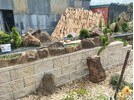

IMG_20260301_155153525_HDR.jpg
So I pried a couple of rocks out with a crow bar and blocks.
One of the rocks was considerably bigger than I remembered, it is 900mm by 600mm.
A lot was buried in the ground, this rock should be very useful for above the entrance to Arosa.

The firewood mountain in the background is not how we normally stack firewood, but I got behind schedule.
This is the fastest way for me to get it dried out, a trick taught to me by guys who spent a lifetime cutting firewood.
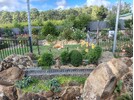

IMG_20260303_162705335_HDR.jpg
I planted a few dwarf conifers I needed to move from beside the pond and some cuttings that needed planting out as well.
Doggo having a good old time rolling round on the lawn.
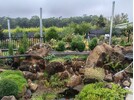

IMG_20260302_151346785_HDR.jpg
I like it better now and it should look better when the confers have grown some more.
Also this clears the area beside the leaking waterfall, where the pipes are returning the filter outflow to the pond now.
Want to try and get the leak/leaks there sorted out in early autumn and rid of the conduits.
Unfortunately ripping the waterfall and creak out and doing it again is the best way forward, so the conifers needed moving.
 
It was another nice warm day, perfect to rest after working and run a train.

A stitch together of video's, of todays freight train running.
Doggo having fun with white cabbage moths.


View attachment 353449
Getting through the block splitting and stacking. Should have this area clear and be starting on the Arosa station extension in a week or two, fingers crossed that is :).
Doggo lurking around waiting for me to start the block splitter so he can bark and carry on , I mean help.:rofl:
Excellent video Stewie and Doggo seems to be enjoying himself.
 
Made a bit more progress on the catenary system parts.

Langwies  gantry.png
This is the gantry style I am trying to model.

st peters gantry.png
This is the older style gantry that is at St Peters/Molinis, I like the way it narrows at the ends, but looks to hard too make and would be more fragile.

switches.png
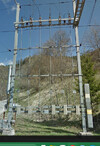
Definitely want to have a go at modelling these isolators at each station.

langwies earth radio mast.png Earth switch and radio tower, A extra detail for later on.
It also nicely shows the different thicknesses and styles of masts used.

IMG_20260310_184811958_HDR.jpg
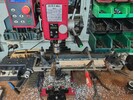
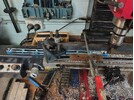
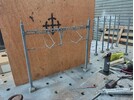
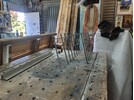
I used 16mm ally channel for the gantry, with a 10mm endmill to cut the slots. With a 5mm gap between slots and 50mm between centres.
I set a bit of 10mm x 40mm angle in line with the bed and dialed it in.
So I can now just drop a length of channel in and clamp it against the angle and its good to go.
When I first started I didn't notice the channel was flexing and needed a bit of plywood and extra clamp to hold it in place.
IMG_20260311_102258082_HDR.jpg
I filed the ends of the slots square, here I am cutting the slot at the ends to join to the masts.
I used 12mm square rods for these masts, it fitted the 16mm channel nicely.

IMG_20260309_101216488_HDR.jpg
To get the hole in the foam bases i heated some 8mm rod in the drill press. It nicely melted a 10mm hole through the centre of the foam blocks quickly and accurately.

IMG_20260312_164020170_HDR.jpg
I think it came out ok.
Even found the plastic bolt heads to stick on the base plates :) .

Wasn't sure if I should of used a 8mm slot instead of the 10mm for strength. It still seems pretty strong, considering most of the channel has been removed.
I will see how it goes on the next one which needs to longer.

There are a few mods to make on the next one.
I think i will change the 50mm centre on the slots to 35mm- 40mm. The slots at each end are 40mm on this one and look better than the middle ones.
I forgot to allow for the thickness of plate that the centre support is welded to, so it sits 3mm too low:rolleyes:.
I should not of cut a slot in the top of the channel where the centre support is.
It would be a much stronger and easier join, also I ordered some countersunk rivets to connect it with(neater).


IMG_20260312_163848412_HDR.jpg
Bases painted, lacquered and installed on the masts they are now finished ready to install.

IMG_20260312_164037625_HDR.jpg
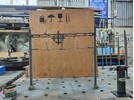
This mast is for the end of the catenary system joining to the temporary return loop.
That's why it has the o gauge bullhead rail bent to {hopefully} guide the panto under the cat system.
On the other side as I install the catenary wires I will join to the rail and trim most of the over hang off on that side.

These gantries take a fair bit of time to make, but they are a fun challenge and I only need 3-4 for each station.
Don't think i would make them if they had to be everywhere.
So 1 down 4 to go before the catenary can be rolled out, plus 2 tunnels and a snow shelter to finish off as well.
 
Last edited:
May I suggest a shallower/longer run in angle for the pantograph, as it may not drop/adapt to the change in height quickly enough and you could damage/distroy the pantograph. Especially if they are driven and you have to overcome the mechanics and their upward springing force.
 
May I suggest a shallower/longer run in angle for the pantograph, as it may not drop/adapt to the change in height quickly enough and you could damage/distroy the pantograph. Especially if they are driven and you have to overcome the mechanics and their upward springing force.
OK will do, thanks for the heads up. Do you think about half the angle they are now might be ok?.
I will be testing it out at minimum speed.
 
Last edited:
Looking excellent Stewie, can't remember if I mentioned it, but Gordon's remarks made me think, if the pantograph is touching the wire as per prototype, have you noticed that the contact wire goes from side to side so it "sweeps" across the pan head to prevent wear in one place, hence the differing length of register arms that hold the contact wire.
 
Thanks @Fezwig, yeah I have spent way too much time looking at RhB.s catenary on google earth. It stands out, I was planning on 15mm- 20mm "window" that the wire will ziz-zag side to side. Don't want to wear a groove in the panto.
Brilliant! I love the research almost as much as the modelling, as an aside, (and I assume this would be standard for all pantographs) on ours anyway, we have 2 rows of carbon in the pan head that are in contact with the wire, each row is divided with four separate carbon pieces, these "float" on air supplied that raises/lowers and keeps the pantograph up, so should a piece become damaged, the escaping air will be enough to drop the pantograph automatically. Also the ends of pand head that point down are painted with a sticky white (ish) paint so that if the wire or track is out of alignement and the wire runs off the carbon bits in leaves a mark in the paint.
 
Looking excellent Stewie, can't remember if I mentioned it, but Gordon's remarks made me think, if the pantograph is touching the wire as per prototype, have you noticed that the contact wire goes from side to side so it "sweeps" across the pan head to prevent wear in one place, hence the differing length of register arms that hold the contact wire.
Thanks @Fezwig, yeah I have spent way too much time looking at RhB.s catenary on google earth. It stands out, I was planning on 15mm- 20mm "window" that the wire will ziz-zag side to side. Don't want to wear a groove in the panto.
I know that the zig zag is a part of the real thing, but very tricky to do, I know we tried in MiIllisee on the Ruschbahn. But in effect with a lot of curves wear of the pans in the Ruschbahn and indeed for @grizzmo ‘s line with many curves it will not be a problem other than an aesthetic one. Far more important that when wire is installed the pan is on the wire as close to the centre at all times except when entering the shed where angle to let the pop up for the pan to apply inside the shed. On the R1 curves the pan will get plenty of equal wear.

Looking at your hard work on the gantries have you been considering my button suggestion for holding the wire in place? Sorry if you have commented elsewhere Stewie, hit this post first.
 
I know that the zig zag is a part of the real thing, but very tricky to do, I know we tried in MiIllisee on the Ruschbahn. But in effect with a lot of curves wear of the pans in the Ruschbahn and indeed for @grizzmo ‘s line with many curves it will not be a problem other than an aesthetic one. Far more important that when wire is installed the pan is on the wire as close to the centre at all times except when entering the shed where angle to let the pop up for the pan to apply inside the shed. On the R1 curves the pan will get plenty of equal wear.

Looking at your hard work on the gantries have you been considering my button suggestion for holding the wire in place? Sorry if you have commented elsewhere Stewie, hit this post first.
Bit hard to explain well I think and harder to draw.

On the large gantries yes, a bit smaller version of the buttons to let the catenary contact wire to expand and contract along the track length.
On the single posts no, as the side wire will be soldered to the top of the catenary contact wire from one side only.
The copper wire should flex easily allowing the catenary to expand/contract along the track length.
The gantry I made above is a one off and was made to be a solid no movement anchor point to the end of the system.

Not sure if I explained it well.
 
This is an impressive attention to detail, and along with your earthworks and planting is going to make for some superb photos and video.
(I am also quite envious of the size of your shop, and level of equipment) :envy::)

I really wish I had had the opportunity to get into this earlier, and I could have got more access to machinery (metal working)..

I suppose you have the space to spread out, whereas we are all crammed into a tiny island? :D

Keep going!

PhilP.
 
This is an impressive attention to detail, and along with your earthworks and planting is going to make for some superb photos and video.
(I am also quite envious of the size of your shop, and level of equipment) :envy::)

I really wish I had had the opportunity to get into this earlier, and I could have got more access to machinery (metal working)..

I suppose you have the space to spread out, whereas we are all crammed into a tiny island? :D

Keep going!

PhilP.
Thanks, I am on a tiny island like you guys :rofl:

We had a great metal work teacher in high school, I made that steam traction engine on the shelf above the lathe in year 7 edit year 9 school.
Lol imagine that nowadays, we made the boiler and the safety valve (the spring in it is from a pen ):rofl:
Have loved metal fabrication ever since.

Even thou i am a sparky I spent about half of my working time in the metal fabrication that goes along with electrical installations.
We were even trained to use lathes and mills as part of our apprenticeship.

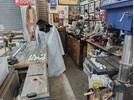
Its taken me decades to acquire all my workshop stuff.
The workshop was in very poor condition when we moved in, but was a big draw card to this place.:)
 
Last edited:
Bit hard to explain well I think and harder to draw.

On the large gantries yes, a bit smaller version of the buttons to let the catenary contact wire to expand and contract along the track length.
On the single posts no, as the side wire will be soldered to the top of the catenary contact wire from one side only.
The copper wire should flex easily allowing the catenary to expand/contract along the track length.
The gantry I made above is a one off and was made to be a solid no movement anchor point to the end of the system.

Not sure if I explained it well.
Ok het that you will likely find out in the curves when you do them. I found that I needed lots of ‘pull offs’ on curves to keep things central. Shorter lengths also helped, I know that a lot happened with the heat in even short lengths as the sun is full on on the wire, I think you may have larger problems your neck of the woods but we shall see.
 
Ok het that you will likely find out in the curves when you do them. I found that I needed lots of ‘pull offs’ on curves to keep things central. Shorter lengths also helped, I know that a lot happened with the heat in even short lengths as the sun is full on on the wire, I think you may have larger problems your neck of the woods but we shall see.
It will be a steep learning curve I think, I will be putting the posts closer together on the curves and the posts will be holding the contact wire in position side to side.
The first bit I will try is a short 1m long section between a snow shelter and the end gantry.
I will take lots of photos when I install it, so you will be able to see what I have in mind.
I am looking forward to your thoughts on it.
 
A couple of weeks have rolled by and a bit of progress has been made.


View attachment 353782
A few catenary masts just about finished, I just need to paint the insulators black and varnish them.
Next job will be to make a batch of "concrete" foam bases for them.
These lot are modeled on the older style RhB masts that were set direct in the concrete base, no separate base and bolt on mast like they do now.
Look how clean that work bench is:rofl:.

Next big challenge will be the large gantries the RhB use at stations to cross multiple tracks.
I have bought some materials, 12mm steel square rod for the masts and 16mm x 20mm ally channel for the gantry.
I will have a crack at a trial one this fortnight, that can then be used at the temporary end of the cat system if it works out ok.
Also salvaged some more nice straight 2x4's from scrap pallets for the Arosa station extension. They just need de-nailing.


View attachment 353785
The area for Arosa station is now clear, all the firewood that was here has been split and stacked :)
Half the cuttings that I grew here have been planted out on the railway.
Work should start here next week, if all goes to plan.


View attachment 353786
I wasn't happy with the amount of rock between the tracks here, it just wasn't what I had envisioned.


View attachment 353788
So I pried a couple of rocks out with a crow bar and blocks.
One of the rocks was considerably bigger than I remembered, it is 900mm by 600mm.
A lot was buried in the ground, this rock should be very useful for above the entrance to Arosa.

The firewood mountain in the background is not how we normally stack firewood, but I got behind schedule.
This is the fastest way for me to get it dried out, a trick taught to me by guys who spent a lifetime cutting firewood.


View attachment 353787
I planted a few dwarf conifers I needed to move from beside the pond and some cuttings that needed planting out as well.
Doggo having a good old time rolling round on the lawn.


View attachment 353789
I like it better now and it should look better when the confers have grown some more.
Also this clears the area beside the leaking waterfall, where the pipes are returning the filter outflow to the pond now.
Want to try and get the leak/leaks there sorted out in early autumn and rid of the conduits.
Unfortunately ripping the waterfall and creak out and doing it again is the best way forward, so the conifers needed moving.
Just been having a perusal of your thread as I've been a little inactive with all things garden railway recently, including this forum.

Amazing work so far, and the railway is just perfect.

Not as perfect as that pile of logs though. That's quality!
 
Just been having a perusal of your thread as I've been a little inactive with all things garden railway recently, including this forum.

Amazing work so far, and the railway is just perfect.

Not as perfect as that pile of logs though. That's quality!
Thanks, that pile of logs took some effort. Shame I was 3 months behind in cutting and splitting. Normally it just gets chucked in a giant haphazard pile near the splitter and moved slowly to shelter half a year later, much easier and quicker to do.
 
Back
Top Bottom