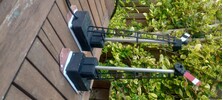
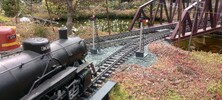
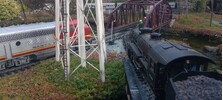
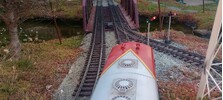
3D Semaphore Signals

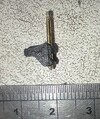
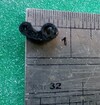
Update on the failed V2 signal.
I had forgotten that I had used a brass rod for the blade pivot.

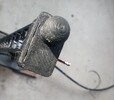
The operating crank inside the signal head and the signal blade were both super glued to the brass rod. The crank part was cut away to allow space for the super glue to hold but the blade was just a plain hole. The problem with a plain hole is that any glue is pushed away as the parts are assembled.
I will repair this signal again with super glue but this time I will grind a flat or 2 flats on the rod to provide a surface for the glue to attatch to.

The V3 version was made with all these components printed as 1 assembly and will not fail in this way (I hope :( :( :( )

View attachment 343533View attachment 343534

Alan
Super glue not the best solution for moving metal parts. Accepting this is possibly the only solution, glue on the start of where you push it in and at the start of the hole where you push it in should give it a better chance.
 
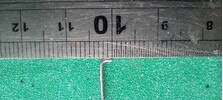
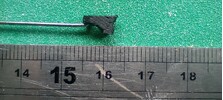
The brass rod was attacked by the dremel cutting disc and now has some digs in it for the glue to stick to.

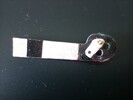
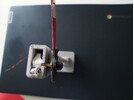
IMG_20250602_095231794_HDR~2.jpgIMG_20250601_182705534~2.jpgIMG_20250601_182742451~2.jpg

After roughing up the rod, the signal blade is now an interferance fit (possibly due to burrs in the grinding process) and may not need to be glued because it is suitably tight on the brass rod.

If the signal blade takes a knock then I would rather the blade fixing be the weak spot than the tiny internal crank. The crank has a cut away to allow an area for the glue but it is still a small component.

I might revert to this method, using a brass rod, for the next pair of signals. The blade assembly is easier this way.

This signal now needs a new top cover, the original was damaged in the removal process and the signal will be replaced outside to see how it holds up to the weather. I would have liked to inspect the internals in the base while the signal was out but it is so well sealed that it is not easy to get into.

Alan
 
Latest news on the signals.

After recent heavy rain, a week later I tested both signals and they were both working. However after a second week the V3 version had stopped working, condensation within being the culprit. Happily the earlier V2 version was and still is working.

Time now to develop the fourth version.
As the V2 version was still working and still is despite further heavy rain I decided to continue with the brass rod design as opposed to the all in one printed crank of the V3 version. This also allows me to add some detail such as bolt heads to the blade.
.
Inside the signal head I made the crank with more of a hook. This allowed me to raised the internal barrier slightly.
IMG_20250815_114437981~2.jpg
Also I tightened the clearance holes for the brass rod so that rain had less space to enter the signal and added a collar behind the blade to discourage rain to enter the signal head. The signal blades are simply a friction fit on the brass rod and if they endure the weather, birds and the gardener with his big boots this will be my preferred method.

Most of the changes are at the base of the signal.

The first change was to move the servo 3mm lower from the roof of the base. Difficult to illustrate this but previously the servo was tight against the top of the base. This is where the condensation was occurring. By making a 3mm air gap I hoped that it will save the sides of the servo heating up and causing the moisture to condense within the servo case. The whole signal base that sits below ground is now 3mm deeper.

The second change was to introduce some ventilation to the base.
I made a 'cabinet' at the bottom of the signal post. This cabinet has louvres to allow air to enter the base. The louvres have a 1mm gap and aren't fitted with insect mesh so I'm hoping that the ants don't discover it :speechless:

As before a flat plate was sealed to the base and acts as an anchor when buried.
IMG_20250810_114640832_HDR.jpg This photo was in portrait mode and flipped itself.

I made 3 of these V4 signals with 2 of them controlling the junction as below.
IMG_20250813_113401028_HDR (1).jpgIMG_20250814_195857567.jpgIMG_20250814_195248080.jpg

The control system for these signals is in a nearby building.

The V2 version is still working and there are now 3 of the V4 versions installed.

Just need some bad weather now to see how these last.

AL
 
Alan are you running your control rods up inside the post if you are could you show some close up pictures of how you did it please.
 
Alan are you running your control rods up inside the post
Yes they do and there is not a lot of room. I'm using aluminium tube for the post of 6 mm diameter with an inside diameter of 4 mm. The control rod that is 0.6 mm piano wire when bent to a right angle is almost 4 mm at it's top end inside the signal head.

In the photos below there is an old rejected control rod that was cut too short to reliably operate the crank arm, it does not protrude from the crank.
I bend this to a right angle first to a generous length and then cut to about 3 mm after bending.
IMG_20250818_120407819.jpgIMG_20250818_105725878.jpg


An old version showing the operating hole for the control rod. IMG_20241102_123743796.jpg
And another old photo inside the signal head that just shows the top of the control rod and the lack of space. IMG_20241102_125353294.jpg

Al
 
Thanks for the pictures.
What I'm thinking about is 2 control rods onside the post.
I'm going to have 2 blades per post and was going to use the 3D posts you sent me.
Bit of thinking is going to have to be done.
Might have to put the rods on the outside.
 
Might have to put the rods on the outside.
Yes there would no room for 2 control rods in this signal. These signals are based on a motorised head that does not operate using mechanical links. Using 2 control rods for 2 signals outside the post is a typical method in the real world.
You need to devise a method of mounting 2 servos and a linkage to operate the signals. Perhaps get some ideas from the RC aeroplane world with their large choice of linkage components.

AL
 
I'm going to use 1 servo with a circular actuator.
The way my signalling is going to work is 2 arms on the one post one above the other, when straight through the upper arm is lowered and the lower is horizontal, when points change the upper arm is pushed to horizontal and the lower is dragged down to an angle.
Probably not conventional but will give an indication of point setting from a distance, top will be red and lower will be yellow/orange.
The signal servo will be "point following"driven by an output from the point controller.
Rods on the outside look like the design way to go.
 
I'm going to use 1 servo with a circular actuator.
The way my signalling is going to work is 2 arms on the one post one above the other, when straight through the upper arm is lowered and the lower is horizontal, when points change the upper arm is pushed to horizontal and the lower is dragged down to an angle.
Probably not conventional but will give an indication of point setting from a distance, top will be red and lower will be yellow/orange.
The signal servo will be "point following"driven by an output from the point controller.
Rods on the outside look like the design way to go.
Indeed indication of point setting not normal practice other than when giving access to the route. However on my line I have 3 signals that specifically are to indicate the setting of a point thus Rule 1 applies here.
 
Indeed indication of point setting not normal practice other than when giving access to the route. However on my line I have 3 signals that specifically are to indicate the setting of a point thus Rule 1 applies here.
Yep on part of the layout the position of the point lever is a visual of the setting.
But I have also gone all High Tech and have a computer program that shows the point setting on a monitor as well so I can see at a glance the setting out around the layout.
 
I have been thinking about making semaphore signals for quite a long time but did'nt know where to start.
There was a recent thread on this forum about a 3Dprinted signal that was featured in Garden Rail magazine.
I managed to borrow a copy of the magazine to find out more. The 3D files are available to download for free and I used them to print my own signal. After printing the parts, assembly and some painting, I was really pleased with the end result except - it is scaled for narrow gauge.

One interesting feature of the model is that it has a 3D printed hole within the post. It is'nt a straight hole but a hole that bends into the side of the post near the lamp and exits the side lower down near the base. This is impossible without 3D printing!

Inspired by this wrong size signal, I decided to design a more G scale version.

Photo below of the 2 signals. The ladder and platform on the home signal show it's scale. The narrow gauge signal is 22cm tall and the G scale distant version is 20cm tall.

View attachment 323427
The distant signal is not quite finished, it needs the spectacle lenses fitting and also the lamp. The hole for the lamp wiring is just above the hoop and exits from the bottom of the post. The operating rod is welding wire until I can get some piano wire.
I have used a flat base for this signal but as these signals will be operated (indoors) with servos they will have a base incorporating a servo mounting

Photo below of the twin enamelled wire for the lamp exiting the post.

View attachment 323428

I am making a small quantity of these signals for our club railway to replace the existing colour signals.

View attachment 323429

To be continued ----

AL

Nice job, mate. I had a go at it too - but mine don't have any real prototype - they just a german-looking bridge signals. When weather permits I'll install them in the garden.


Nice job, mate. I had a go at it too - but mine don't have any real prototype - they just a german-looking bridge signals. When weather permits I'll install them in the garden.

Thanks for the compliment but they are not based on any particular prototype, just made so they look right.
When the weather permits, I'll check my signals that are in the garden. I know that one of my later versions has already failed at the end of last year.
I haven't ventured outside to inspect it yet but I suspect it has failed due to condensation within the servo body.
Depends if any more have failed over this damp winter whether I carry on using enclosed servos. I have been looking at open frame linear servos but haven't got a working signal drive yet.

Liked your videos and your tidy workbench :D
 
Thanks for the compliment but they are not based on any particular prototype, just made so they look right.
When the weather permits, I'll check my signals that are in the garden. I know that one of my later versions has already failed at the end of last year.
I haven't ventured outside to inspect it yet but I suspect it has failed due to condensation within the servo body.
Depends if any more have failed over this damp winter whether I carry on using enclosed servos. I have been looking at open frame linear servos but haven't got a working signal drive yet.

Liked your videos and your tidy workbench :D
i also have concerns about servos - i did placed them above ground level - but in our climate the water gets everywhere. I also been thinking maybe of some kind of solenoid drive - but didn't yet found anything remotely usable yet.
 
i also have concerns about servos - i did placed them above ground level - but in our climate the water gets everywhere. I also been thinking maybe of some kind of solenoid drive - but didn't yet found anything remotely usable yet.
Whilst Servos appear to survive in the live steam environment ok I too would be concerned about servos outside, they are out 24/7/365 can be effected by overnight dampness to say nothing of freezing in winter conditions. I would imagine they are likely to be a Spring Autumn outside item being removed and brought indoors over winter. A complete faff.

Have you looked at Pneumatics/Air control, not the cheapest kid on the block but my signals and point units been outside 20 plus years now with no problems other than occasional freezing up in heavy frost.

 
Whilst Servos appear to survive in the live steam environment ok I too would be concerned about servos outside, they are out 24/7/365 can be effected by overnight dampness to say nothing of freezing in winter conditions. I would imagine they are likely to be a Spring Autumn outside item being removed and brought indoors over winter. A complete faff.

Have you looked at Pneumatics/Air control, not the cheapest kid on the block but my signals and point units been outside 20 plus years now with no problems other than occasional freezing up in heavy frost.

I know air control exists, but i operate DCC (with wireless controller) so my switches and anything moving at all must be electrical - else i won't have any freedom of controlling layout. Speaking of costs - seems these air thingies are not much more expensive than DCC parts...

I also found a German vendor who makes LGB/PIKO comparable DCC decoders etc at about 1/5 of main vendors price - i ordered some parts, and 2 switch decoders rated for outside and compatible to LGB/PIKO turnout motors come to 36Eur incl. delivery. If these will be any good i report on them here. Quite obscure vendor - and their site is in german only so hard to find.
 
How about waterproof servos used in the boating world
Waterproof thes passed the IP67 rating.
From the net "An IP67 product is completely water and dust proof. IP67 products are also known as 'underwater products'. This means they can survive up to a depth of 1 metre in water for up to 30 minutes."

This guy does RC submarines and has a novel way of making servos waterproof. I might get a cheap small servo and give this a go.

I had waterproof servos out under my raised bench in the garden for about 2 years working my points of the 8 I had only one failed.
These servos were subject to the irrigation microsprays water 3 times per week for 30 minutes, as well as the water runoff from the rain we have here in Australia.
They cost a bit more but I found them worth the money
 
How about waterproof servos used in the boating world
Waterproof thes passed the IP67 rating.
From the net "An IP67 product is completely water and dust proof. IP67 products are also known as 'underwater products'. This means they can survive up to a depth of 1 metre in water for up to 30 minutes."

This guy does RC submarines and has a novel way of making servos waterproof. I might get a cheap small servo and give this a go.

I had waterproof servos out under my raised bench in the garden for about 2 years working my points of the 8 I had only one failed.
These servos were subject to the irrigation microsprays water 3 times per week for 30 minutes, as well as the water runoff from the rain we have here in Australia.
They cost a bit more but I found them worth the money
That's interesting. Are there commercial solutions for that?
 
How about waterproof servos used in the boating world
Waterproof thes passed the IP67 rating.
From the net "An IP67 product is completely water and dust proof. IP67 products are also known as 'underwater products'. This means they can survive up to a depth of 1 metre in water for up to 30 minutes."

This guy does RC submarines and has a novel way of making servos waterproof. I might get a cheap small servo and give this a go.

I had waterproof servos out under my raised bench in the garden for about 2 years working my points of the 8 I had only one failed.
These servos were subject to the irrigation microsprays water 3 times per week for 30 minutes, as well as the water runoff from the rain we have here in Australia.
They cost a bit more but I found them worth the money
i actually watched the vid. i think for our purposes oil infill is overkill, but o-ring on a shaft seems sensible. also i like idea to paint servo in plastidip or other rubbery spray to prevent water ingress. we don't have pressure - just creeping water so plastidip should do.

The boat servos at £40-80 a piece kind of killing the idea of making it - there are commercial components like solenoids and switch motors that already waterproof for such money.
 
I know air control exists, but i operate DCC (with wireless controller) so my switches and anything moving at all must be electrical - else i won't have any freedom of controlling layout. Speaking of costs - seems these air thingies are not much more expensive than DCC parts...

I also found a German vendor who makes LGB/PIKO comparable DCC decoders etc at about 1/5 of main vendors price - i ordered some parts, and 2 switch decoders rated for outside and compatible to LGB/PIKO turnout motors come to 36Eur incl. delivery. If these will be any good i report on them here. Quite obscure vendor - and their site is in german only so hard to find.
I do believe that there are electrically operated pneumatic actuators, but they are horribly expensive and have not seen any on by the sundry Model Railway.suppliers that I can remember. Over the years we have lost I think 3 different suppliers with only Sunset Valley still in the frame.
 
I do believe that there are electrically operated pneumatic actuators, but they are horribly expensive and have not seen any on by the sundry Model Railway.suppliers that I can remember. Over the years we have lost I think 3 different suppliers with only Sunset Valley still in the frame.
yeah - i prefer something more commodity like LGB, PIKO, Massoth - at least easily replaceable
 
Back
Top Bottom