What happened at your workbench today?

I wonder if clear external PVA let down 50/50 with water all sides may work. Will look white when applied but dry clear with a very slight shine that will disappear in short order outside. Ther is also a similar product called SBR that is already to brush on without letting down with water, just make sure external variety. Both will benefit with a tiny drop of washing up liquid added to the mix.
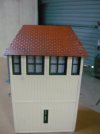
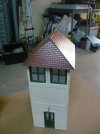
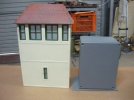
They are glued with pva and sealed with Halfords matt varnish. Seems not enough though.
 
They are glued with pva and sealed with Halfords matt varnish. Seems not enough though.
Matt varnish would probably not be the thing as it is not a glue.I have in other places glued up old concreter chippings to make a wall with a concrete fill to the rear, this has stood the test of time very well. But not sure how it would work with your bricks as there would be no gaps for the cement to get into where as liquid pva painted on the surface would. Perhaps you could still do this to the rear with PVA?
 
Matt varnish would probably not be the thing as it is not a glue.I have in other places glued up old concreter chippings to make a wall with a concrete fill to the rear, this has stood the test of time very well. But not sure how it would work with your bricks as there would be no gaps for the cement to get into where as liquid pva painted on the surface would. Perhaps you could still do this to the rear with PVA?
problem is bricks are not thermally hardened, they are literally dried clay (maybe with some glue) - so they literally dissolve on water. i am thinking next time to try epoxy for first coat - to totally isolate them from weather.
 
Perhaps a soak in something like Thompsons water seal, and then let dry, before assembly?

Or you could try to fire them?
But I don't think a domestic oven would get hot enough?

PhilP.
 
problem is bricks are not thermally hardened, they are literally dried clay (maybe with some glue) - so they literally dissolve on water. i am thinking next time to try epoxy for first coat - to totally isolate them from weather.
Bake 'em in the oven - when the good lady is out

Doh, some smart Alec beat me to it.

I dunno, given the size of the brick, I reckon you could get away with it in a domestic oven - put those in a kiln and they'd disappear in a puff of smoke.

Put it this way: 2 hours at 200 deg C ain't gonna make them any worse ;);)
 
Bake 'em in the oven - when the good lady is out

Doh, some smart Alec beat me to it.

I dunno, given the size of the brick, I reckon you could get away with it in a domestic oven - put those in a kiln and they'd disappear in a puff of smoke.

Put it this way: 2 hours at 200 deg C ain't gonna make them any worse ;);)
i think domestic oven maybe good up to 240C, so i give it a try on small sample
 
I wonder if clear external PVA let down 50/50 with water all sides may work. Will look white when applied but dry clear with a very slight shine that will disappear in short order outside. Ther is also a similar product called SBR that is already to brush on without letting down with water, just make sure external variety. Both will benefit with a tiny drop of washing up liquid added to the mix.
I know of a modeller who uses SBR to hold his ballast in place, lives just down the road (an hour or so drive) and it is out in Queensland Aust summer sun standing up to it OK. UK would get nowhere near the UV levels that we get.
 
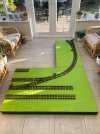
I have been using the Aussie brand (Davco lanko 751) of sbr to fix ballast down too. The track is in full sun, rain and frost. Seems to be standing up well.
Just don't dilute it too much, where I went to 50/50 water mix it didn't last. About 20-25% water seems to work well here, needs a little water to soak into the ballast.
So it might be good for your clay tiles @peterpavuk using undiluted.
 
I have been using the Aussie brand (Davco lanko 751) of sbr to fix ballast down too. The track is in full sun, rain and frost. Seems to be standing up well.
Just don't dilute it too much, where I went to 50/50 water mix it didn't last. About 20-25% water seems to work well here, needs a little water to soak into the ballast.
So it might be good for your clay tiles @peterpavuk using undiluted.
SBR is quite sloppy anyway so would not let it down with water myself.
 
Back
Top Bottom