
You are using an out of date browser. It may not display this or other websites correctly.
You should upgrade or use an alternative browser.
You should upgrade or use an alternative browser.
What happened at your workbench today?
- Thread starter Henri
- Start date


Chris Vernell
Three score and nineteen

42So is it number '2', '3', '23', or '32'?
PhilP.

korm kormsen
Registered

nearly 60 years ago.Hover mower, and flip-flops, anyone?
me, using the mower beside a rivulet.
mower got stuck. - i pulled.
mower let go and landed on my foot.
the same split second i pushed the mower.
the mower landed and drowned in the rivulet.
i looked at my foot.
my brand-new (biker-)winter boot looked like a sandal.
leather, steelcap, sock - gone.
i wiggled my toes - no pain, no blood.
coming to the house, my mother saw the boots and got pale, without a sound.
my (step)father gave me about half an hour lesson about safety.
but nothing, that i did not had learned already between pulling the mower and wiggling my toes.
i still think, the best and most lasting teachings we get from/after making mistakes.

Northsider
Modelling the Northern half of the Isle of Man

Depends which way it's going.So is it number '2', '3', '23', or '32'?
PhilP.

Technocrat
Mostly Retired?

Just remember, almost all the warning labels in modern society are the result of someone being er... less than intelligent.Well, not quite, there would always be people who would go out of their way to avoid using commonsense as it can sometimes be the more expensive way of doing things.

Grover65k
AKA Tony

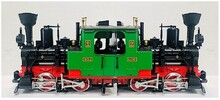
Another locomotive under construction for the Granddaughters H & G Rail Rd. It’s the result of an impulse buy of an LGB sound fitted Stainz at the Bedford garden railway show. It’s sitting on a playmobil diesel chassis as that has a long wheel base and should cope with the R1 curves on there railway.
Still to test to see if the sound works at the lower playmobil voltage . If it does then it’s time to do fit batteries and wiring and loose some of the red paint!
So...
Where can I acquire a "Double Stainz" ?
Ahh... (from 2017 !) Thread-308935 => the freelance-double-articulated-locomotive
or perhaps the LGB 20990 ?
Attachments
Last edited:

There is an entirely prototype reason for a double Stainz. They had the equivalent in Bosnia by doing pretty much as you have stitched in your picture. They were not a particular success, pictures of them are very rare as they quickly realised that the additional power hoped for was not present. Thus they were singled and spent most of their lives as single locomotive shunters.So...
Where can I acquire a "Double Stainz" ?
Ahh... (from 2017 !) Thread-308935 => the freelance-double-articulated-locomotive
or perhaps the LGB 20990 ?
As for making one, not a big deal with some minor cutting of one cab, some kind of plate in the cab to keep the two together and linking wires.
In our scale you will end up with a prodigious puller that will run much better on dirty track due to doubling the potential pickups. Oh and a repaint to black.
playmofire
Registered
A rather sweeping statement as there are few people who can truthfully say that there is no one more intelligent than they are.Just remember, almost all the warning labels in modern society are the result of someone being er... less than intelligent.

Rhinochugger
Retired Oik
Hmmmm - no generalisation is wholly true, including this oneA rather sweeping statement as there are few people who can truthfully say that there is no one more intelligent than they are.

playmofire
Registered
True, but really I am taking exception to the suggestion that the need for warning labels and lesser intelligence are necessarily linked. Warnings and instructions are relevant, even if to some people they may seem obvious and unnecessary, although, as ever, there are exceptions:Hmmmm - no generalisation is wholly true, including this one
Rhinochugger
Retired Oik
I think the 'lesser intelligence' label was a trifle tongue in cheek - probably referring to people who chose not to use the intelligence they were given.True, but really I am taking exception to the suggestion that the need for warning labels and lesser intelligence are necessarily linked. Warnings and instructions are relevant, even if to some people they may seem obvious and unnecessary, although, as ever, there are exceptions:

David1226
Registered
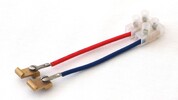
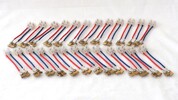
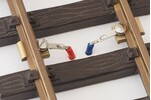
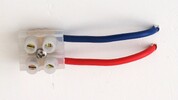
I have just got around to creating twenty-five sets of track feeds for the baseboards that will become the Claptowte Railway. The track connections use Massoth track feed clamps with dropper wires soldered on to the connecting tags, which will pass through holes drilled in the baseboard and be screwed into connector blocks on the underside of the board. It is something of a paradox that boards with complex multiple pointwork only require one feed to power the whole board, whereas boards with just lengths on plain track, require as many as five feeds.
David
David
Last edited:
playmofire
Registered
Very neat and very thorough.

FatherMcD
Registered
Truly an excellent method for fitting feed wires, but I have to ask, how did you get the soldered-on terminals through holes in the (foamboard?) track base that seem to be smaller in diameter than the terminals? Is it just an optical illusion?I have just got around to creating twenty-five sets of track feeds for the baseboards that will become the Claptowte Railway. The track connections use Massoth track feed clamps with dropper wires soldered on to the connecting tags, which will pass through holes drilled in the baseboard and be screwed into connector blocks on the underside of the board. It is something of a paradox that boards with complex multiple pointwork only require one feed to power the whole board, whereas boards with just lengths on plain track, require as many as five feeds.
View attachment 353073
View attachment 353074
View attachment 353075
View attachment 353076
David
FatherMcD
Registered
Perhaps the root cause, but the proximate cause would be to avoid legal liability for millions of dollars in settlements such as the one paid out to the woman who bought a cup of hot coffee at a McDonald's drive-thru and then (less intelligently?) put it between her thighs where it spilled and burned her. This was in the days before cup holders were a routine item in vehicles and the coffee really was too hot according to information presented to the jury. At the other end is the warning on the pizza boxes where I buy take out pizza. "Open box before consuming pizza". I still wonder if that is a joke.Just remember, almost all the warning labels in modern society are the result of someone being er... less than intelligent.
David1226
Registered
Only one end of the dropper wire has a tag soldered to it, it's the free end that gets poked through the hole, from the top, and screwed into the terminal block underneath. The foamboard is just a small mocked up piece, the same thickness as the plywood baseboard top, just for illustrative purposes.Truly an excellent method for fitting feed wires, but I have to ask, how did you get the soldered-on terminals through holes in the (foamboard?) track base that seem to be smaller in diameter than the terminals? Is it just an optical illusion?
David
FatherMcD
Registered
Duh. Of course! Overlooking the obvious.Only one end of the dropper wire has a tag soldered to it, it's the free end that gets poked through the hole, from the top, and screwed into the terminal block underneath. The foamboard is just a small mocked up piece, the same thickness as the plywood baseboard top, just for illustrative purposes.
Oh dearDuh. Of course! Overlooking the obvious.

Jasper
Hey, I'm only being creative here!

twenty-five sets of track feeds
I can't be the only one who felt compelled to actually count the track feeds in the photo, and confirm that there are indeed 25 of them.
Similar threads

- Replies
- 18
- Views
- 3K
