LGB on Playmobil tracks ?

Mobi

Registered
Country flag
I know Playmobil trains work very well on LGB tracks as I run them. But what about other way round? Do LGB trains work on Playmobil tracks (assuming battery powered)?

I don't have any Playmobil tracks to test myself.

As Playmo tracks are lot cheaper than brass tracks, it would be cheaper to lay on outdoor.
 
All the LGB wagons and coaches I have work fine on the plastic Playmobil track but I don't have any battery powered LGB locos. If the wagons and coaches work I don't see why they shouldn't. There is of course only one official radius curve and that is small but there are some people who will 3D print larger radii.

Paul
 
Not sure if Playmo track is UVA/UVB stable for outdoor use....
 
As Playmo tracks are lot cheaper than brass tracks, it would be cheaper to lay on outdoor.

if the price is more important, than how the track looks, maybe you should think about making your own cheap track.

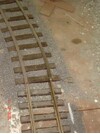
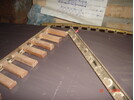
i did that, using cheap curtain-rails and wooden ties.

blech11.JPG

blech9.JPG
 
I know Playmobil trains work very well on LGB tracks as I run them. But what about other way round? Do LGB trains work on Playmobil tracks (assuming battery powered)?

I don't have any Playmobil tracks to test myself.

As Playmo tracks are lot cheaper than brass tracks, it would be cheaper to lay on outdoor.
PM (forum mesaage) sent to you.
 
When I searched in YouTube for videos of LGB locos running on Playmobil tracks, I could not find any - which is surprising!

ChatGPT says Playmobil never officially disclosed their track radius but it reckons it is slightly less than LGB R1 curve.
 
if the price is more important, than how the track looks, maybe you should think about making your own cheap track.

i did that, using cheap curtain-rails and wooden ties.

View attachment 352534

View attachment 352535

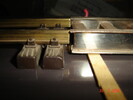
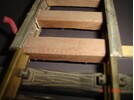
Please tell, what is a curtain rail ? Looking at the second photo, my mind cannot get how the ties and rail work together. The ties look like three separate pieces.
 
Please tell, what is a curtain rail ? Looking at the second photo, my mind cannot get how the ties and rail work together. The ties look like three separate pieces.
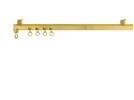
Old curtain rail is like 'H' section girder with rollers. - Think miniature overgead hoist:
I-beam-uncorded-DA-2231-300x225.png
Culled from the Interweb..

PhilP.
 
The question of the difference in radius between LGB curves and Playmobil was raised last year and I posted a photo showing the two together on here but I can't find it now nor the original on my computer.
 
Please tell, what is a curtain rail ? Looking at the second photo, my mind cannot get how the ties and rail work together. The ties look like three separate pieces.
Back in the day Curtain Rail used to be I beams with little rollers that sat either side with loops to hang curtains on, all the bits tended to be brass.. Probably disappeared in UK back in the 70 when Plastic replacements became the norm. Much prised is the I beam for may jobs such as Crane Beams and as here track.
 
Please tell, what is a curtain rail ?
just like PhilP and dunnyrail mentioned - metallic rails to hang up curtains.
here in paraguay i could buy cheap tin rails, that were either bronze- or tinplated. - and cheap! (about $0.20 per yard of rail)
a friend with carpentry tools made me the ties from offcuts. (cheap too)
main difference between out- and indoors was the glue used. outdoors i used the german UHU, or the "3M" goop used for motor sealing, indoors just white wood-glue.
(hindsight: for outdoors, now i would drive a thin nail through the tin-rail into the middle part of the tie every tenth tie, or so)

btw: if there are no more metallic curtain rails... for battery driven locos the plastc rails might be even better. no rust, paintable. just using a tacker, to connect rail and "middle ties".

my mind cannot get how the ties and rail work together. The ties look like three separate pieces.

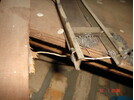
just that. the middle piece of the "tie" for the correct spacing. the outer pieces were just for optics.

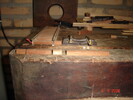
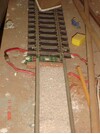
cause in the old days the next shop to develop negatives, was 300miles/500km away, i got only some pics from the later indoor layout:

blech3.JPG

blech5.JPGblech7.JPG

blech8.JPG

blech10.JPG

blech4.JPG
 
just like PhilP and dunnyrail mentioned - metallic rails to hang up curtains.
here in paraguay i could buy cheap tin rails, that were either bronze- or tinplated. - and cheap! (about $0.20 per yard of rail)
a friend with carpentry tools made me the ties from offcuts. (cheap too)
main difference between out- and indoors was the glue used. outdoors i used the german UHU, or the "3M" goop used for motor sealing, indoors just white wood-glue.
(hindsight: for outdoors, now i would drive a thin nail through the tin-rail into the middle part of the tie every tenth tie, or so)

btw: if there are no more metallic curtain rails... for battery driven locos the plastc rails might be even better. no rust, paintable. just using a tacker, to connect rail and "middle ties".


just that. the middle piece of the "tie" for the correct spacing. the outer pieces were just for optics.

cause in the old days the next shop to develop negatives, was 300miles/500km away, i got only some pics from the later indoor layout:

View attachment 352561

View attachment 352562View attachment 352563

View attachment 352564

View attachment 352565

View attachment 352566

Looking at UK brand plastic I cant imagine them being any good for track.
 
Looking at UK brand plastic I cant imagine them being any good for track.
True.. At least for modern stuff.

Though I remember a 'plastic' version of the brass 'girder track' when Dad was working T C Hall & Son, when I was in short trousers..

Gosh! That makes me feel old. - Quiet at the back..

That, and the 70th anniversary of the Gauge O Guild, this year..
Formed only two years before me. :worried:

PhilP.
 
just like PhilP and dunnyrail mentioned - metallic rails to hang up curtains.
here in paraguay i could buy cheap tin rails, that were either bronze- or tinplated. - and cheap! (about $0.20 per yard of rail)
a friend with carpentry tools made me the ties from offcuts. (cheap too)
main difference between out- and indoors was the glue used. outdoors i used the german UHU, or the "3M" goop used for motor sealing, indoors just white wood-glue.
(hindsight: for outdoors, now i would drive a thin nail through the tin-rail into the middle part of the tie every tenth tie, or so)

btw: if there are no more metallic curtain rails... for battery driven locos the plastc rails might be even better. no rust, paintable. just using a tacker, to connect rail and "middle ties".


just that. the middle piece of the "tie" for the correct spacing. the outer pieces were just for optics.

cause in the old days the next shop to develop negatives, was 300miles/500km away, i got only some pics from the later indoor layout:

View attachment 352561

View attachment 352562View attachment 352563

View attachment 352564

View attachment 352565

View attachment 352566

Ah Ha ! We have penetration.....;).....So your system only works if you have a baseboard to fasten the rails to, I suspect.
 
So your system only works if you have a baseboard to fasten the rails to, I suspect.
pe... whot?

but you are wrong - partly.
for hidden track, like in tunnels or shadow storage it is easier to just nail the rails to a baseboard.
but where visible, it is better, to pre-bend the rails, then glue the middle parts of the ties, throw the track on the dirt, anchor with some 2 or 3 inch nails, and connect the track with screws or pop-rivets.

it's the old game:
wanna save money, pay in effort and time.
 
Back
Top Bottom