Hello - a new member with an old system

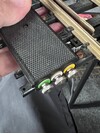
I have the smoke switch but no switch in the cab or smoke box. I was wondering about a lack of skate pick-ups but reassured by rhaetianfan’s post on Monday. Next step a strip-down and clean with contact cleaner I think.
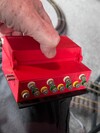
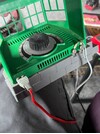
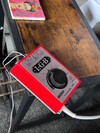
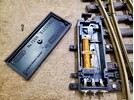
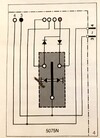
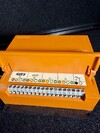
Should have added that I think I understand the points switching now - two cables into the red switch box then three to each point. However, I’m less sure how I used/why I needed the green controller as well as red transformer. Could they be coded to different trains in the 1980’s?
 

Attachments

  • IMG_5471.jpeg
    IMG_5471.jpeg
    380.4 KB · Views: 0
  • IMG_5470.jpeg
    IMG_5470.jpeg
    490.4 KB · Views: 0
  • IMG_5469.jpeg
    IMG_5469.jpeg
    468.3 KB · Views: 0
  • IMG_5468.jpeg
    IMG_5468.jpeg
    541.3 KB · Views: 0
However, I’m less sure how I used/why I needed the green controller as well as red transformer. Could they be coded to different trains in the 1980’s?
As your system is quite old, the only way you can run both your locos at the same time, is to have a controller for each. You will also need a separate circuit of track, isolated from the other circuit....
 
Welcome and congratulations having a grandson who likes trains too!
Never a better excuse than your grandchilds running along the track.
Please use this tip: use "copper grease" when you build up your tracks.
It can take over 300 degrees celcius and will not be washed away by any rain.
It will keep your track for years to come clear from electrical interruptions due to bad connections !
 

Attachments

  • Copper grease.jpg
    Copper grease.jpg
    103.7 KB · Views: 0
Welcome and congratulations having a grandson who likes trains too!
Never a better excuse than your grandchilds running along the track.
Please use this tip: use "copper grease" when you build up your tracks.
It can take over 300 degrees celcius and will not be washed away by any rain.
It will keep your track for years to come clear from electrical interruptions due to bad connections !
That’s interesting thanks. I’ve seen it advertised for high temperature lubrication but had not realised it is also good for electrical connections. Do you spread on top of cleaned tracks or concentrate it on track joints?
 
Here is a copy of page 49 chapter 2.4 from our 361 page book "Our Model Garden Railway" that covers this subject.
(The book is for sale on Amazon and covers a lot of practical problems of G-scale railways.)
My co author is an G-scale expert, solving all sorts of G-scale problems for over 40 years now.
You may contact him about your loco on his mailaddress: rainer.kleinsteuber@gmail.com
May be he can help you.
 

Attachments

That’s interesting thanks. I’ve seen it advertised for high temperature lubrication but had not realised it is also good for electrical connections. Do you spread on top of cleaned tracks or concentrate it on track joints?

It is not electrically conductive as a product. It helps seal cleaned joints from water and dirt between rail surface and track clamps. So clean all surfaces to be mated to be effective. Do not use on rail head. Max
 
That’s interesting thanks. I’ve seen it advertised for high temperature lubrication but had not realised it is also good for electrical connections. Do you spread on top of cleaned tracks or concentrate it on track joints?
Do not spread it on top of the rails, you will get traction problems!
The working of the copper grease is only the prohibiting of wheathering the contact surfaces in a railway joint.
This will result in a everlasting perfectly continuous good electric contact between the two to be connected surfaces.
Even when the rails is moving , because of walking over it or because of temperature changes between day and night, the grease will prevent corrosion of the rail contacts. I am running it for about 8 years now without any connection problem!
In fact using this grease, everywhere you can think of it being contact improving,is a must and prohibits the need to change from rail power to battery power.
Also the use of thick wires next to the railway connected to all separate rails sections is no longer needed!
SO GO FOR IT AND YOUR RAILWAY WILL IMPROVE SIGNIFICANTLY!
 
Welcome aboard John.
 
John:
Welcome.


Typically, these things (lgb) run, almost forever.
There are many possibilities, but id suggest simply taking it to a train store for repair. Im guessing that you need a new motor, about 60£.
Add service time. Another 60£ ill guess, for example, clean, grease removal and replacement.
Obviously, i have no real idea.
You have whats called a clamshell gearbox, ie to sides to create the gear box. No problems, per se, but do require a lot more work to disassemble and reassemble. Also, you motor will have a tiny ball bearing in the gear box, at each end of the motor shaft. These must not be lost if you use the old motor.
Do the wheels turn, and do the gear/rods move freely?

Your loco looks to be in good condition and modest wear.
Does the headlight light when power is applied(try both directions).

Train repair can be costly. You might be able to find another, used, in your price range. Or, this could lead from pan to fire.

As mentioned, your locos do not have independent control.
You can run both on the same track. They may or may not run at the same speed. or, as mentioned, set up a separate loop, eg, an inner and outer loop, connected by points. Or something rather more clever….

Something you CAN do, is to carefully turn the loco over, protecting whistles and bells, and take the leads from your transformer and touch them, simultaneously, to the different sides of the loco wheel sets. Sometimes, the pick up brushes that touch the back of the wheels dont make full contact. These do wear out and are designed to be replaced. Trying the direct lead can cause the wheels to shift side to side and complete an otherwise faulty contact. Wont hurt to try. Then, you may determine, or not, if the motor is faulty.
Best of luck.
 
Last edited:
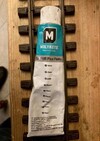
Just taken a look at your pictures. Your tube of Molykote CU 6349 performs the same function as "Coppergrease". As noted by another your 2070 loco is of an older design, the PDF I posted will not be of much use, sorry for any misinformation contained. However its exterior condition appears to be very good. I never knew all the motions on the 2070 loco were once metal. On my version they are plastic. Max
 
Back
Top Bottom