You are using an out of date browser. It may not display this or other websites correctly.
You should upgrade or use an alternative browser.
You should upgrade or use an alternative browser.
Funicular
- Thread starter trammayo
- Start date


John Carmichael
Registered

Then you should like this Trammayo because you can't buy a funicular kit! But you'll probably need to buy most of the important components unless you know how to make complex things like motors, gears, and circuit boards!
By the way, my lists of Suppliers and Tips have been updated because these comprehensive lists are a work in progress. I love to share.
By the way, my lists of Suppliers and Tips have been updated because these comprehensive lists are a work in progress. I love to share.
Last edited:
John Carmichael
Registered
I've updated the funicular Modeling Tips page with important tips on cable management - specifically the cable hooks, cable guards and track pulleys. (see Above)
John Carmichael
Registered
Yesterday, after 10 months, I finished installing the funicular outside within the Cholla Patch Railroad layout. It now has a new mountain range to climb. Most of the iron support structure is buried within the mountain. The entire mountain (except around the plants) is coated in a 2:1 water/Titebond III solution which solidified all the small particle sand and clay. This controls erosion and makes cleaning the leaves off easy with a leaf blower without all the sand blowing away. I use the same Titebond solution on my track ballast- like the HO guys do. I've designed and built a passenger boarding area with lots of anxious travelers and an ornate Victorian ticket booth (modeled after the precious upper tramway station booth at Saltburn Cliff Tramway in England- saltburn cliff tramway - Bing images ). This summer, I'll make a suspension footbridge from the upper station over to the Treehouse behind the mountain.
You can see photos of the installation details here: G-Scale Funicular Garden Railway
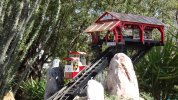
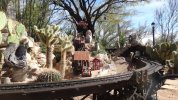
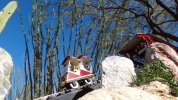
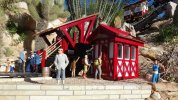
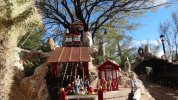
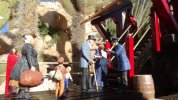
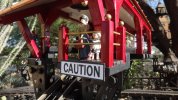
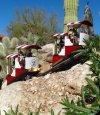
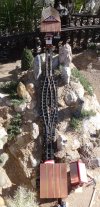
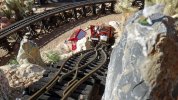
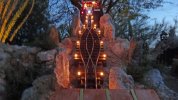
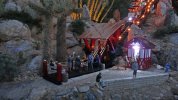
You can see photos of the installation details here: G-Scale Funicular Garden Railway
Last edited:
John Carmichael
Registered
p.s. I plan on making a more professional video (with tripod) after Tucson's Rails in the Garden tour next weekend. Damn! I'll need to polish all the copper roofs again! (Then I'll let them age naturally)...
John
John
Last edited:


John Carmichael
Registered
The switch has no moving parts. The cars are guided through the ABT passing switch by the outside guide rails. Each car has double-flanged wheels on one side and non-flanged wheels on the other. The doubled-flanged wheels are only on the outside guide rails. This ingeneous arrangement guides each car to opposite sides of the passing switch which prevents collision. If you read my initial posting, and you look closely at the photos and videos, you can easily see for yourself how the wheels engage the rails. Thanks for your question.
John Carmichael
Registered
error
Last edited:


John Carmichael
Registered
Hello All:
Thanks to all for your kind comments. I'm so glad that all you experts liked my work. That helps to make it all worthwhile.
I have been keeping sane distracting myself by making several cool G-Scale funicular railway videos including the very first known ONBOARD video of a model funicular!
We’ve really tried to do a good job of filming using the GoPro camera and special lighting effects.
Here is a photo of the little funicular movie camera car that we used for the onboard shots. Note the cable hook and flange-less wheel.
What you can't see are the 453 grams of lead weights underneath the car! The total weight of the camera car exactly equals the 753 gram weight of the passenger cars. (for cable weight balance)

I published all the funicular videos in SD in a playlist on You Tube located here:
G-Scale Funicular Railway - YouTube
We had a good time making these and hope you enjoy them.
John
p.s. If you listen carefully to the audio of some of them, you can hear the same groans and creaking noises that real funiculars make. I love that!
Thanks to all for your kind comments. I'm so glad that all you experts liked my work. That helps to make it all worthwhile.
I have been keeping sane distracting myself by making several cool G-Scale funicular railway videos including the very first known ONBOARD video of a model funicular!
We’ve really tried to do a good job of filming using the GoPro camera and special lighting effects.
Here is a photo of the little funicular movie camera car that we used for the onboard shots. Note the cable hook and flange-less wheel.
What you can't see are the 453 grams of lead weights underneath the car! The total weight of the camera car exactly equals the 753 gram weight of the passenger cars. (for cable weight balance)
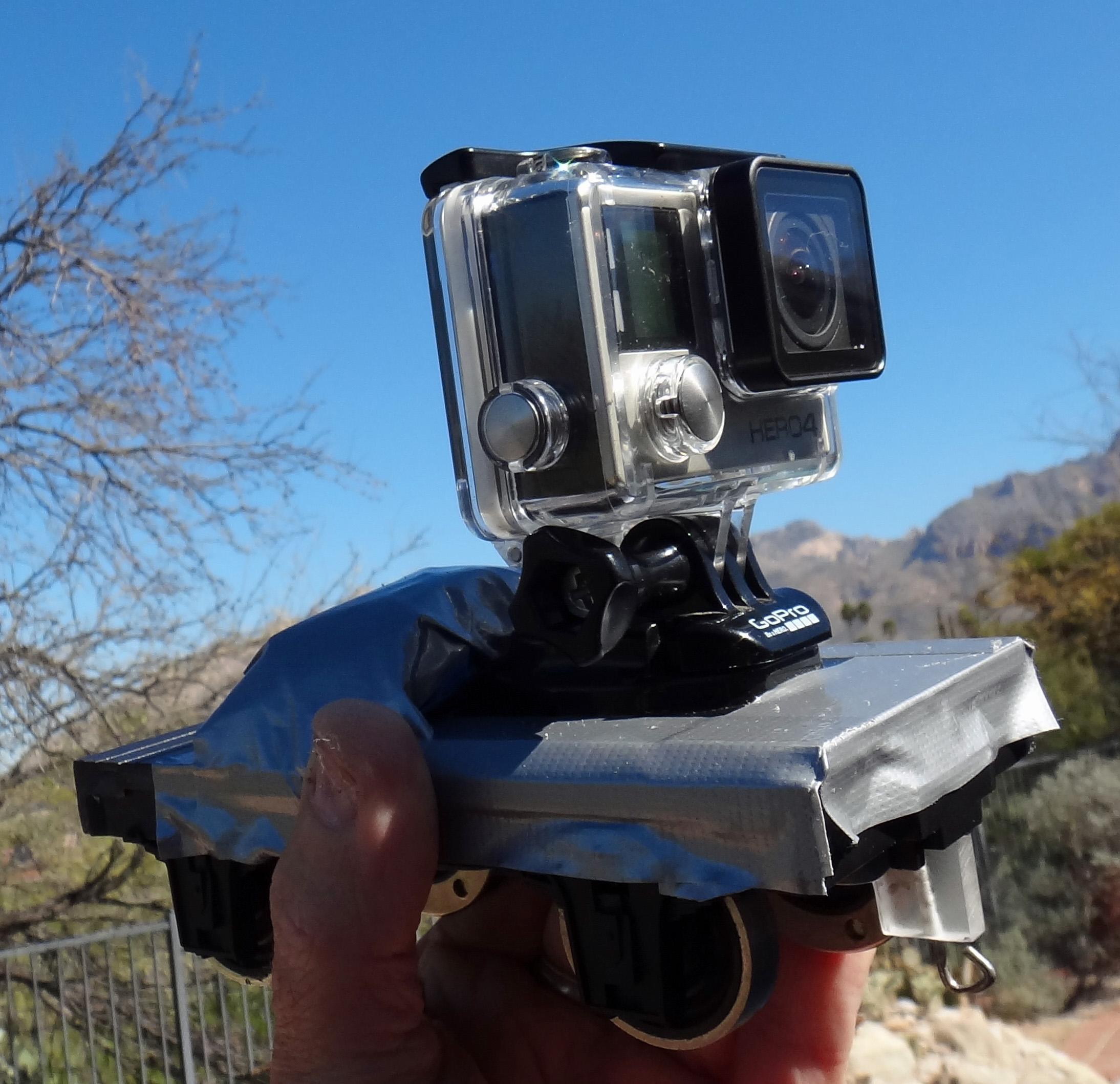
I published all the funicular videos in SD in a playlist on You Tube located here:
G-Scale Funicular Railway - YouTube
We had a good time making these and hope you enjoy them.
John
p.s. If you listen carefully to the audio of some of them, you can hear the same groans and creaking noises that real funiculars make. I love that!
Last edited:

musket the dog
Registered
An ingenious way to model something not often seen. I really like the view of the winding mechanism as the car comes into the upper station, very special indeed 
John Carmichael
Registered
This is our last and best funicular garden railway video that contains many short clips edited together- some with onboard video. Makes you feel like a passenger!
We worked real hard on getting the perfect angles, lighting and editing.
Filming it was a great quarantine project.
Hope you like it!
We worked real hard on getting the perfect angles, lighting and editing.
Filming it was a great quarantine project.
Hope you like it!
Last edited:

John Carmichael
Registered
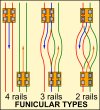
Here is a helpful diagram showing three basic types of funiculars. The earliest ones were four rail (two track) funiculars, but they are the costliest to build because rails are expensive, they take up a lot of space, and they need double stations. More advanced three rail funiculars are less expensive but a little harder to build because they require a passing switch. The least expensive is the modern two rail funicular. They use less iron rails, don’t need double stations, and occupy less real estate, but have the harder to build passing switch. This unique type of funicular was invented in 1890 by Swiss engineer Carl Roman Abt (1850–1933) for the Giessbach Hotel funicular which is still in operation. It was made possible by his innovative and revolutionary ABT passing switch - the only railroad switch without any moving parts! Abt called it the “automatic turnout” solution. It became an instant success and most funiculars constructed afterwards use the ABT design to this day
Last edited:

Rhinochugger
Retired Oik

Do you think the word 'funicular' is a shortened form of 'funny peculiar' ? 
John Carmichael
Registered
Here is a helpful diagram showing three basic types of funiculars. The earliest ones were four rail (two track) funiculars, but they are the costliest to build because rails are expensive, they take up a lot of space, and they need double stations. More advanced three rail funiculars are less expensive but a little harder to build because they require a passing switch. The least expensive is the modern two rail funicular. They use less iron rails, don’t need double stations, and occupy less real estate, but have the harder to build passing switch. This unique type of funicular was invented in 1890 by Swiss engineer Carl Roman Abt (1850–1933) for the Giessbach Hotel funicular which is still in operation. It was made possible by his innovative and revolutionary ABT passing switch - the only railroad switch without any moving parts! Abt called it the “automatic turnout” solution. It became an instant success and most funiculars constructed afterwards use the ABT design to this day.

Gavin Sowry
Garden Railroader, Raconteur, and Gentleman

Here is a helpful diagram showing three basic types of funiculars. The earliest ones were four rail (two track) funiculars, but they are the costliest to build because rails are expensive, they take up a lot of space, and they need double stations. More advanced three rail funiculars are less expensive but a little harder to build because they require a passing switch. The least expensive is the modern two rail funicular. They use less iron rails, don’t need double stations, and occupy less real estate, but have the harder to build passing switch. This unique type of funicular was invented in 1890 by Swiss engineer Carl Roman Abt (1850–1933) for the Giessbach Hotel funicular which is still in operation. It was made possible by his innovative and revolutionary ABT passing switch - the only railroad switch without any moving parts! Abt called it the “automatic turnout” solution. It became an instant success and most funiculars constructed afterwards use the ABT design to this day.
View attachment 264921
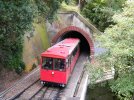
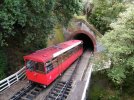
Abt turnouts under these cars. Must get a shot sometime, of the turnout without the cars on them.
This is a two rail system as shown in the diagram. Because it is a double flange system, there was no need for the usual 1 in 20 slant of the rail on the sleeper. The car manufacturer specified an unusual 12" radius rail head (9" radius is more common). I was tasked with 'finding' a suitable rail and fastenings for this system, which I did, and drew up the 'plain track' plan.
This system, opened in 1978, replaced the earlier two track one, which was a 'true' San Francisco type, with the addition of a tail rope, which made it into a funicular hybrid system. The car going down would grip the cable in the normal manner, and the car going up would be towed along for the ride. The main cable would only run when cars needed to to run. You knew it was time to board when the rope started up.
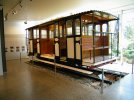
Preserved original car. In addition to the normal system, this also had an added Fell rail brake.
Last edited:
John Carmichael
Registered
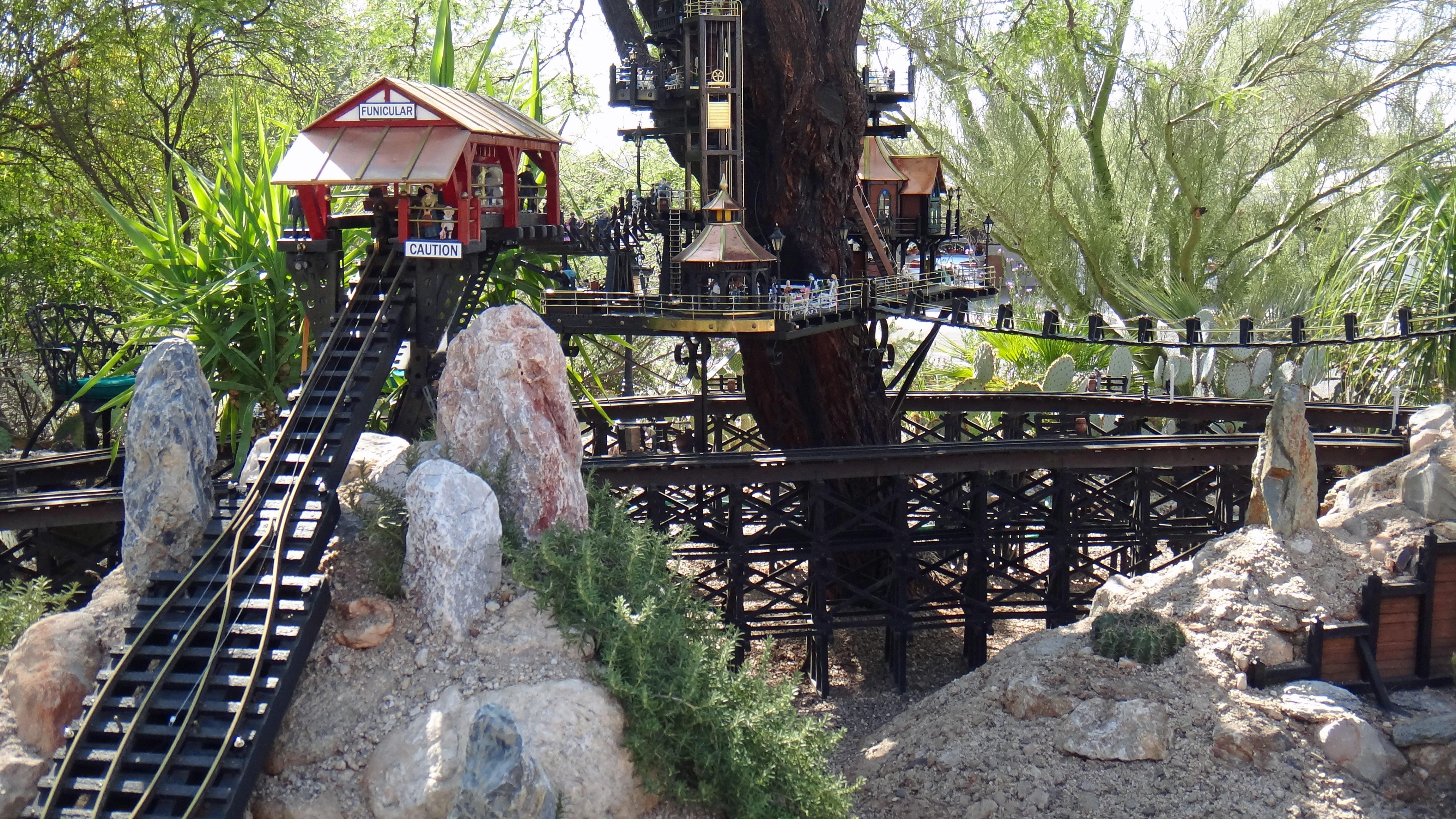
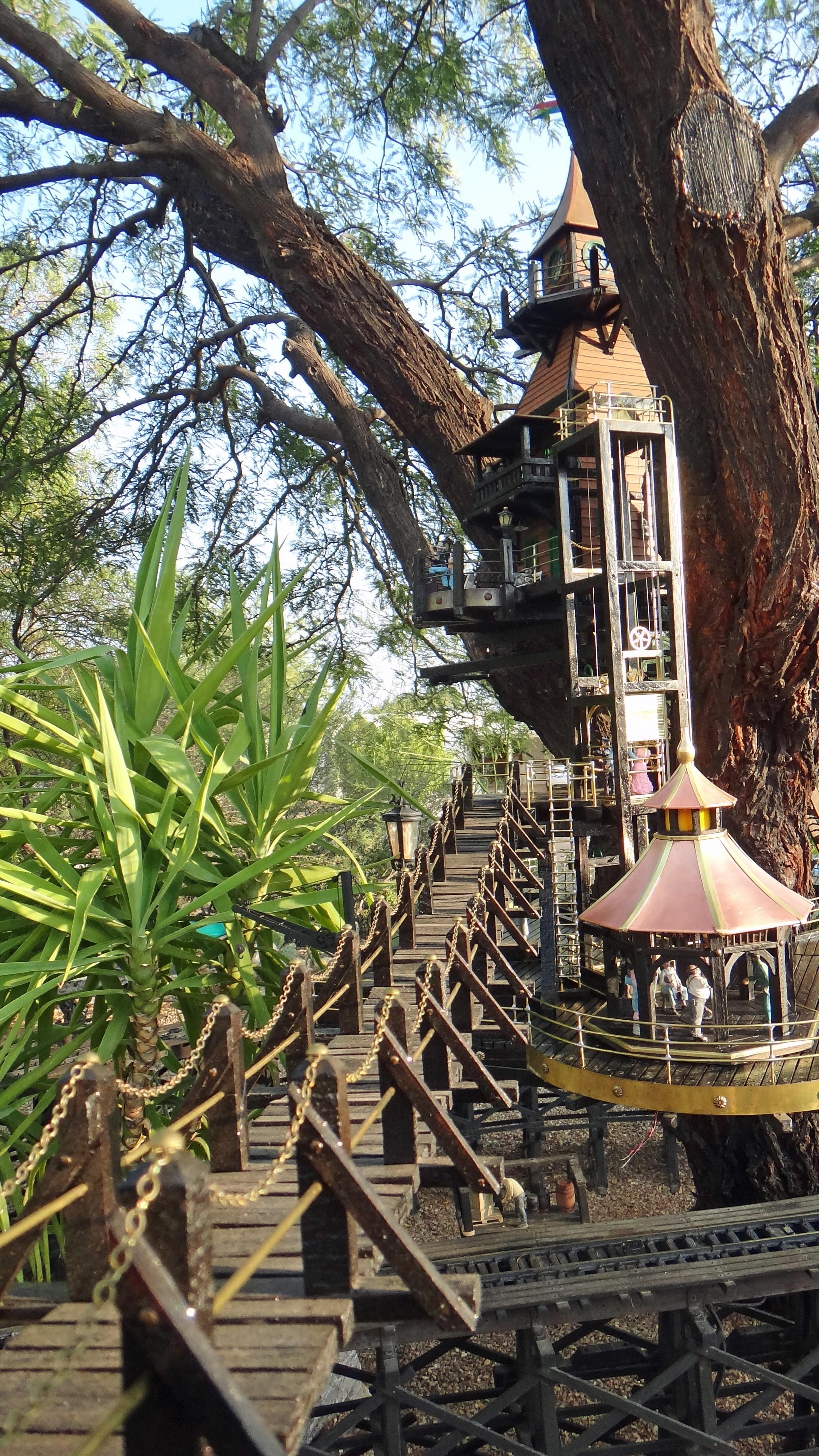
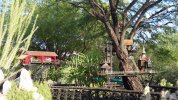
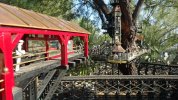
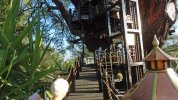
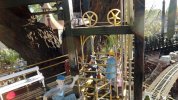
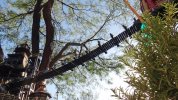
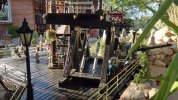
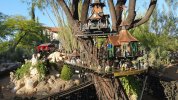
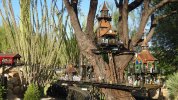
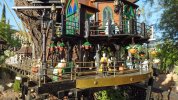
The funicular now has a reason for being. I've connected the upper station to a 104 ft. long (at 1:24 scale) suspension foot bridge that leads to the re-modeled Treehouse Complex. The two supporting cables of the bridge run through holes drilled in each plank, and are attached to steel disks on the station by magnets to prevent any damage to the station from a heavy falling branch or strong winds. If the bridge is overly stressed, it will automatically disconnect and protect the station. The other end of the cables are attached to the elevator boarding platform at the tree house with miniature turnbuckles for adjusting tension and extension springs to allow for slight motions. The stainless steel cables are the same 1/32" stainless steel cable used in the funicular. The tree house along with a restaurant, salon, gazebo and lodge now has a new Victorian elevator to travel between levels, and it really works!I'm a Yorkshireman abroad - tight fisted when it come to spending! I much prefer making things myself if I can.
see photos (after Supercar and Trolley) here: John Carmichael
Attachments
-
 Garden Railway Treehouse Remodeled-21.JPG784 KB · Views: 0
 -
 Garden Railway Treehouse Remodeled-31.JPG591.3 KB · Views: 0
 -
 Garden Railway Treehouse Remodeled-36.JPG514.9 KB · Views: 0
 -
 Garden Railway Treehouse Remodeled-42.JPG464.8 KB · Views: 0
 -
 Garden Railway Treehouse Remodeled-46.JPG660.6 KB · Views: 0
 -
 Garden Railway Treehouse Remodeled-54.JPG570.1 KB · Views: 0
 -
 Garden Railway Treehouse Remodeled-56.JPG740.1 KB · Views: 0
 -
 Garden Railway Treehouse Remodeled-58.JPG860.7 KB · Views: 0
 -
 Garden Railway Treehouse Remodeled-59.JPG636.3 KB · Views: 0
Similar threads
- Replies
- 17
- Views
- 642

- Replies
- 26
- Views
- 2K

- Replies
- 16
- Views
- 1K


