You are using an out of date browser. It may not display this or other websites correctly.
You should upgrade or use an alternative browser.
You should upgrade or use an alternative browser.
First outdoor railway
- Thread starter Paul_Kirk
- Start date

playmofire
Registered

Welcome from the North Yorkshire coast.

railaddict
Registered

Warm welcome to the forum, Paul!

maxi-model
UK/US/ROW steam narrow gauge railways 1:1
Welcome Paul. You can't have too many locos, or rolling stock and structcturs and shrubs for that matter. Enjoy the journey ! Max

Northsider
Modelling the Northern half of the Isle of Man
Welcome to the Forum, Paul! You may find that, although your initial interest is in locomotives, it grows to encompass other things, and that a simple circle of track increases into much more, over time

Canyon City
Registered

Welcome to the forum, Paul! Yes, you can never have enough vehicles.


Thanks very much for the welcome everyone  - some great pics & advice I'm really in the early days of designing a layout and current thoughts are that it will have an elevated section. That does of course mean an incline and so my first question is what is a manageable incline for G scale? I guess it depends on many things including the number of drive wheels on the loco, number of things to be pulled and whether the track is dry etc. s there a general rule? Thanks.
- some great pics & advice I'm really in the early days of designing a layout and current thoughts are that it will have an elevated section. That does of course mean an incline and so my first question is what is a manageable incline for G scale? I guess it depends on many things including the number of drive wheels on the loco, number of things to be pulled and whether the track is dry etc. s there a general rule? Thanks.
Zerogee
Clencher's Bogleman
A belated welcome, Paul!
The question of inclines is always a tricky one... I guess the golden rule is try to keep them as shallow as possible, although G scale stuff is actually quite forgiving - I've seen LGB locos tackle some quite ludicrous gradients! My advice (for what it's worth) is to aim for something around 1-in-40 to 1-in-30 if you can, but even 1-in-20 can be got away with if you have to. I have seen much steeper than that, but the more extreme then the more wear you'll be putting on drive gears, motors etc.
As you've surmised, you may need to keep your trains short if your gradients are severe!
Jon.
All advice freely offered, and worth exactly what you pay for it!
The question of inclines is always a tricky one... I guess the golden rule is try to keep them as shallow as possible, although G scale stuff is actually quite forgiving - I've seen LGB locos tackle some quite ludicrous gradients! My advice (for what it's worth) is to aim for something around 1-in-40 to 1-in-30 if you can, but even 1-in-20 can be got away with if you have to. I have seen much steeper than that, but the more extreme then the more wear you'll be putting on drive gears, motors etc.
As you've surmised, you may need to keep your trains short if your gradients are severe!
Jon.
All advice freely offered, and worth exactly what you pay for it!

Gerard
Geard Co-Author " Our Model Garden Railway"

Hello Paul,
Welcome to this forum.
May i give you some advice about the choice of your control system?
My advice is to choose a DCC digital system with decoders in your locs and points. It has an enormous amount of benefits, such as:
Unlimited number of trains / No extra wiring to the points / Control of all thinkable functions on your locs and wagons / Extremely realistic run of your locs / a constant power supply from the track to all your lightning in wagons, signals and buildings.
Of course this advice goes with another advice concerning keeping up your track conductivity:
Use diluted coppergrease in all your electric connections, it will prevent corrosion for many years (mine allready for 8 years) / use a cleaning pad, loco or car after every rain event / use a sanding pad with P800 grade sand-foam mounted at an angle of 30 degrees on a stick to walk around to clean the top of the track once a year after winter.
You can find a lot more tips in our book "Our Model Garden Railway"
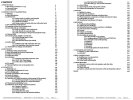
To give you an impression, see the contents of the book below.
Succes!
Gerard
Welcome to this forum.
May i give you some advice about the choice of your control system?
My advice is to choose a DCC digital system with decoders in your locs and points. It has an enormous amount of benefits, such as:
Unlimited number of trains / No extra wiring to the points / Control of all thinkable functions on your locs and wagons / Extremely realistic run of your locs / a constant power supply from the track to all your lightning in wagons, signals and buildings.
Of course this advice goes with another advice concerning keeping up your track conductivity:
Use diluted coppergrease in all your electric connections, it will prevent corrosion for many years (mine allready for 8 years) / use a cleaning pad, loco or car after every rain event / use a sanding pad with P800 grade sand-foam mounted at an angle of 30 degrees on a stick to walk around to clean the top of the track once a year after winter.
You can find a lot more tips in our book "Our Model Garden Railway"
To give you an impression, see the contents of the book below.
Succes!
Gerard
Attachments


stevedenver
Registered

Hey Paul, welcome to a great forum and fellowship.
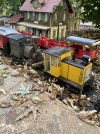

Oh dear serious case if leaves on the line. Glad I do not have to put up with too much if that issue having chooped 3 that were present in my line when I moved in and subsequently the Horse Chestnut in the School behind my garden being felled as well.Hey Paul, welcome to a great forum and fellowship.
View attachment 358848
stevedenver
Registered
Lgb plow does the trick. So long as they’re dry…

Similar threads


- Replies
- 29
- Views
- 1K


- Replies
- 26
- Views
- 858
