You are using an out of date browser. It may not display this or other websites correctly.
You should upgrade or use an alternative browser.
You should upgrade or use an alternative browser.
Comparison Between CMP's Jackson & Sharp and Accucraft's San Juan Coaches
- Thread starter JohnSol
- Start date

JohnSol
Registered

Obviously, I'm still dealing with the proper scale of coaches build in different eras. To me, the smaller Jackson & Sharp coach was built directly after the American Civil War when five foot nine-inch man was considered large. This as opposed to the later coaches with closed vestibules that were built a generation after the Civil War when people were eating better and growing larger. At least that my logic for the variance in coach sizes. Whether true or not is only my guess.


There is also the fact from your examples that the Clerestory roof makes a big difference, these were added to help with ventilation and lighting.Obviously, I'm still dealing with the proper scale of coaches build in different eras. To me, the smaller Jackson & Sharp coach was built directly after the American Civil War when five foot nine-inch man was considered large. This as opposed to the later coaches with closed vestibules that were built a generation after the Civil War when people were eating better and growing larger. At least that my logic for the variance in coach sizes. Whether true or not is only my guess.

maxi-model
UK/US/ROW steam narrow gauge railways 1:1
Hi JohnSol. We seem to have been here before CMP Brass Coaches. It's a Matter of Scale.
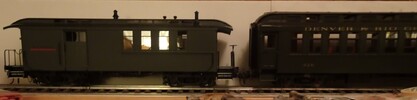
The JMP car, on right, has for many years raised issues in the Fn3 world. It is not uncommon for makers, to maximise sales, to shorten a prototypical car and move bogies outwards allow them to negotiate the smaller curve geometry that a larger number of people use. Or just find a subject that does the same job, but ends up not addressing the actual market needs (!) The Accucraft, on the left, is a correct Fn3 scale (1:20.3) depiction of one of the D&RGW "San Juan" closed vestibule cars. These all varied, to a degree, in length but in real life were all made to fit the same loading gauge. I have the 5 car set Accucraft produced a few years ago and a few of their more regular use open end J&S cars. There were quite a few detail variations in practice on the D&RGW cars, but not that much to do with severe truncation, like the JMP.
If you take a ride on any narrow gauge line the first thing you notice is the more restricted interior dimensions of the cars, compared to a standard gauge one (even more so in the US compared to UK). This is in part down to the usually accompanying restricted loading gauge. Both vertically and horizontaly (we are now entering the modeling worlds Twighlight Zone !) The effect gets greater the smaller the track gauge. People size does not really come into it, you should have seen the size if the cars on London's first UndergrounD line (where the term "car" is used rather than the more usual carriage here).
Probably one of the most misleading things, when matching up cars in pictures, is that over the years the locos grew a lot but not so much the cars. A civil war era 3ft gauge 4-4-0 is one heck of a lot smaller than a 3ft gauge D&RGW K-37. The D&RGW K's were effectivly 4'8" std gauge locos fitted with smaller diameter wheels moved inside the frame, that gave them their squat appearance and fitted the narrower 3ft gauge. They both hauled similar size cars for similar size people. Despite their other failings Bachmann did a very good job of depicting this with their Fn3 scale "Centennial" 4-4-0/2-6-0, and the later C-19 & K-27. For a more extreme example of diminuation take a look at their "industrial" 2-6-0. I have an Accucraft K-26 and that is quite a bit bigger than the K-27. Max
A Lynton & Barnstable (L&B) railway coach kit in 16mm scale, or is it ? One slight problem..........
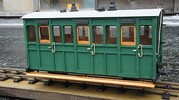
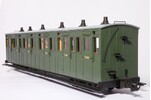
L&B coaches were never that short. Below model of correct size coach (they never made them shorter) in 16 mm scale. Example of getting a much loved subject fit a more restricted railway ! And very nice it is too.
Just for good measure - A Bachmann Fn3 scale RGS 2-6-0 and a K-27 with an Accucraft J&S, also Fn3. Those old locos really were that small.
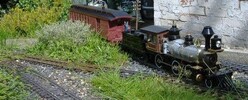
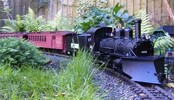
The JMP car, on right, has for many years raised issues in the Fn3 world. It is not uncommon for makers, to maximise sales, to shorten a prototypical car and move bogies outwards allow them to negotiate the smaller curve geometry that a larger number of people use. Or just find a subject that does the same job, but ends up not addressing the actual market needs (!) The Accucraft, on the left, is a correct Fn3 scale (1:20.3) depiction of one of the D&RGW "San Juan" closed vestibule cars. These all varied, to a degree, in length but in real life were all made to fit the same loading gauge. I have the 5 car set Accucraft produced a few years ago and a few of their more regular use open end J&S cars. There were quite a few detail variations in practice on the D&RGW cars, but not that much to do with severe truncation, like the JMP.
If you take a ride on any narrow gauge line the first thing you notice is the more restricted interior dimensions of the cars, compared to a standard gauge one (even more so in the US compared to UK). This is in part down to the usually accompanying restricted loading gauge. Both vertically and horizontaly (we are now entering the modeling worlds Twighlight Zone !) The effect gets greater the smaller the track gauge. People size does not really come into it, you should have seen the size if the cars on London's first UndergrounD line (where the term "car" is used rather than the more usual carriage here).
Probably one of the most misleading things, when matching up cars in pictures, is that over the years the locos grew a lot but not so much the cars. A civil war era 3ft gauge 4-4-0 is one heck of a lot smaller than a 3ft gauge D&RGW K-37. The D&RGW K's were effectivly 4'8" std gauge locos fitted with smaller diameter wheels moved inside the frame, that gave them their squat appearance and fitted the narrower 3ft gauge. They both hauled similar size cars for similar size people. Despite their other failings Bachmann did a very good job of depicting this with their Fn3 scale "Centennial" 4-4-0/2-6-0, and the later C-19 & K-27. For a more extreme example of diminuation take a look at their "industrial" 2-6-0. I have an Accucraft K-26 and that is quite a bit bigger than the K-27. Max
A Lynton & Barnstable (L&B) railway coach kit in 16mm scale, or is it ? One slight problem..........
L&B coaches were never that short. Below model of correct size coach (they never made them shorter) in 16 mm scale. Example of getting a much loved subject fit a more restricted railway ! And very nice it is too.
Just for good measure - A Bachmann Fn3 scale RGS 2-6-0 and a K-27 with an Accucraft J&S, also Fn3. Those old locos really were that small.
Last edited:

Rhinochugger
Retired Oik
Both have clerestories of different heights - that's where the main difference appears to lie.There is also the fact from your examples that the Clerestory roof makes a big difference, these were added to help with ventilation and lighting.
Rhinochugger
Retired Oik
The windows on these coaches slid upwards to open ............. which wasn't very far. This is because below the swage line, behind the boarding, the body of the coach was constructed like a warren girder truss - which is why they don't sag like the Cambletown and Macrihanish Railway carriages didI notice the 'swage line' in the original photo appears to be almost the same for both carriages, strange that the lower roof coach apparently has taller windows.

JohnSol
Registered
Thank you one and all for your comments on this subject of scale.
Maxi-Model's example of model train manufactures scaling their models shorter to negotiate model railroads tighter corners is valid. To some extent, I believe this also applies to real world smaller railroads. The two foot gauge railroad in New England is one example. In terms of length, Maxi-Model's example of a local railroad in Devon is clearly valid. However, it terms of height, many of the older buildings in that area, particularly along the coast had doorways and ceiling heights that were suited for smaller, shorter people. For the same reason, I wondered if railroad car makers would have built smaller (shorter in height) railroad cars to accommodate smaller people from such a previous era?
Maxi-Model's example of model train manufactures scaling their models shorter to negotiate model railroads tighter corners is valid. To some extent, I believe this also applies to real world smaller railroads. The two foot gauge railroad in New England is one example. In terms of length, Maxi-Model's example of a local railroad in Devon is clearly valid. However, it terms of height, many of the older buildings in that area, particularly along the coast had doorways and ceiling heights that were suited for smaller, shorter people. For the same reason, I wondered if railroad car makers would have built smaller (shorter in height) railroad cars to accommodate smaller people from such a previous era?


Almost certainly, even relatively recently. For instance if I try to get into a 1950s European car I may just squeeze in but there is no way I could drive it in the position I would have to take. The same is also true of houses where the further back you go the smaller (especially ceiling height) they are, I once had a 200 year old house and a seemingly permanent sore head - not from beer before the wags start.I wondered if railroad car makers would have built smaller (shorter in height) railroad cars to accommodate smaller people from such a previous era?
maxi-model
UK/US/ROW steam narrow gauge railways 1:1
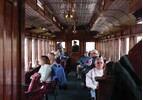
Quick comparison - 1st is a picture is of the interior of a replica J&S car that runs on the 3ft gauge Cumbres & Toltec, former D&RGW, line. I understand theirs are mostly built on former flat car underframes. So overall size unknown compared to originals, but they will be shorter by virtue of their underfame origins (is this where the CMP issues started ?) But they do have restored J&S cars, no people for scale but article here https://www.trains.com/trn/news-rev...ailroad-restores-19th-century-passenger-cars/
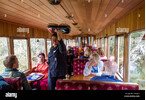
2nd is a similar shot of the interior of a modern Welsh Highland Railway coach that runs on the 20 mile long 2ft gauge line in north Wales. This line has possibly the most generous loading gauge of all UK NG lines, irrespective of track gauge. Their, articulated, Garratt locos measure 8ft across the cylinders, they also use a 2-8-2 non-articulated tender loco on their line (All locos ex' South African Railways).
True, humans in our parts of the world have grown taller, over a number of generations, due to the growing greater abundance of nutritious food to the wider (no pun intended) masses. I live in a house that was built in 1720. I need to be careful in a couple of places not to clip the top of my 6ft frame. Looking at the irregular shape of some of my upper floors and doorframes they have been their a while and not made to meet the needs of loftier folk
C&T J&S replica car interior. Remember you have a clerestory giving the impression of greater size.
WHL modern saloon interior. Note, some Welsh people can be smaller than visiting tourists for scale. (Now I am really in trouble)
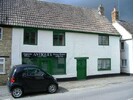
Gnome sweet gnome. It started life in 1720. The ground floor lies 9" below tge level of the pavement. And it stopped being a Antique Shop 26 years ago. The SMART car outside in now a newer 453 white one (2016 vintage)
2nd is a similar shot of the interior of a modern Welsh Highland Railway coach that runs on the 20 mile long 2ft gauge line in north Wales. This line has possibly the most generous loading gauge of all UK NG lines, irrespective of track gauge. Their, articulated, Garratt locos measure 8ft across the cylinders, they also use a 2-8-2 non-articulated tender loco on their line (All locos ex' South African Railways).
True, humans in our parts of the world have grown taller, over a number of generations, due to the growing greater abundance of nutritious food to the wider (no pun intended) masses. I live in a house that was built in 1720. I need to be careful in a couple of places not to clip the top of my 6ft frame. Looking at the irregular shape of some of my upper floors and doorframes they have been their a while and not made to meet the needs of loftier folk
C&T J&S replica car interior. Remember you have a clerestory giving the impression of greater size.
WHL modern saloon interior. Note, some Welsh people can be smaller than visiting tourists for scale. (Now I am really in trouble)
Gnome sweet gnome. It started life in 1720. The ground floor lies 9" below tge level of the pavement. And it stopped being a Antique Shop 26 years ago. The SMART car outside in now a newer 453 white one (2016 vintage)
Last edited:
JohnSol
Registered
Quick comparison - 1st is a picture is of the interior of a replica J&S car that runs on the 3ft gauge Cumbres & Toltec, former D&RGW, line. I understand theirs are mostly built on former flat car underframes. So overall size unknown compared to originals, but they will be shorter by virtue of their underfame origins (is this where the CMP issues started ?) But they do have restored J&S cars, no people for scale but article here https://www.trains.com/trn/news-rev...ailroad-restores-19th-century-passenger-cars/
2nd is a similar shot of the interior of a modern Welsh Highland Railway coach that runs on the 20 mile long 2ft gauge line in north Wales. This line has possibly the most generous loading gauge of all UK NG lines, irrespective of track gauge. Their, articulated, Garratt locos measure 8ft across the cylinders, they also use a 2-8-2 non-articulated tender loco on their line (All locos ex' South African Railways).
True, humans in our parts of the world have grown taller, over a number of generations, due to the growing greater abundance of nutritious food to the wider (no pun intended) masses. I live in a house that was built in 1720. I need to be careful in a couple of places not to clip the top of my 6ft frame. Looking at the irregular shape of some of my upper floors and doorframes they have been their a while and not made to meet the needs of loftier folk
C&T J&S replica car interior. Remember you have a clerestory giving the impression of greater size.
View attachment 350931
WHL modern saloon interior. Note, some Welsh people can be smaller than visiting tourists for scale. (Now I am really in trouble)
View attachment 350932
Gnome sweet gnome. It started life in 1720. The ground floor lies 9" below tge level of the pavement. And it stopped being a Antique Shop 26 years ago. The SMART car outside in now a newer 453 white one (2016 vintage)
View attachment 350933
Nearly all railway modelling is a compromise, in real 1:1 land railways took up acres of space. Apparently an 00 model of Kings Cross in it's entirety would cover at least a couple of tennis courts. So making rolling stock shorter means that shorter platforms etc look about rightThank you one and all for your comments on this subject of scale.
Maxi-Model's example of model train manufactures scaling their models shorter to negotiate model railroads tighter corners is valid. To some extent, I believe this also applies to real world smaller railroads. The two foot gauge railroad in New England is one example. In terms of length, Maxi-Model's example of a local railroad in Devon is clearly valid. However, it terms of height, many of the older buildings in that area, particularly along the coast had doorways and ceiling heights that were suited for smaller, shorter people. For the same reason, I wondered if railroad car makers would have built smaller (shorter in height) railroad cars to accommodate smaller people from such a previous era?
Oh missed the shorter one with a clerestory, do do that I am!Both have clerestories of different heights - that's where the main difference appears to lie.
maxi-model
UK/US/ROW steam narrow gauge railways 1:1
Nearly all railway modelling is a compromise, in real 1:1 land railways took up acres of space. Apparently an 00 model of Kings Cross in it's entirety would cover at least a couple of tennis courts. So making rolling stock shorter means that shorter platforms etc look about right
I want one and I want one now ! A mate of mine is a Buckingham town councillor, I wonder if I can get him to hand the municipal tennis court to me ? Max

Just give Brunel Models a call...I want one and I want one now ! A mate of mine is a Buckingham town councillor, I wonder if I can get him to hand the municipal tennis court to me ? Max

PhilP.
maxi-model
UK/US/ROW steam narrow gauge railways 1:1
So, that will be 8 tennis courts then. MaxJust give Brunel Models a call...
PhilP.
maxi-model
UK/US/ROW steam narrow gauge railways 1:1
Thank you Maxi-Model for the additional resources.
I wonder if the coaches in Knotts Berry Farm are rebuilt to original dimensions? It's been decades since I'd been there and don't really remember the height of the doors. The C-19 locomotive is the sister engine of D&RGW 346
View attachment 350940
This Wikipedia article lays out points about the Knott's Berry Farm railroad. The loco's are the real deal. A couple of the J&S cars are certainly the real deal, like the locos ex' RGS, but I am not sure if they are in "revenue earning" service. Other cars seem to be converted from gondolas, which in turn use flat cars as their basis. Personally I like "prototypical" representations. But then my understanding of what is "prototypical" is limited, like my knowledge. As they say in this hobby, "There is s a prototype for everything". Oh, and they have RGS goose #3. What is not to like ? Max
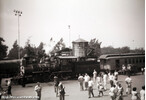
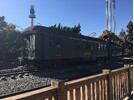
2 genuine ex'RGS J&S cars at Knott's Berry Farm
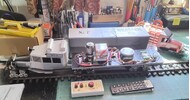
My Goose #7 on the Bench receiving RC Trains singing dancing upgrade. Prop PhillP of this parish. (Anybody want to sell me a #5 ?)
Rhinochugger
Retired Oik
I think you have a slightly beefier speaker than I have in mineThis Wikipedia article lays out points about the Knott's Berry Farm railroad. The loco's are the real deal. A couple of the J&S cars are certainly the real deal, like the locos ex' RGS, but I am not sure if they are in "revenue earning" service. Other cars seem to be converted from gondolas, which in turn use flat cars as their basis. Personally I like "prototypical" representations. But then my understanding of what is "prototypical" is limited, like my knowledge. As they say in this hobby, "There is s a prototype for everything". Oh, and they have RGS goose #3. What is not to like ? Max
2 genuine ex'RGS J&S cars at Knott's Berry Farm
View attachment 350961
My Goose #7 on the Bench receiving RC Trains singing dancing upgrade. Prop PhillP of this parish. (Anybody want to sell me a #5 ?)
View attachment 350962

maxi-model
UK/US/ROW steam narrow gauge railways 1:1
I think you have a slightly beefier speaker than I have in mine
Oh, just something I had bought by mistake that needed a home. As my cat says (highly proficient in English) "If I fits, I sits". Here is a short test video on the rollers. Needs some fine tuning. Max
Similar threads

- Replies
- 29
- Views
- 1K


- Replies
- 10
- Views
- 1K


- Replies
- 17
- Views
- 2K
