Brass track Rail clamps vs joiners

natoanjou

Registered
Country flag
Put together a circular track to test out a couple new locos. (LGB 11000 R1 30º). The track was used so I got rid of the oxidation and track looks good.
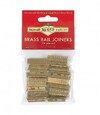
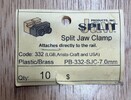
I had an unused bag of SplitJaw rail clamps (pic attached) and clamped the tracks completely with them. They absolutely did not carry voltage to adjoining tracks. Only the powered track and 1 adjacent track carried 25 volts.
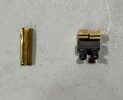
So I ended off dismantling the entire circle and used new Bachman G-Scale Brass Rail Joiners. They worked perfectly.
I'm new to G-scale so some trial and error is involved but I couldn't figure out this problem. I think some rail clamps lock over joiners but these were from a setup that used locking clamps directly on the rails. I cleaned of the bottom side brass on each side where the clamp connects.
It's a lot easier to use joiners but certain connections need clamps.
Any help clearing up this mystery would be much appreciated.
 

Attachments

  • G-Scale (1).jpeg
    G-Scale (1).jpeg
    145.8 KB · Views: 0
  • G-Scale Bachman Joiners.jpeg
    G-Scale Bachman Joiners.jpeg
    54.6 KB · Views: 0
  • G-Scale.jpeg
    G-Scale.jpeg
    98.6 KB · Views: 0
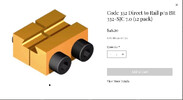
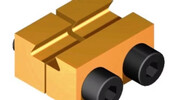
Your split-jaw joiners are insulating joiners. They are not supposed to carry power. These are the conducting type:1758253632877.pngNote how both sides are brass. On yours, the dark material is a plastic insulator. The Bachmann joiners are designed to screw to the rails with screws through the round and elongated holes into tapped holes in the rail web. I have several that I use this way and they work very well at holding alignment and conducting power.
 
Learning experience for you Nat. Those clamps may come in handy in the future if you need isolating sections. In the meantime Massoth or even Piko all brass not isolating are the way to go.
 
Those clamps may come in handy in the future if you need isolating sections. In the meantime Massoth or even Piko all brass not isolating are the way to go.
yes or no. that is a personal choice,
there are many G-scalers, who prefer to stay with Brass Rail Joiners (aka "Fishplates" )

i myself have (LGB) G-scale layouts since 1970 - always with fishplates. but on my upcoming 5th permanent layout i plan to use clamps for connecting turn-outs/switches/points. (makes easier to lift them out for maintenance/repair)
why did i stay over 50 years with fishplates? - two reasons: connecting with fishplates is easy to connect and disconnect when i got a new layout of track in my head and they cost less in money or work, than the other options.

(or you could solder your rails directly together. or solder short pieces of wire between rails ("jumpers"), or or you can run cables/bus beside the track and connect that to each piece of track, or, or, or... )

it is your railway - it has to please you, nobody else.
 
What a great forum. G-scale is petering off near me in south Jersey. Thank you all for the help.
I realize now that instead of using the clamps from the container I was given, these were new in a separate bag.
Even though I cleaned some of the existing clamps which were all brass, I didn't use those. I didn't realize that the split jaw's solid half was plastic.
Schooled!
 
Last edited:
What a great forum. G-scale is petering off near me in south Jersey. Thank you all for the help.
I realize now that instead of using the clamps from the container I was given, these were new in a separate bag.
Even though I cleaned some of the existing clamps which were all brass, I didn't use those. I didn't realize that the split jaw's solid half was plastic.
Schooled!

I'll be truthish and admiterate that I didn't know that Split-Jaws made insulating joiners. All mine are brass, since I only run live steam or battery-powered stuff.
 
I'll be truthish and admiterate that I didn't know that Split-Jaws made insulating joiners. All mine are brass, since I only run live steam or battery-powered stuff.
All of the clamp makers do Insulated ones, even Hillman back in the day. 2 types for LGB and Peco rails but obviously not for the over fishplate ones in their range of 3 uses.
 
All of the clamp makers do Insulated ones, even Hillman back in the day. 2 types for LGB and Peco rails but obviously not for the over fishplate ones in their range of 3 uses.

I'm sure they do, but I just walked into Split-jaw, told them I wanted joiners for running live steam and they took $250 off me right there. Discount for cash, he said. ;)
 
I'm sure they do, but I just walked into Split-jaw, told them I wanted joiners for running live steam and they took $250 off me right there. Discount for cash, he said. ;)
Depends on the year, I got my first lot Hillman in USA prior to 1994 so nothing like the price these days. Though I reckon Massoth best value and product, so easy to fit.
 
Alright
All of the clamp makers do Insulated ones, even Hillman back in the day. 2 types for LGB and Peco rails but obviously not for the over fishplate ones in their range of 3 uses.
definitely considered battery but not familiar with steam. Do you mean actual Steam model loco?
 
The thing about clamps though not needed for live steam, they do give some element of security as it would look a bit obvious running down the road with say a 30ft loop of track. Also they do stop separation of the rails with running though KGB make under join plastic parts to help contain that. Not sure if other makes do, Peco certainly do not.
 
Live steam not cheap but addictive if you get into it. Locos are mostly gas fired but some use actual coal. Great variety available both types and scales. Worth getting involved with a local garden railroad or model engineering group before buying anything. By the time you have added battery/rc/sound to a conventional loco you are getting up to the price of a good entry level live steamer. Max

My live steam "Vale of Rheidol" 2-6-2 letting off steam on a chilly day.

VoR Loco 007.jpg
 
Wow. Beautiful. I red into it and it requires some effort to get parts needed to convert. Someone recommended 3D printing.
 
You *can* use 3D printed parts to embellish a live-steam loco, but have to be aware things can get quite warm!

White-metal, turned (or cast) brass, may be 'better' for some parts / locations?

PhilP.
 
You *can* use 3D printed parts to embellish a live-steam loco, but have to be aware things can get quite warm!

White-metal, turned (or cast) brass, may be 'better' for some parts / locations?

PhilP.
Some white metal WILL melt in boiling water!!
 
Back
Top Bottom