Hello from London Ontario Canada

Kirk Lambeth

Registered
Just starting to install a ceiling track. Going to have question on track switching. On concealing wires for track switching. I am still putting backing in for the track. I am just wondering has someone did this?

 
I guess you could use plastic trunking. In the UK, we can buy this from DIY stores. It's about 10mm high and 13mm wide, with a snap on lid.

On a ceiling layout, this would be hidden by the track if it is positioned behind it....
 
Welcome along and glad to see you posting already. Questions? You came to the right place with experience and ideas aplenty among the members along with a great desire to help, just remember that the only daft question is the one that was never asked.
Ignore what some doomsayers say about the humour here, all sound and perfectly normal for children of our age.
Above all have fun!
 
Hi Kirk, and welcome to the Forum! Another solution would be to use battery powered remote control for your locos. Most locomotives can be converted. It's probably worth seeing if there are other people running large-scale trains in your area, as you could then see what they run. There's no one right way to do things, after all.
 
Hi Kirk, and welcome to the Forum! Another solution would be to use battery powered remote control for your locos. Most locomotives can be converted. It's probably worth seeing if there are other people running large-scale trains in your area, as you could then see what they run. There's no one right way to do things, after all.
Thanks for you advice. Being new into this look like I will have to do some research.
 
Thanks , I will check a electronic store or electric wholesaler.
Welcome to the Forum Kirk.

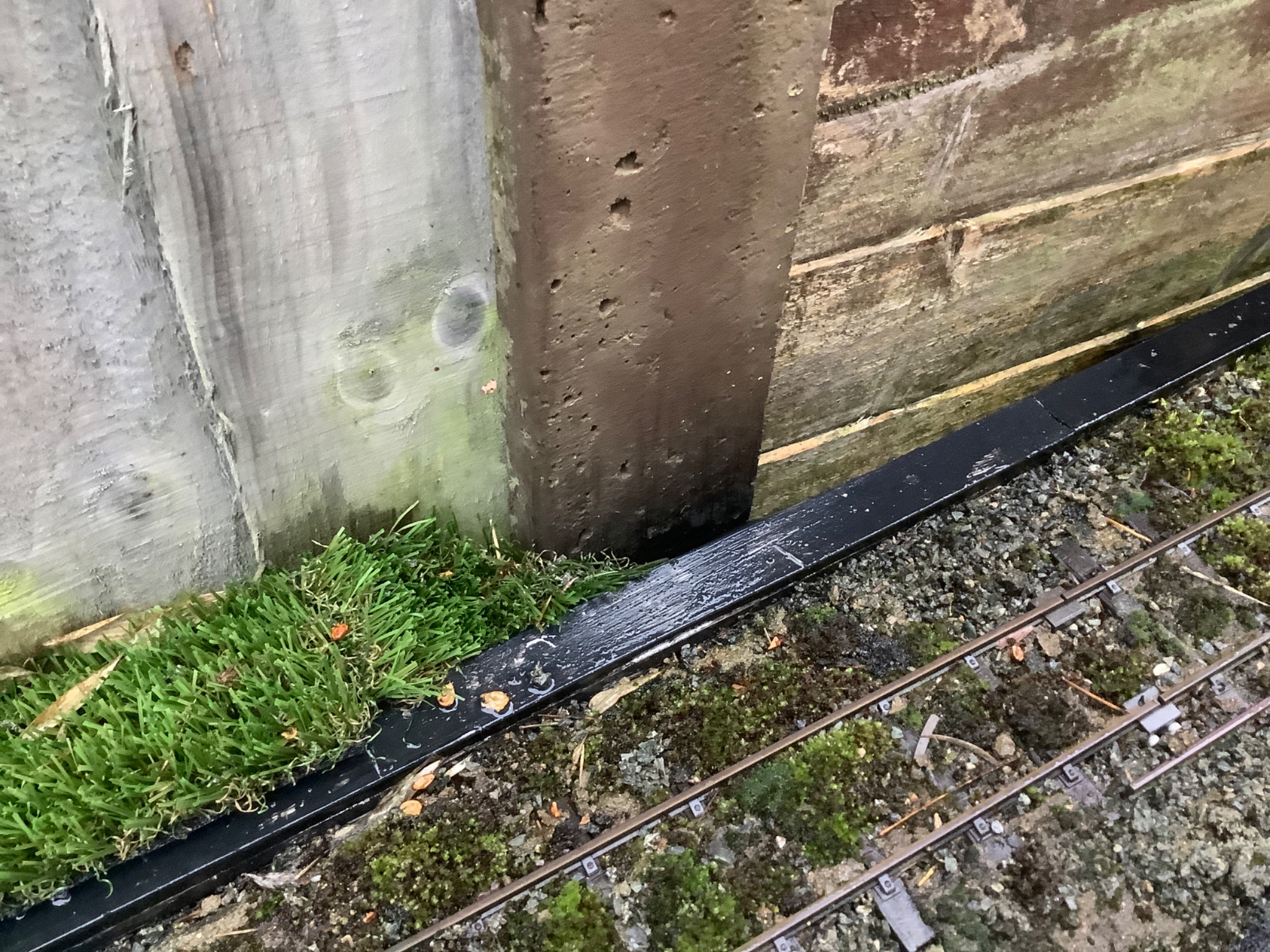
I use trunking for wires works very well and with lid being removable makes life easy for alterations. This trunking that I have sprayed black is around 1inch by 1/2inch deep. Smaller is available and I use that elsewhere on the layout. To hold in place in your situation you should get away with using the ‘self adhesive’ type, more expensive but will save you the hassle of pre drilling and using small pins. I cut gaps in the side (around 1/4inch) for the wires to exit with a Junior Hacksaw, jut cut 2 cuts then bend the plastic to break it off.
image.jpg
 
Hi Kirk, and welcome to the Forum! Another solution would be to use battery powered remote control for your locos. Most locomotives can be converted. It's probably worth seeing if there are other people running large-scale trains in your area, as you could then see what they run. There's no one right way to do things, after all.
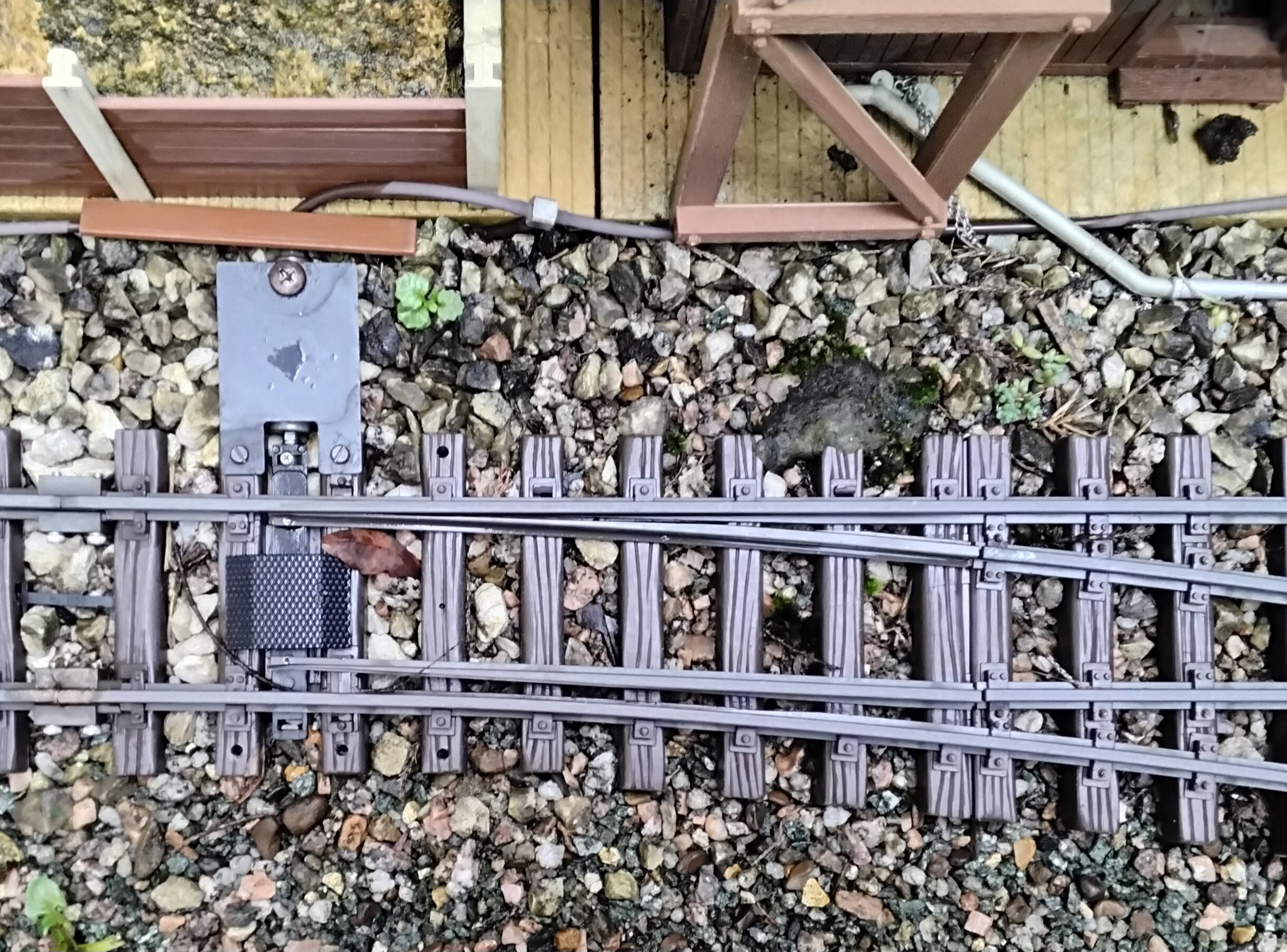
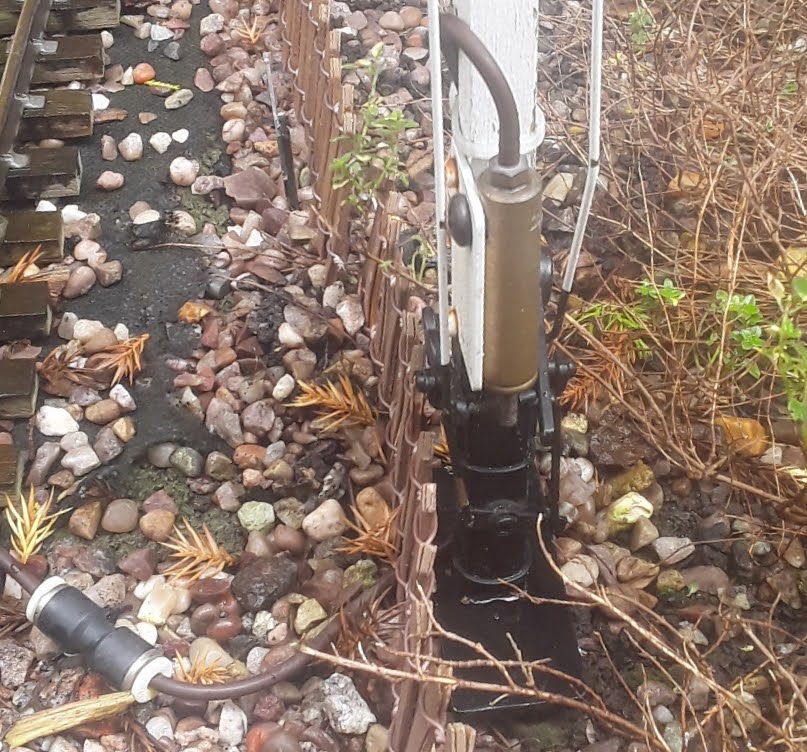
As an alternative there are also air power for points/switches rather than wired in electric or manual. Singnals can also be operated the same way. "Cables" are 2 mm dia (1.6 id) flexible tubing. Ok, I run outdoors which is an added issue with wired electrics but I gave up on those and went air powered over 10 years ago. Why ? These are very reliable and offer a more positive operation compared to electric. Only needs a little, silent (air brush), compressor with a 1lt reciever tank attached. This runs periodically to maintain the 30 psi operating pressure a system like this needs. You can even use an old car tyre to pressurise instead. My line has 11 switches, with linked signaling to power. Works out not much more cost than a load of LGB point motors and swtich gear. Dunnyrail here can probably tell you more if you are interested. Max

Air powered point motor in-situ on LGB R5 radius switch. These straight drop ins to fit LGB, Piko, USAT and other compatible makes of switches.
20260211_112510.jpg
Detail of Klippard pneumatic motor based (from Sunset Valley Railroad, US based supplier) air powered signal application. Same pneumatic "motor" is used to actuate a switch, which is "inline" to this one to actuate and show direction point is set to.
20210808_132736.jpg
 
Last edited:
I do like the use of pneumatic. Do you have any problems' with water in the air? I guess I could or should put a dryer on the air.
Ah, that's not me, I'm currently using DDC - Direct Digital Control - you want this post:
 
I do like the use of pneumatic. Do you have any problems' with water in the air? I guess I could or should put a dryer on the air.
There is a water trap, usually as standard, supplied with compressors, even the small ones. It's a closed system so there should be no issues with condensation. My simple pneumatic system spreads over my garden, to feed all the switches and signals. I've use about 500 ft of piping so far. You do not need a big compressor or receiver tank to run this. The air volume in the system is actually very small, as is the amount exhausted when an actuator is operated. When the compressor is switched on it's all operable in around 30 seconds. I can actually watch the switches move back into my defaults for the layout as it powers up. Depending on how often you move switches the compressor will start up for a short period to bring the receiver tank back up to pressure to keep things at 30 psi. In one place I have got 4 switches that are set to operate in unison at a crossing (my layout is reverse figure 8). Other combinations are used on sidings and passing loops. All that little lot has been down over 10 years, no leaks or issues so far. I use simple QR connectors so I can remove items, if needed, for maintenance. I just pop in a small section of pipe, on the open end of the QR connector, that is capped to stop any condensation going in when doing this. You can see one in bottom left of picture of signal. Max

Pneumatics Archives My initial supplier, they now have UK agent I use.

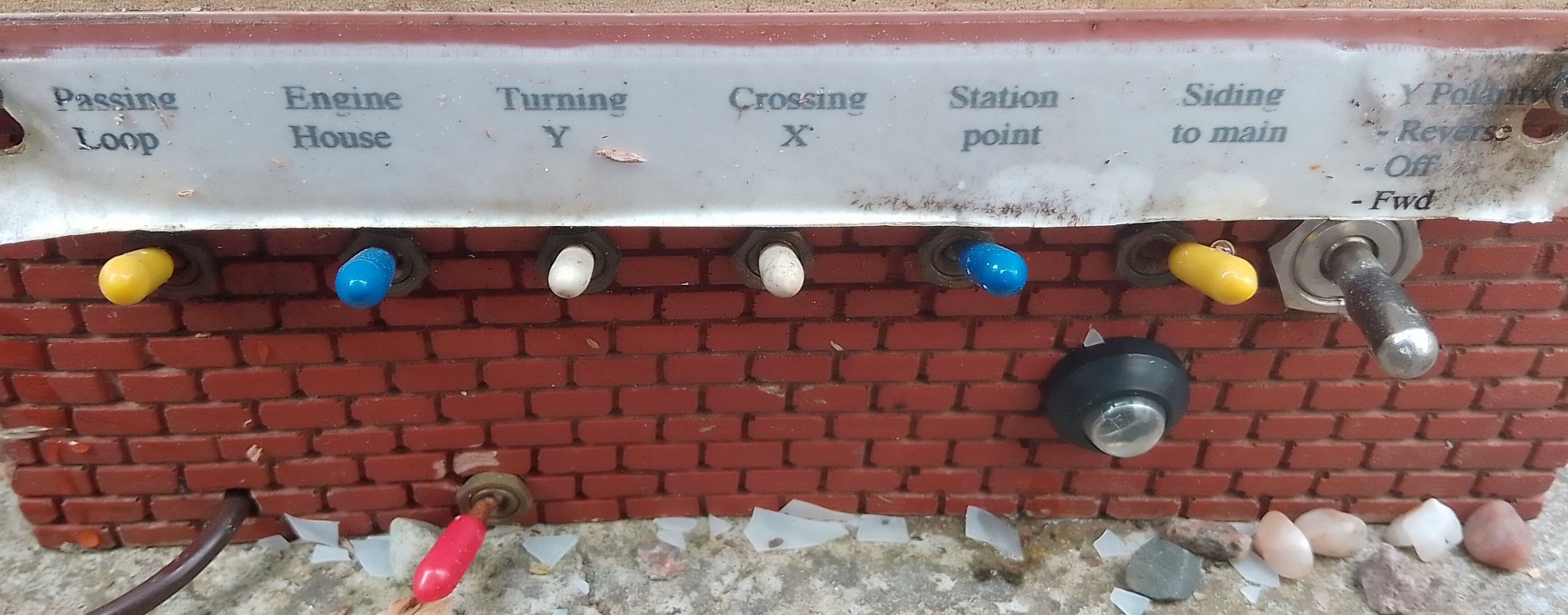
The back of my little signal box. This houses the toggle switches that actuate the individual or grouped parts of my system. Big switch is a hangover from my track powered days - used to reverse polarity of track in my turning Y .
IMG_20230621_101726_595~2.jpg

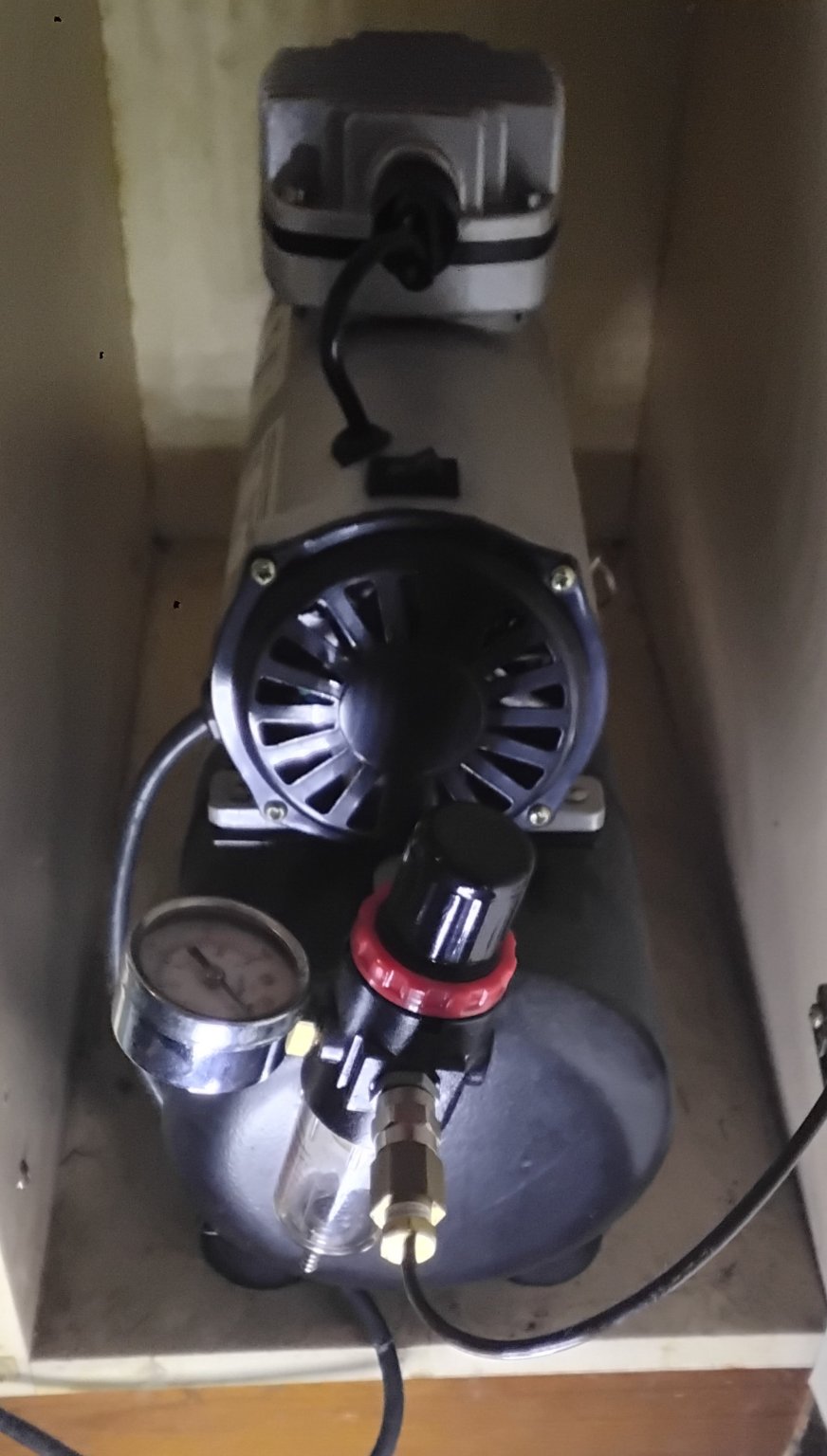
Compressor in its hidey hole in the kitchen. It's actually a 3ltr receiver with this compressor, with its heat sink on top, that this one is sitting on. The water trap is the glass bowl at front. Pressure gauge and dial to set pressure at desired 30 psi level is there too. Note the size of the pipe feeding the system, same as the rest, 2mm od/1.6 mm id.

20260211_183556.jpg
 
Last edited:
Like Max I am sold on Air or Pneumatic operation of points and signals on my line. What I like about it is the simplicity if doing revisions. A year or two back I had to move a control panel as there was one for a high level station and one for a low level yard ine panel above the other. Confused the hell out of visitors so I moved the upper panel along the board by 10 feet. Sorting out the air lines took around an hour that would probably have been near a days work with electrically operated points. As Max says by the time you price it all up there probably is not a lot to choose cost wise between the two, though currently we only have to the best of my knowledge one supplier these days which is dare I say it just across the boder from you.
 
Back
Top Bottom