Chris Vernell
Three score and nineteen

BTDT 


Some of my best tools are the ones I made at school. My machine vice is now 50 years old, and still works a treat.oh, yeah, it takes decades to grow together with one's tools.
some of my most used tools are inherited from my father and grandfather.


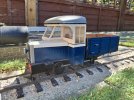
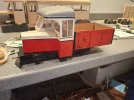
 ) and then detailing...
 There are a few bugs to iron out, but it's making progress.
Your versions are a bit neater than mineWell, a quick measure up scuppered any plans for an Appletree motor/gearbox, so I had a look at the other options: mostly 3D printed, with nylon gears. And then there were the £100+ options. Looking at them, it struck me that what was needed was effectively a box section, and I had a motor and worm gear (condition unknown) in my box of bits...
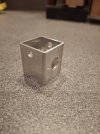
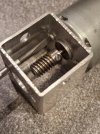
I then discovered a lengthy of 25mm square aluminium, which got marked out, and drilled to take a Como 385 motor, and the 3/16th" axles.
View attachment 355936
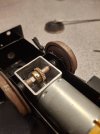
The motor was fitted to it:
View attachment 355937
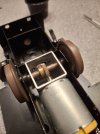
...and the pinion gear aligned and tightened.
View attachment 355938
A power pack was attached and....success!
View attachment 355939There are a few bugs to iron out, but it's making progress.
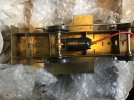
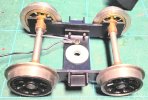
This is what the underside of a county Donegal railcar no 10 llooks like from the same supplier.Well, a quick measure up scuppered any plans for an Appletree motor/gearbox, so I had a look at the other options: mostly 3D printed, with nylon gears. And then there were the £100+ options. Looking at them, it struck me that what was needed was effectively a box section, and I had a motor and worm gear (condition unknown) in my box of bits...
I then discovered a lengthy of 25mm square aluminium, which got marked out, and drilled to take a Como 385 motor, and the 3/16th" axles.
View attachment 355936
The motor was fitted to it:
View attachment 355937
...and the pinion gear aligned and tightened.
View attachment 355938
A power pack was attached and....success!
View attachment 355939There are a few bugs to iron out, but it's making progress.
It will be !Now why isn't that wire fed through the hole in the stretcher?
PhilP.

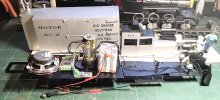

Hm could it be that the nearside is plastic or some other insulated material and the other metal? The cross piece would also need to be insulated material as well.So, next up in the RC/battery/sound conversion queue - Accucraft Goose #2. Body off. General arrangement of bits to install. Like Goose #7 all supplied by RC Trains. Looks very sound with little use. Bought in original track powered condition, unlike #7. Not seen this pick up arrangement before, see picture. Single wire rubbing against an axle, one polarity rear the other on front.How does that work in the axle insulation dept ? Or am I as usual being very dumb, as usual. Anyhow it does not matter given what I am doing. Now where are those pictures of #7 install ? Max
View attachment 355964
View attachment 355965
Thanks -that's really useful! You've got a smaller motor -I had to remove the chassis stretcher in order to fit the Como motor, so it's currently more like a nose-hung tramway traction motor.This is what the underside of a county Donegal railcar no 10 llooks like from the same supplier.
Quite common with Accucraft models, harks back to the days of metal chassis used in smaller scale modellingSo, next up in the RC/battery/sound conversion queue - Accucraft Goose #2. Body off. General arrangement of bits to install. Like Goose #7 all supplied by RC Trains. Looks very sound with little use. Bought in original track powered condition, unlike #7. Not seen this pick up arrangement before, see picture. Single wire rubbing against an axle, one polarity rear the other on front.How does that work in the axle insulation dept ? Or am I as usual being very dumb, as usual. Anyhow it does not matter given what I am doing. Now where are those pictures of #7 install ? Max
View attachment 355964
View attachment 355965
I think that the white nylon bearing is doing the insulating/isolating job. It's the same on the rear powered bogie, that also swivels in its mount. I would hate to think how it would perform on a less than perfectly conductive track. Like mine was, as I found out, becoming. My Goose #7 arrived converted to battery operation so most evidence was lost. And though my Accucraft K-27 uses different pick ups it had a similar "lopsided" arrangement shared between loco and tender. That one's erratic performance started my "battery odyssey". Now I understand why. MaxHm could it be that the nearside is plastic or some other insulated material and the other metal? The cross piece would also need to be insulated material as well.
Indeed so, good to have another convert to the battery cause. I cant imagine now cleaning my track any more even though it is not at ground level.I think that the white nylon bearing is doing the insulating/isolating job. It's the same on the rear powered bogie, that also swivels in its mount. I would hate to think how it would perform on a less than perfectly conductive track. Like mine was, as I found out, becoming. My Goose #7 arrived converted to battery operation so most evidence was lost. And though my Accucraft K-27 uses different pick ups it had a similar "lopsided" arrangement shared between loco and tender. That one's erratic performance started my "battery odyssey". Now I understand why. Max
Yep, the obvious drawback of such a system is that it halves the number of electrical pick-up points, and as we all know, 'points make prizes.'I think that the white nylon bearing is doing the insulating/isolating job. It's the same on the rear powered bogie, that also swivels in its mount. I would hate to think how it would perform on a less than perfectly conductive track. Like mine was, as I found out, becoming. My Goose #7 arrived converted to battery operation so most evidence was lost. And though my Accucraft K-27 uses different pick ups it had a similar "lopsided" arrangement shared between loco and tender. That one's erratic performance started my "battery odyssey". Now I understand why. Max


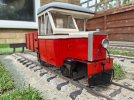

Looking forward to see the railcar finished next thenWhat a difference a week makes!

I looks like I can fit two Strikalite AAA x 5 battery packs, one under the bonnet and the other over the rear axle; and the MR603 right at the rear. I'll wire them in series to get 12V; I don't need a long run time. I hope to use a cam-operated microswitch for on/off, using the starting handle in a similar way to the ratchet brake on MER tram No 23...In wagon bit with a Tarp cover like mine?