
beavercreek
Travel, Art, Theatre, Music, Photography, Trains

I have used Aristocraft/Crest Train Engineer (DC) RC since the old days (for me, 20 years ago) when it was produced by Aristocraft. It was a goodly RC system of control for DC layouts mainly using trackside power units to feed the rails. You could run different sections of the layout but they had to be totally separated electrically from each other with a power unit RX for each section. There was an on board receiver for use in a loco with a battery but they did have their issues.
Aristocraft/Crest then replaced the old DC system with a new one named 'TE Revolution'. Nice handset, two way signal RX/TX so that you had feedback on a screen of what was going on, RX modules for individual locos, the ability to control different locos if using battery.
Aristocraft went to the wall but the Crest part of the business continued with a guy called Navin who had worked for Aristocraft.
Crest became Precision RC who produced new and updated items for the TE Revolution DC system.
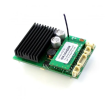
Then they produced the DCC version which enabled locos with DCC decoders to run on batteries while controlled by a single handset with no 'Central Controller' supplying power to the rails needed. This is called a 'dead rail' system. The TE handset controls the DCC decoder via the TE DCC RX board and the handset allows the changing of DCC CVs etc. This was/is a reasonably priced but excellent system with a good handset, good RX boards with a decent feedback screen.
They also marketed a USB programmer to update firmware on the handset TX and the reciever RX.
I have also used their DCC control system and it works very well indeed.
But...
going by the sparse population of boards and handsets on the Precision RC website it looks like the Revolution journey may be over (the DCC receiver is out of stock and the DCC handset is not even listed any more.
There are other systems for RC control of DCC eg FossWorks or the expensive Airwire system, but it is like chalk and cheese when comparing the possibilities and functionality that Revolution provided to that of Fossworks as well as the quality of the kit and the power handling that big locos (mainly heavy current diesels USA Trains and Aristocraft etc.) need.
As I have invested in TE Revolution (DC and DCC) and I have spare hand sets as well as spare DC and DCC receivers, I should hopefully be okay into the future but it would be a shame to see yet another manufacturer within our hobby go to the wall.
Precision RC website: Train Engineer Revolution
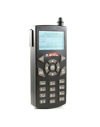
Aristocraft/Crest then replaced the old DC system with a new one named 'TE Revolution'. Nice handset, two way signal RX/TX so that you had feedback on a screen of what was going on, RX modules for individual locos, the ability to control different locos if using battery.
Aristocraft went to the wall but the Crest part of the business continued with a guy called Navin who had worked for Aristocraft.
Crest became Precision RC who produced new and updated items for the TE Revolution DC system.
Then they produced the DCC version which enabled locos with DCC decoders to run on batteries while controlled by a single handset with no 'Central Controller' supplying power to the rails needed. This is called a 'dead rail' system. The TE handset controls the DCC decoder via the TE DCC RX board and the handset allows the changing of DCC CVs etc. This was/is a reasonably priced but excellent system with a good handset, good RX boards with a decent feedback screen.
They also marketed a USB programmer to update firmware on the handset TX and the reciever RX.
I have also used their DCC control system and it works very well indeed.
But...
going by the sparse population of boards and handsets on the Precision RC website it looks like the Revolution journey may be over (the DCC receiver is out of stock and the DCC handset is not even listed any more.
There are other systems for RC control of DCC eg FossWorks or the expensive Airwire system, but it is like chalk and cheese when comparing the possibilities and functionality that Revolution provided to that of Fossworks as well as the quality of the kit and the power handling that big locos (mainly heavy current diesels USA Trains and Aristocraft etc.) need.
As I have invested in TE Revolution (DC and DCC) and I have spare hand sets as well as spare DC and DCC receivers, I should hopefully be okay into the future but it would be a shame to see yet another manufacturer within our hobby go to the wall.
Precision RC website: Train Engineer Revolution
Last edited by a moderator:


 Thanks, Max.


