Pickup power issue for lighting passenger cars

Eugbro

Registered
Country flag
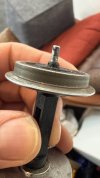
Im have issues with wheel pickup arcing the voltage of my power supply and as you can see in the picture it looks like its cooking the wheels, the internal of the wheels feel rough. I have also tried the old carbon pickups in the inner wheel, same result. What am I doing wrong there?


IMG_9146.JPG
 
Hi mate, I have a meter attached to the track and when the lights keep flickering (dirty track), the amps increase/spike from the usual 1 amp to 6-8amp... also the wheels look like they are burnt aka fried a bit! I wouldn't think dirty track would do this, besides maybe make the lights flicker a bit, but not cause voltage spikes and cook the wheels/internal mechanisms... I run the train/power 24/7... Im thinking I might just run lighting power from the loco power socket instead... Unless anyone had an idea on what was happening here!
 
I have these Accucraft ball bearing axle units and not seen a similar problem. But then mine are little used. Sounds like a short somewhere in the axle housing/mechanism causing a short across the two rails. Clean the axles/bearings out with a piped contact cleaner spray ? (Non plasic solvent type) And check the bogies for any stray contamination across the frames. Also have a look at the internal lighting wiring in the car and at the voltage regulator that should be there in case anything loose or causing a short.
 
They look filthy..
Dirty rails and wheels do not work well.
If things are dirty the resistance to current flow will increase, so you will draw less current.

Spiking to 6-8 Amps is more like a short circuit/fault condition.

Break the problem down:
Clean the track.
Clean wheels and pickups.
Start with just one loco, no stock.. - Do you get the problem on one section of track? Is the problem repeatable? Is this crossing a point (turnout)? Reverse loop? Some other 'section detection or switch?

If all are is well, repeat with one consist / set of carriages..

If the fault occurs:
Split the carriages (if possible) see if one half is OK, the other one not. Then break the faulty set down, to isolate where the fault is.

Good luck,
PhilP.
 
This problem originates from running your track while here is a thin layer of (sand) dust on top it from each small rain shower.
What happens is a frequent on/of contact between track and wheel caused by the tiny sand dust particles causing a so called "Pit-Corrosion"
Each time when the wheel drops on the rails a spark is made by the initiation of new electric contact causing a little bit of your wheel and your track to "vapourise".
The solution to prevent this lies in a few measures:
1 First of all clean your track after each rain shower, best to be done using a cleaning wagon.
2 Apply a copper braided wire to take the electricity from your wheels from the top of the wheels. (see the relevant part of our book) . They keep your wheels clean.
 

Attachments

Back
Top Bottom