New Live Steam 12x6 Modular Layout but need 12x6 Plywood.

As sagely mentioned above, If your loco uses alcohol, definitely consider some sort of metal covering in your steam up/light the thing area. Bear in mind that spilled alcohol/meths can burn, a faint, sometimes hard to see blue.


Even butane is an issue, as it can ‘pool’ under the loco. Eg, gas ‘on’, your fiddling with the lighter amd valve before the fire actually starts. Can be rather ‘stimulating’lol.typically nothing more than a ‘poof’ flash and gone. Possibly too, hair on your hands or eyebrows….lol.

A container / large spray bottle of water at hand can also be helpful if you’re concerned about the extinguisher. Rather less contained/effective, but better than nothing.
 
Last edited:
It is usual for extinguishers to be tested/inspected at regular intervals..

PhilP.
It is a a legal requirement for testing of pressure vessels (including fire extinguishers) in a public place.
 
Hello,

Thank you for providing additional information. I have recently upgraded my table to a 13x7 size. The builder mentioned the presence of a built-in center, but I am unsure of its specific function.

Given this upgrade, I am considering expanding my layout. The tracks are 45mm in diameter and feature an oval in HO Live Steam on both sides. Additionally, I am interested in using homosote or a similar material for the interior of the oval.

I am particularly interested in creating a quieter environment. Furthermore, I will not be installing any scenery.

Please let me know if you have any further recommendations or insights.
 
Hello,

Thank you for providing additional information. I have recently upgraded my table to a 13x7 size. The builder mentioned the presence of a built-in center, but I am unsure of its specific function.

Given this upgrade, I am considering expanding my layout. The tracks are 45mm in diameter and feature an oval in HO Live Steam on both sides. Additionally, I am interested in using homosote or a similar material for the interior of the oval.

I am particularly interested in creating a quieter environment. Furthermore, I will not be installing any scenery.


Please let me know if you have any further recommendations or insights.
What your supplier is talking about is a location inside the layout where you can get to so that you can get to all parts of the layout, 2x2’6” is about as far as the average person can reach without leaning across the layout. If your line was located next to a wall you would not be able to reach across without actually being on the table…not the best of plans particularly with live steam that can and does occasionally stop in unexpected locations.
 
I do not expose my vessel in public. I thought boilers (pressure vessel ?) under 1ltr capacity were exempt ? Max
Yes they are, but it is recommended by the 16mm that you at least do an annual test and record that you have. Critical to this is the Preasure Gauge. It ideally should have a red line for the blow off point. So assuming this is correct. Link to 16mm self testing routine.
 
Hello,

Thank you for providing additional information. I have recently upgraded my table to a 13x7 size. The builder mentioned the presence of a built-in center, but I am unsure of its specific function.

Given this upgrade, I am considering expanding my layout. The tracks are 45mm in diameter and feature an oval in HO Live Steam on both sides. Additionally, I am interested in using homosote or a similar material for the interior of the oval.

I am particularly interested in creating a quieter environment. Furthermore, I will not be installing any scenery.


Please let me know if you have any further recommendations or insights.

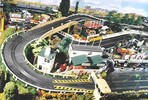
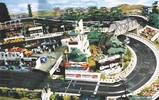
I do have a test indoor layout for OO9 (OO on 9mm N gauge track). A little smaller than your intended set up. Below a comparison between the same loco and stock, L&B Manning Wardell 2-6-2, in both 16mm/1:19 and 4mm/1:76 scales. It's quite a difference ! I will be incorporating OO on 16.5 mm gauge when I get the whole thing done properly. I bought some nifty Tillig dual gauge 16.5/9 mm track, inc switches, to mix the two up. Max

Now the little lady is 16mm scale and the little loco 4mm. So 1:4. But the track gauge ratio is 1:5. So that's around a 10.5" miniature railway then :wasntme: I love it when show layouts mix scales to create a model railway within a full size one.
 
Last edited:
What your supplier is talking about is a location inside the layout where you can get to so that you can get to all parts of the layout, 2x2’6” is about as far as the average person can reach without leaning across the layout. If your line was located next to a wall you would not be able to reach across without actually being on the table…not the best of plans particularly with live steam that can and does occasionally stop in unexpected locations.
I know that feeling. My old slot car layout. It paid for the garden railway 20 years ago. Ebay and PayPal a wonderfull thing. Max
Track East Grand bridge.jpgTrack East Parabolica.jpg0
 
I do not expose my vessel in public. I thought boilers (pressure vessel ?) under 1ltr capacity were exempt ? Max
As the comment was in reference to the fire extinguisher..
Compare it to a litre bottle of Robinson.
'It's a litre bit more..' as the advert went.

I acquired several extinguishers, in a previous existence. Been in one smoke-filled building, and one boat, where I was close enough to feel the heat, and end up oily and smokey..
So I have an 'interest' in knowing these things are probably going to work.

PhilP.
 
We are talking fire extinguishers!!!
You did mention "Pressure Vessels" Jimmy, so I took that bit probably a little bit too literally. Sorry. As to my own vessel it only extiguishes fires after a good session down the Village Arms. I did ask Google AI "Is a boiler a pressure vessel ?" The answer was
Reading the 16 mm AGM guidelines made me chuckle. A red line on a loco's pessure gauge ? Never seen one. Testing annually ? Only when I light up for a sesssion. OK, it is then I do the "is it leaking ?" and "oh my god it's showing 75 psi and the safety valve hasn't lifted !" bit. Time to test the safety valve/guage.

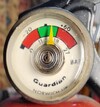
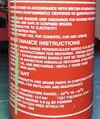
Note to OP. This is an example of extrame thread drifting. I promise I will never post another picture of a 30 year old extiguisher again. Without any qualifications. I really should read the instructions :wasntme: Shown below. Max

20260208_104938.jpg

20260208_104413.jpg
 
You did mention "Pressure Vessels" Jimmy, so I took that bit probably a little bit too literally. Sorry. As to my own vessel it only extiguishes fires after a good session down the Village Arms. I did ask Google AI "Is a boiler a pressure vessel ?" The answer was
Reading the 16 mm AGM guidelines made me chuckle. A red line on a loco's pessure gauge ? Never seen one. Testing annually ? Only when I light up for a sesssion. OK, it is then I do the "is it leaking ?" and "oh my god it's showing 75 psi and the safety valve hasn't lifted !" bit. Time to test the safety valve/guage.

Note to OP. This is an example of extrame thread drifting. I promise I will never post another picture of a 30 year old extiguisher again. Without any qualifications. I really should read the instructions :wasntme: Shown below. Max

View attachment 352916

View attachment 352915
This what I use to have to work to as an authorised BS tester, inspector, and certifier.

 
You did mention "Pressure Vessels" Jimmy, so I took that bit probably a little bit too literally. Sorry. As to my own vessel it only extiguishes fires after a good session down the Village Arms. I did ask Google AI "Is a boiler a pressure vessel ?" The answer was
Reading the 16 mm AGM guidelines made me chuckle. A red line on a loco's pessure gauge ? Never seen one. Testing annually ? Only when I light up for a sesssion. OK, it is then I do the "is it leaking ?" and "oh my god it's showing 75 psi and the safety valve hasn't lifted !" bit. Time to test the safety valve/guage.

Note to OP. This is an example of extrame thread drifting. I promise I will never post another picture of a 30 year old extiguisher again. Without any qualifications. I really should read the instructions :wasntme: Shown below. Max

View attachment 352916

View attachment 352915
Ah well you never had any of your locomotives tested by me and Tim at Ridgmont. Gauge tested on an annually calibrated test gauge then your gauge dismantled to put a red line on at the locomotives blow off pressure (normally 40psi on Roundhouse locs).
 
Re sound deadening.

Cork is cheap, easilyworked, fairly effective at reducing noise. I would imagine ho or o scale, doubled up width and layer-wise ought to be somewhat economical. Im sure there are other options for sound reduction. There may be coarse bulletin board style sheets at a hardware store.

Have no idea, havent tried, but dense closed cell foam, like cheapy camping pads, might be an option.

Fwiw, the table framework, with the suspended surface, may make the homasote or plywood board act like a soundboard.. homasote , is very stiff, dense,and less resonant by far and very heavy, for any given thickness, should be fairly sound deadening. It think it will need more support to reduce sagging over time . It also absorbs moisture, and can chip.

Good luck.
 
Last edited:
ok, i think it's party-pooper time again.

gentlemen, do you realise, how many thousands of pounds, dollars or other clam-shells you have invested into your/our hobby?
compare that with the prices of fire extinguishers.

if i peck now on Maxi, that is not meant personal, but meant for all. (he just happened to give me points, where to hook in)

some facts:
the difference between a fire in the house and a house-fire is decided during the first about 15 minutes after the first spark/flame.
(so, don't wait too long to call the fire dept, they need about ten minutes minimum to come)

the extinguisher, that Maxi showed us, is a joke. eh, i wanted to say a car-extinguisher. these help, when you burn the seat with a cigarette butt. for a burning tyre, or a burning motor, or (old fashioned lead) battery - you got better chances heaping sand upon the fire, or peeing on it.
these car extinguishers, have about a litre/quart of content. four parts gas and one part powder. if they are in top condition, they give you between 10 and 15 seconds of spray.

the pics of that little extinguisher show me, that it has been well guarded in a drawer or box.
when a fire starts, the brain enters in panic-mode. no good state to think, where the extinguisher might be guarded.
that black structure is a support - to screw the thing to a wall (best beside the door grip, or the light switch, where it gets seen so often, that your subconscious knows, where it is) (and don't use it as coat-hanger)

that thing being so old, as the label says, the best, you can do, is throw it out of the window. (or have it recharged and put it as back-up into your car)

what needs a fire? - heat/temperature, oxygen and fuel/material.
what is in these ABC extinguishers? - chemical powder/dust to hinder oxygen to reach the heated fuel. plus gas to press the powder out of the extinguisher.
the dust is heavier, than the gas. it settles down, being very fine it builds a solid lump. you use the extinguisher all the gas gets out, but only part of the needed dust. (solution: bang the extinguisher sideways against something hard (floor/wall) than shake it before use)
these small (car-)extinguishers have one (one only) big advantage: less dust to clean up, if the house still stands.

there is another option.
BC gas-extinguishers. they contain CO² and do nothing else, than lower the temperature extremely under the ignition point of most materials. (advantage - NO dust in computers or other delicate things, like a layout)

so, back to the beginning:
how many thousands of pounds, dollars and hours you have invested into your/our hobby?
compare that with the prices of fire extinguishers.

whichever you prefer, you should have per floor at least one extinguisher of one or two gallons/4 to 8 litres.

my personal preference is, to have an equal quantity of ABC and of BC extinguishers in the house.

/rant over

ps: those with too much time on hand might take a look here:
 
ok, i think it's party-pooper time again.

gentlemen, do you realise, how many thousands of pounds, dollars or other clam-shells you have invested into your/our hobby?
compare that with the prices of fire extinguishers.

if i peck now on Maxi, that is not meant personal, but meant for all. (he just happened to give me points, where to hook in)

some facts:
the difference between a fire in the house and a house-fire is decided during the first about 15 minutes after the first spark/flame.
(so, don't wait too long to call the fire dept, they need about ten minutes minimum to come)

the extinguisher, that Maxi showed us, is a joke. eh, i wanted to say a car-extinguisher. these help, when you burn the seat with a cigarette butt. for a burning tyre, or a burning motor, or (old fashioned lead) battery - you got better chances heaping sand upon the fire, or peeing on it.
these car extinguishers, have about a litre/quart of content. four parts gas and one part powder. if they are in top condition, they give you between 10 and 15 seconds of spray.

the pics of that little extinguisher show me, that it has been well guarded in a drawer or box.
when a fire starts, the brain enters in panic-mode. no good state to think, where the extinguisher might be guarded.
that black structure is a support - to screw the thing to a wall (best beside the door grip, or the light switch, where it gets seen so often, that your subconscious knows, where it is) (and don't use it as coat-hanger)

that thing being so old, as the label says, the best, you can do, is throw it out of the window. (or have it recharged and put it as back-up into your car)

what needs a fire? - heat/temperature, oxygen and fuel/material.
what is in these ABC extinguishers? - chemical powder/dust to hinder oxygen to reach the heated fuel. plus gas to press the powder out of the extinguisher.
the dust is heavier, than the gas. it settles down, being very fine it builds a solid lump. you use the extinguisher all the gas gets out, but only part of the needed dust. (solution: bang the extinguisher sideways against something hard (floor/wall) than shake it before use)
these small (car-)extinguishers have one (one only) big advantage: less dust to clean up, if the house still stands.

there is another option.
BC gas-extinguishers. they contain CO² and do nothing else, than lower the temperature extremely under the ignition point of most materials. (advantage - NO dust in computers or other delicate things, like a layout)

so, back to the beginning:
how many thousands of pounds, dollars and hours you have invested into your/our hobby?
compare that with the prices of fire extinguishers.

whichever you prefer, you should have per floor at least one extinguisher of one or two gallons/4 to 8 litres.

my personal preference is, to have an equal quantity of ABC and of BC extinguishers in the house.

/rant over

ps: those with too much time on hand might take a look here:

Korm thank you for the name check. My, little old extiguisher was only used for illustrative purposes. Some here seem to wish to interpret it quite litterally. Fair enough, there are some very valid points raised that need to be made clear. However this was not meant to be seen as in "this is all you will need". More as in "don't forget you are playing with a blowtorch in the house and will need something if things go wrong". Personally I would never light up a loco inside my 300 year old cottage. There are 16 mm NGM groups who regularly steam at smaller village hall type venues. I'm sure they have thier own protocols for safety, I know the group Jon works with and he has covered some aspect they use to mitigate against mishaps. I have seen the damage a blow back from a gas burner poker can do on one of my locos. Even outdoors.

My out of date little "joke" was bought to cover small electrical fires (1999) that might occur with an overheated 1:32 slot car and a small heated paint spray booth. I stopped doing that 20 years ago, moved the hobby into garden and onto raised rails. It's just hung around. I do occaisionally run and charge battery locos on that indoor siding you see pictured. I do not trust Li-Po's and stick to NIMH. Oh, and becase of my slightly obsessive nature I gave it a good dust before taking the picture. Got to try and keep up standards of presentaion. It has never sat in a draw, as you assert, it has alway been positioned in line of site where it might be needed, as is a fire blanket. People in 300 year old oak framed and floored stone cottages shouldn't throw lighted coals, so to speak.

I appreciate people have a very serious take on this subject and it is good to point out best practice. 6 years ago I had my home fully rewired to latest modern standards (don't ask how old some of it was). Probably the best insurance against fire in a house like mine. If a fire starts I'm heading straight out the dooor, with the cat , and calling the local brigade on my mobile and warning the neighbours. It's then down to luck and hope the insurers pay out to the very generous figure I have insured to if all is consumed.

It is not on to beat someone up repeatedly just because they posted a picture of a "sub optimal" solution, just to make a point. Right, got that off my chest. Time for a chillie dog and a beer and settle in for the Superb Owl show. Have a nice night y'all. Max.
 
My out of date little "joke" ...

yeah, that was not nice. but...
...i really wanted to give a fire-security rant.
and needed some starting point.
again, my apology for using you to this end.

If a fire starts I'm heading straight out the dooor, with the cat , and calling the local brigade...
possibly one of the best options for a not fire-trained person.
(if possible, grab all your documents too. fire victims, i talked to, often said that the worst was to loose family pics and to have spend weeks or months to get replacements for all the documents, we need nowadays)
 
Re sound deadening.

Cork is cheap, easilyworked, fairly effective at reducing noise. I would imagine ho or o scale, doubled up width and layer-wise ought to be somewhat economical. Im sure there are other options for sound reduction. There may be coarse bulletin board style sheets at a hardware store.

Have no idea, havent tried, but dense closed cell foam, like cheapy camping pads, might be an option.

Fwiw, the table framework, with the suspended surface, may make the homasote or plywood board act like a soundboard.. homasote , is very stiff, dense,and less resonant by far and very heavy, for any given thickness, should be fairly sound deadening. It think it will need more support to reduce sagging over time . It also absorbs moisture, and can chip.

Good luck.
Homasote (softboard in UK) is indeed not a good option for a baseboard top, as said it needs more support particularly with heavy live steam and indeed would be awful with drips of water and oil that live steam is apt to do. External grade particle board with external grade PVA coating where the track is would be a better cheaper bet than marine ply. Ordinary ply could easily delaminate as it is not meant for a damp environment never mind dripping live steam locomotives.
 
Back
Top Bottom