
John Shawe Black Adder Rebuild Questions

CinderSinger

Registered
HI, i'm in the process of refurbishing and rebuilding a John Shawe Black Adder (1997 build).

I bought it as a box of bits so unfortunately have no reference material for where some of John's parts went. I am using the standard Roundhouse chassis & body handbooks for the rest. Other than that, for a real Black Adder, all I could find were a few low-res exterior photos from Tony W's website gallery, a couple of low-res videos on Youtube, plus just trying to refit John's extras until they seem to be in the right place.

This method has worked fine up until now for pretty much all of it except when I came to trying to try and locate John's fittings back inside the cab, in particular:

i) how each feed pipe (for the pressure gauge, lubricator, whistle, and blower) comes off John's manifold and runs next to the coal boiler in the cab area
ii) the new location of the modified Roundhouse lubricator and its pipework (which I think may result in the lubricator swapping sides, but then the drain plug is obstructed)
iii) how the bypass valve (with the long spindle and handle on the end) should be bolted to the cab floor (ie which parts of the casting should be above vs. below the cab floor)

Is anyone able to post any photos of their Black Adder cab which I could use as reference.

Also there is what looks like an extra in-line check valve in the box but all the main fittings (e.g. both sides of the axle pump and boiler feed) already have one so not entirely clear if it really is part of this loco. If anyone is able to shed any light on if they have (or do not have) extra inline valves anywhere in the water system that'd be great too.

Many thanks
 
Hi, thanks for your replies

There have been 16mm Association people in the background helping (trying to remember) what went where, but now just stuck on these few remaining parts described.

Really its not a discussion that is going to be easy to cover verbally over the phone so need something visual to look at

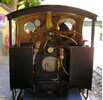
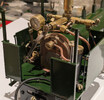
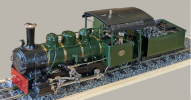
Tony, yes please would very much appreciate any photos you have which might help. :) I'm just looking for a general view of the cab, plus a photo of the rear left and right side by the frames under the cab by the unions where the copper inlet and bypass pipes convert over to the silicon ones which go into the tender (to see if there are extra check valves there)
Many thanks
 
Last edited:
Hi, thanks for your replies

There have been 16mm Association people in the background helping (trying to remember) what went where, but now just stuck on these few remaining parts described.

Really its not a discussion that is going to be easy to cover verbally over the phone so need something visual to look at

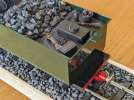
Tony, yes please would very much appreciate any photos you have which might help. :) I'm just looking for a general view of the cab, plus a photo of the rear left and right side by the frames under the cab by the unions where the copper inlet and bypass pipes convert over to the silicon ones which go into the tender (to see if there are extra check valves there)
Many thanks

All of the things I have not got photos of...!

General cab view attached, but this was a special done for Tag Gorton and is not "standard" in a few ways, but not by much.

I can't help with under the cab ... just the ashpan and the ponytruck really. The bypass valve body sits on the cab floor, held in place by the hex fitting on the end of the supply pipe from the axle pump. The lubricator has a bottom drain which pokes through a hole in the floor. There are no check valves under the floor. Supply from tender to axle pump base uses an existing frame spacer screw to hold it in place, same with bypass outlet pipe on the other side. Hope that helps ... it has been a while.

And some questions for you: 1) What is the boiler serial number? (Back of firebox, bottom left) 2) And do you know why it was taken to bits?

jim_slater_4.jpg
 
Thanks Tony that one pic and your explanation is really helpful, I can see the answers to all of my questions about the cab in that pic.

It looks like the main difference between Tag's one and mine is the blower comes out of the front of the left branch of the manifold and runs around the outside lhs of the boiler rather than through it.

Means can't put the pressure gauge or its pipe where it is in the pic. The current pipework of this one suggests the pressure gauge pipe was obstructing the view of the gauge glass so have looked at it again today and think it makes sense to have the pressure gauge tucked in on the left just aft of the manifold but not obstucting the reverser, blower wheel, or gauge glass, also means it leaves more potential cab space for a scale driver/fireman whilst still being able to fire and operate the controls.

Also looks like the lubricator pipework was bent well out of place from its original position so have re-done that as per your pic. This one still has a side drain but I reckon its going to leave a mess on the floor if the oil runs round the bottom of the outlet, so may well convert it to bottom entry.

I can just see the bottom elbow of the bypass manifold in your pic, plus using your explanation i'll have a go at fixing it to the footplate tomorrow

Thanks for the info about the one-way valves as well.

I'm not going to mention the serial number but suffice to say when it went to the previous owner it had three coats of paint on it, one presumably the original Roundhouse green, second John's standard black overcoat, and then the previous but one owner decided to thickly (badly) hand paint it in a green again.... the reason it was in pieces was because Mike D stripped it right back and then repainted it (2-3 years ago) and it has never been rebuilt since. I only took full ownership of it last week.

Just doing a bit of fettling and trial fitting of everything at the moment whilst waiting for some new motion parts to arrive from Roundhouse so I can get the rest back together. Will post a few pics once the cab is sorted

Many thanks again
 
Last edited:
Means can't put the pressure gauge or its pipe where it is in the pic.

The pressure gauge is a feed off a whistle valve in that picture.

The current pipework of this one suggests the pressure gauge pipe was obstructing the view of the gauge glass so have looked at it again today and think it makes sense to have the pressure gauge tucked in on the left just aft of the manifold but not obstucting the reverser, blower wheel, or gauge glass, also means it leaves more potential cab space for a scale driver/fireman whilst still being able to fire and operate the controls.

Pressure gauge normally goes in the front right corner. I believe Tag moved it when he fitted the smaller gauge.

Also looks like the lubricator pipework was bent well out of place from its original position so have re-done that as per your pic. This one still has a side drain but I reckon its going to leave a mess on the floor if the oil runs round the bottom of the outlet, so may well convert it to bottom entry.

Ah yes, some had the drain hanging out of the RHS doorway.

I'm not going to mention the serial number

Shame.

but suffice to say when it went to the previous owner it had three coats of paint on it, one presumably the original Roundhouse green, second John's standard black overcoat, and then the previous but one owner decided to thickly (badly) hand paint it in a green again.... the reason it was in pieces was because Mike D stripped it right back and then repainted it (2-3 years ago) and it has never been rebuilt since. I only took full ownership of it last week.

No such thing as "original Roundhouse green" on these locos. They were all new locos, not conversions.

The blower valve on the loco in the picture is entirely standard.

Good luck with the smokebox.
 
Ta, at first glance the blower arrangement in the smokebox looks good, pretty much the design as found on many real prototypes.

It might be an unwarranted concern but my only worry about the air system is a massive crescent-shaped hole cut in the frame plate under the smokebox. It was covered with a thick goop of sealant which looks like a recipe for frequent leaks after a few clean outs. Think will fit an extra plate behind it with much smaller holes for the cylinders' vertical inlet and exhaust pipes to go through, plus with a sensible bit of sealant around the small gaps it should hopefully be a much more reliable design.
 
Here you go, here are the results of today's advice and help thanks.

Long way to go with it, should be beauty when done. Once its running well am aiming to make some extra cosmetic tweaks so looks similar to the full size Innisfail locomotive.

20251213_2015.jpg
 
Back
Top Bottom