Train Engineer Revolution (DC and DCC) system seems to be disappearing

beavercreek

Travel, Art, Theatre, Music, Photography, Trains
Country flag
I have used Aristocraft/Crest Train Engineer (DC) RC since the old days (for me, 20 years ago) when it was produced by Aristocraft. It was a goodly RC system of control for DC layouts mainly using trackside power units to feed the rails. You could run different sections of the layout but they had to be totally separated electrically from each other with a power unit RX for each section. There was an on board receiver for use in a loco with a battery but they did have their issues.

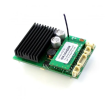
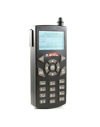
Aristocraft/Crest then replaced the old DC system with a new one named 'TE Revolution'. Nice handset, two way signal RX/TX so that you had feedback on a screen of what was going on, RX modules for individual locos, the ability to control different locos if using battery.
Aristocraft went to the wall but the Crest part of the business continued with a guy called Navin who had worked for Aristocraft.

Crest became Precision RC who produced new and updated items for the TE Revolution DC system.
Then they produced the DCC version which enabled locos with DCC decoders to run on batteries while controlled by a single handset with no 'Central Controller' supplying power to the rails needed. This is called a 'dead rail' system. The TE handset controls the DCC decoder via the TE DCC RX board and the handset allows the changing of DCC CVs etc. This was/is a reasonably priced but excellent system with a good handset, good RX boards with a decent feedback screen.
They also marketed a USB programmer to update firmware on the handset TX and the reciever RX.
I have also used their DCC control system and it works very well indeed.

But...
going by the sparse population of boards and handsets on the Precision RC website it looks like the Revolution journey may be over (the DCC receiver is out of stock and the DCC handset is not even listed any more.
There are other systems for RC control of DCC eg FossWorks or the expensive Airwire system, but it is like chalk and cheese when comparing the possibilities and functionality that Revolution provided to that of Fossworks as well as the quality of the kit and the power handling that big locos (mainly heavy current diesels USA Trains and Aristocraft etc.) need.
As I have invested in TE Revolution (DC and DCC) and I have spare hand sets as well as spare DC and DCC receivers, I should hopefully be okay into the future but it would be a shame to see yet another manufacturer within our hobby go to the wall.

Precision RC website: Train Engineer Revolution
1777380214797.png1777380390371.png
 
Last edited by a moderator:
I think it needs to see a change of hands and money poured in to develop the product line to where it should have been ten years ago..

Robert
 
Last edited:
"it is like chalk and cheese when comparing the possibilities and functionality that Revolution provided to that of Fossworks as well as the quality of the kit and the power handling that big locos (mainly heavy current diesels USA Trains and Aristocraft etc.) need."

With Fosworks architecture integrated into Gauge 1, Gauge 3, 5" and 7 1/4" models. I profoundly disagree with this misleading statement.
I would agree with the above, to a point.

However, the Fosworks system uses a DCC decoder to get the fidelity of sounds (an ESU decoder) but it is not DCC.
The 'Revo' system was a lot nearer to a 'true' DCC solution.

PhilP.
 
I have some Aristo (Crest) setups. Sorry to say I must disagree with the setup, tis clunky and one certainly needs to record what has occurred on paper so that the next one is easier. I have 4 items of power and for irregular users they much prefer my Fosworks to the Aristo system, I guess pressing buttons is not so easy as turning a knob plus the direction often gets mixed up with the locomotive changing buttons that also look like direction buttons. The plaintiff cry ‘my loco not working’ often finds it set to a different loco that is not even on the track, for this reason I now never have more than 1 of the Aristo powered locomotives out on the line at the same time.
 
I assume somebody took umbridge to our posts?

Would have been nice to have been informed.

PhilP.
 
I assume somebody took umbridge to our posts?

Would have been nice to have been informed.
The whole thread was duplicated so some posts may have been lost.
 
To add to my original post… besides the original Train Engineer, the REVO ( DC and DCC systems) I also use Massoth DCC , Deltang control for my live steamers.
Going back over ten years or so… I had moved from the original TE to Massoth DCC and TE REVO DC for my non DCC locos. I found that REVO worked really well and was a good upgrade from the old version.
I was awaiting the Massoth RC ‘dead rail’ option to appear but there were years that went by with no show. I tried the Tam Valley cobbled together Heath Robinson but when REVO DCC came on the scene it was the ‘dead rail’ DCC answer for me. I was fine with the controller as it was not too dissimilar to the DC version.
I have not used the Fossworks option but have seen it being put through its paces. It is cheaper and simpler so ideal if that is what you need.
But I wanted a full fat option with a controller that could really substitute for the Massoth handset.
I have a few locos (USA Trains that have a very high stall current draw and as I have some extremely steep gradients on my layout, I needed a system that could take the load so to speak.
Anyhow it seems that the cheapest ‘full fat’ DCC ‘dead rail’ system is possibly in its way out… hey ho.
 
Last edited:
I used the Train Enigineer for 18 years. With the Revo' there too much uncertainty, and overfeatured for me and no UK support. I switched wholesale to RC/battery/sound starting 5 years ago, when the knees said enough, just "simple" DC products. I have incorporated ESU "DCC" cards on some, but only for their sound library matches on distinctive locos only, worth a small premium over the more conventional generic offerings. As Phill says these operate as faux DCC, the real "benefit" is with that the right Fosworks TX you can access upto 13 functions on the ESU card. And that same TX will talk to more conventional set ups too, depends on which RX is doing the translations to the bits on board. I use, and still spec', Fosworks and RCS in the past (sadly defunct, it got around a specific issue) and now RC Trains very compact solutions are solving the seeming insoluable. Horses for courses. Do I need loads of functionality ? No. Max.
 
For me I sit with Max, loads of functionality not required. I do have Fosworks working via DCC and Analogue ootions. For sound I really only want 4 options, steam long plus short whistles, bell and blower. All the others are never used in general operation. Diesel manages with horn, bell plus on/off of motor.
 
I have a Revo system, mainly for remote point control, using EPL motors, I haven't found anything that can match it with either Fosworks or Micron.
 
I have a Revo system, mainly for remote point control, using EPL motors, I haven't found anything that can match it with either Fosworks or Micron.
As you say pretty sure neither of Fosworks or Micron (less sure about them) have attempted point control. Imagine that the receiver costs would be unatractive.
 
As you say pretty sure neither of Fosworks or Micron (less sure about them) have attempted point control. Imagine that the receiver costs would be unatractive.
We have been here before...

People think they just plonk a signal, and it works..

It still needs power.

It needs either its own receiver, or you have to wire-back to a 'concentrator' which can drive a number of devices.

It needs to be robust enough to survive the weather, cats, birds, and in my case fox and badger. - Nothing beats a badger, if it thinks there is something juicy under it!

Every single customer wants something different, and most of them don't want to have to configure it themselves.

It has to be reliable, but cheap enough to appeal to more than the hard-core enthusiast..

@GAP and @ge_rik are / have gone in the sort of direction we have looked at.

But there are not enough hours in the day, and the return on investment of a smaller version of the MyLocoSound card. - Just one of a number of projects ongoing. Took precedence.

I can sell you a transmitter with seven switches, and receivers to match, but you would presently need to do the mechanics after the servo.

PhilP.
 
We have been here before...

People think they just plonk a signal, and it works..

It still needs power.

It needs either its own receiver, or you have to wire-back to a 'concentrator' which can drive a number of devices.

It needs to be robust enough to survive the weather, cats, birds, and in my case fox and badger. - Nothing beats a badger, if it thinks there is something juicy under it!

Every single customer wants something different, and most of them don't want to have to configure it themselves.

It has to be reliable, but cheap enough to appeal to more than the hard-core enthusiast..

@GAP and @ge_rik are / have gone in the sort of direction we have looked at.

But there are not enough hours in the day, and the return on investment of a smaller version of the MyLocoSound card. - Just one of a number of projects ongoing. Took precedence.

I can sell you a transmitter with seven switches, and receivers to match, but you would presently need to do the mechanics after the servo.

PhilP.
As it always at the "niche" end of a "niche" hobby strand there just isn't the volume to justify development, or even sometimes practical. It's up to the end user to do the adapting of existing kit to get the end product and find out "was it worth it ?" When I was "manufacturing" hand built slot cars 25 years ago the thought of producing realistic sounds with gearshifts linked to throttle inputs entered my mind (!). We had a race car owner with the right car (Lola T70 Mk3B, if you ask), a sound engineer with a DAT recorder ready to be strapped into the "passenger side" and a lecturer at Glasgow Uni' ready to assign it to his computer sciences class as a project. Then sense prevailed, slot cars speed around too quickly for normal racecar gearbox upshifts/downshifts and throttle inputs to be translated in any sane way. But it's no different in concept to any DCC loco sounds chips you see now.

My thinking here on the points is you start with a robust weatherproof system, like an air powered one, that allows you to have the activation done remotely from the exposed point/signal. These are operated with their actuating valves grouped in a unit, not remotely at the points/signals. You can house them indoors if you wish. There is a solonoid based system for the SVRR sytem I use Electrically Operated Valve: 24 Volt but it's expensive. As I operate manual mine are housed in a.......signal box ! Max
 
I unfortunately do not have the luxury of proprietary control equipment close to hand so have had to improvise. The cost of freight is mostly more that the item is worth.
I am using microcontrollers; Picaxe and Arduino to do a lot of my stuff like driving servo motors and because I have a grounding in aircraft electronics (the big ones) I can experiment a lot.
If I was to market for example my point setting display board; what I would have to charge to get my time back would be prohibitive. Not everyone would want one so a niche market would aptly describe it.
The wifi control of just 9 points took me almost 6 months to get right and built and tha was using AI to write the programs and the setting up of the wifi access point. A computer geek I am not.
Actually I had a revo system given to me but found it didn't fit my railway at the time so I gave it away to somebody I can't remember who. I really wasn't a fan the handset was to "busy" with lots of buttons where I prefer a simple controller.
 
Back
Top Bottom