
Wanted urgently! LGB Nicky FrankS tender circuit board and wiring harness

The mechanic

Registered
Country flag
Hello everyone,

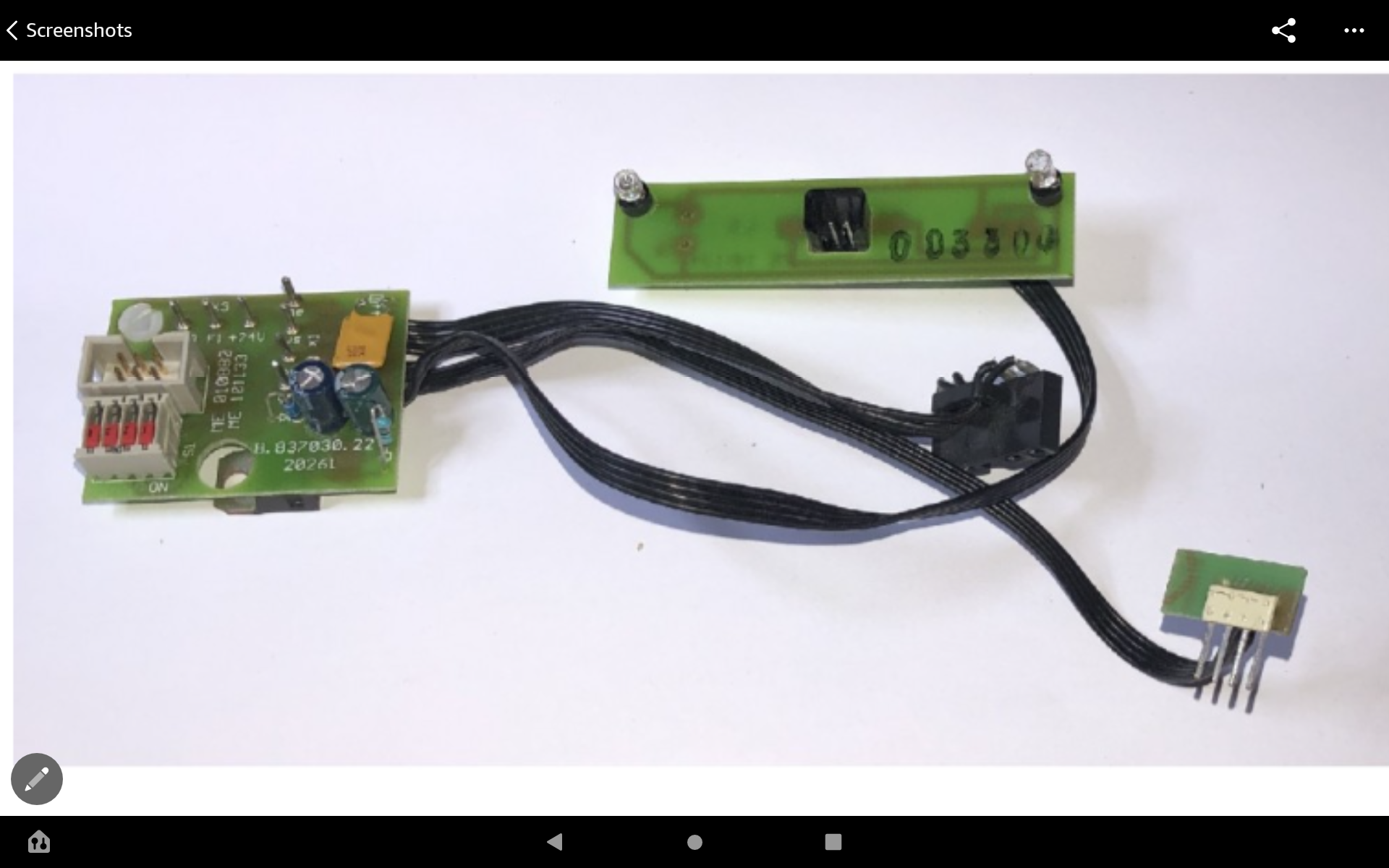
I am having severe difficulties in obtaining a tender circuit board and wiring harness for my LGB Nicky FrankS. The part number is mts-line.de list it as LGB 21261. However LGB list it (printed on the actual board) as LGB 20261.

I did locate one from mts-line.de who posted it to me only to be returned to Germany from the customs "Sazi" in Coventry - they didn't even bother to contact me to tell me the thing was in the country so that I could''ve sorted out any possible additional payment ect (which there was none) ... No, they just sent it back after letting it sit there for a month.

Anyway, the upshot is that I still need the circuit board (see photo below) .... mts-line.de are now showing no stack so I am snookered from that direction.

Does anyone know where I can get hold of one of these as the loco will not work properly without it

Many thanks in advance

Dave
 

Attachments

  • Screenshot_20251208-114702.png
    Screenshot_20251208-114702.png
    963.6 KB · Views: 0
I'm sorry to here they are back to old habits! I had a small packer form the US which they charged me for and emailed me, then a handwritten card arrived nearly two weeks after it has been delivered!
Do have the old circuit board? If so the analogue ones are quite basic so you might be able to get it repaired. If not you could get a decoder instead. You might find one of the DCC boys has one lying around as they tend to rip them out.
 
I am surprised the loco 'doesn't work' without it? - Unless there is a fault in the loco, as the loco should (I believe) run without the tender..

Should be trivial (famous last words) to fix if you have the original, or we should be able to work round the problems.

PhilP.
 
I am surprised the loco 'doesn't work' without it? - Unless there is a fault in the loco, as the loco should (I believe) run without the tender..

Should be trivial (famous last words) to fix if you have the original, or we should be able to work round the problems.

PhilP.
The loco does work in the sense that there is power but does not function correctly.

The problem is that you are trying to synchronise a six coupled chassis with a four coupled. Without the connector the four coupled runs faster than the six coupled leading to the one drive running faster than the other.
 
There is practically nothing to go wrong on that board as it is fairly basic. Are you sure there is something loose or are the dip switches set correctly.
.
 
There is practically nothing to go wrong on that board as it is fairly basic. Are you sure there is something loose or are the dip switches set correctly.
.
The issue isn't that something has gone wrong on the board, moreover the board was not in the loco to begin with having being removed and mislaid by a previous owner.
 
If the tender is running at a different speed to the loco it sounds like a duff motor running slow.
 
If the tender is running at a different speed to the loco it sounds like a duff motor running slow.
The front of the loco is a six coupled engine whereas the tender is four coupled so invariably run at different speeds - the board to the tender regulates this to ensure that the tender does not overrun against the motor in the engine. If this was the only issue caused by loss of the board, I could probably live with it BUT because the board is missing and I run analogue only, there are no lights (directional or otherwise) on the tender and the cab isolation switch does not switch off the tender motor power supply so the locomotive cannot be fully isolated via the cab switch.
 
Last edited:
Doesn’t matter how many coupled wheels there are, it is the gear ratio and wheel size that matters. If both motors run at the same speed, the gear ratios are the same, and wheel sizes are the same, or gear ratio adjusted for different size wheels then both should run at the same speed.
 
Doesn’t matter how many coupled wheels there are, it is the gear ratio and wheel size that matters. If both motors run at the same speed, the gear ratios are the same, and wheel sizes are the same, or gear ratio adjusted for different size wheels then both should run at the same speed.
I agree - apologies I may not have explained it well in referencing six versus four coupled chassis however unfortunately it doesn't appear that the gear, wheel diameter and motor speed between the four and six coupled chassis have been aligned with the Nicki Frank in necessitating the tender to loco circuit board.
 
Sorry, I don't believe that they have tried to do this 'electronically'.

A few years back Buhler changed the design of the motors, making them more efficient.

At this time, we were told to swap both motors in two motor situations, keeping a 'good' older motor for use in a single motor model.

All I see on the boards pictured, is voltage regulation for the lighting?

I would investigate swapping the motors, and working out the connections between the two units.

PhilP.
 
Doesn’t matter how many coupled wheels there are, it is the gear ratio and wheel size that matters. If both motors run at the same speed, the gear ratios are the same, and wheel sizes are the same, or gear ratio adjusted for different size wheels then both should run at the same speed.
Agreed however the 6-coupled chassis is longer and logically will have more frictional drag due to longer coupling rods (which the 4-wheel non-coupled chassis does not have by the way) in addition to marginally higher frictional losses on curves ect. altogether adding up to mis-matched speeds of the two units in operation.

However as stated above, this is not the only reason why I need the board and wiring loom assembly which was ripped out of the loco by a previous owner and was sold to me by one of the main "reputable" dealers under the premise of "requiring a service"!!.... As I operate solely by analogue control, I currently cannot electrically isolate the locomotive and tender using the locomotive cab selector switch and currently there are no tender lights because the entire circuit board and wiring loom is missing!
 
Last edited:
Sorry, I don't believe that they have tried to do this 'electronically'.

A few years back Buhler changed the design of the motors, making them more efficient.

At this time, we were told to swap both motors in two motor situations, keeping a 'good' older motor for use in a single motor model.

All I see on the boards pictured, is voltage regulation for the lighting?

I would investigate swapping the motors, and working out the connections between the two units.

PhilP.
I agree, it isn't anything to do with the motors per se. however the 6-coupled chassis is longer and logically will have more frictional drag due to longer coupling rods (which the 4-wheel non-coupled chassis does not have by the way) in addition to marginally higher frictional losses on curves ect. altogether adding up to mis-matched speeds of the two units in operation.

However as stated above, this is not the only reason why I need the board and wiring loom assembly which was ripped out of the loco by a previous owner and was sold to me by one of the main "reputable" dealers under the premise of "requiring a service"!!.... As I operate solely by analogue control, I currently cannot electrically isolate the locomotive and tender using the locomotive cab selector switch and currently there are no tender lights because the entire circuit board and wiring loom is missing!
 
Last edited:
So, you could theoretically return it, as it is not of merchantable quality?

If the boards are not available as spare parts, then something will have to be fabricated. - Bulb holders will be easy, the auxiliary socket a little more awkward.

If I could borrow one, I could reverse engineer it, but basically track power must feed forward, before coming back to the motor in the tender.
The rear lighting is taken care of by the circuitry in the tender.

PhilP.
 

So, you could theoretically return it, as it is not of merchantable quality?

If the boards are not available as spare parts, then something will have to be fabricated. - Bulb holders will be easy, the auxiliary socket a little more awkward.

If I could borrow one, I could reverse engineer it, but basically track power must feed forward, before coming back to the motor in the tender.
The rear lighting is taken care of by the circuitry in the tender.

PhilP.
Hello PhilP,

I can't really send it back as we have had it over twelve months (My son bought it and I was ill at the time, so its only really now I am getting around to looking at stuff) I have already had to recondition the front chassis as that didn't work properly... It was literally worn out!!

as for the board, that sounds like a chink of light at the end of a dark tunnel!

I don't have a spare one to hand but I may have whats left of the old connectors. I'll whip the top off the tender and take a photo of what"s left.... Its not a pretty sight(!) and get back to you


Dave
 
Back
Top Bottom