Unworked Points

duncan1_9_8_4

Garden Railway Operator
Country flag
United-Kingdom
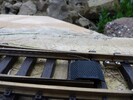
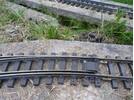
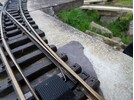
Afternoon. As you may know I am planning a turning circle in the front garden, very remote from the rest of the layout. Other than the Return Loop Module, there won't be any other electrics or complications. So the point work..... I have an LGB manual switch, which as you all know can be worked as a sprung point, theoretically throwing back, but they sometimes derail the following stock....
I also have a Piko switch, that still has it's tension clip, meaning trains can force their way through, but the point blades will stay flicked into the new position and not derail follow stock, as the heavy locomotive did the point for it's following stock.

So, which would you choose.....?
 
I would think that if stock derails trying to push through then they are not heavy enough. Pieces of roofing lead can be added but swapping plastic wheels for metal could also work.

Do you want the trains to follow the same route each time or is it OK to swap direction each time? Would add variety.

Paul
 
Afternoon. As you may know I am planning a turning circle in the front garden, very remote from the rest of the layout. Other than the Return Loop Module, there won't be any other electrics or complications. So the point work..... I have an LGB manual switch, which as you all know can be worked as a sprung point, theoretically throwing back, but they sometimes derail the following stock....
I also have a Piko switch, that still has it's tension clip, meaning trains can force their way through, but the point blades will stay flicked into the new position and not derail follow stock, as the heavy locomotive did the point for it's following stock.

So, which would you choose.....?
Neither, I don't like the idea of push through for model trains. We use them successfully on the 7.25" gauge miniature railway, but once we go as small as G scale, the lack of scale weight always puts me off (plus the fact that I have very few wheelsets with the ginormous LGB flanges).
 
I would think that if stock derails trying to push through then they are not heavy enough. Pieces of roofing lead can be added but swapping plastic wheels for metal could also work.

Do you want the trains to follow the same route each time or is it OK to swap direction each time? Would add variety.

Paul
Absolutely fine to change route every time.
 
Neither, I don't like the idea of push through for model trains. We use them successfully on the 7.25" gauge miniature railway, but once we go as small as G scale, the lack of scale weight always puts me off (plus the fact that I have very few wheelsets with the ginormous LGB flanges).
Needs must I'm afraid.....
 
Most switches tend to not work that well after time. A method that works well once set up is to use some spring wire to return the blades, can be mounted on the sleepers acting on the Stretcher Bar (sleeper on our track).
 
I have an LGB manual switch, which as you all know can be worked as a sprung point, theoretically throwing back, but they sometimes derail the following stock....

If you remove the switch altogether, won't it act in the same way as the Piko one? The train will go into the loop whichever way the point is set, the loco will be heavy enough to throw the blades across when it leaves the loop, and the blades will then be set for the wagons/coaches, so no derailing. The next train weill do the same but going the opposite way round the loop.

Cheers

David
 
an alternative (for elevated railways only) :

using a piece of fishing line and a fishing weight, using the line and a hole in the table, to hang the weight from one side of the switch-bar.
result: a low tec, fail safe way to enter the loop always from the same side.

playing with the size of the weight, this can be adjusted to the weight of the rolling stock.
 
I would use the point without any mechanism at all. It does sound like a recipe for disaster but with the chunky and over large diameter G scale flanges it will work. Don't be clouded by the fact that in other scales with fine flanges it would not work and would drag the blades across.

Having a return spring puts it's operation on a knife edge. It will work only in perfect conditions with a point in an as new condition and level track, heavy stock and good back to back dimensions.

I used R3 points without any control on a return loop for many years without any problem.

As you are on R1 you could test the theory, you have nothing to lose, by temporarily removing a drive from one of your existing points and seeing how a train performs pushing through uncontrolled blades. Then you will be reassured to adopt a flip flop point on an unseen portion of your railway.

Alan
 
Back
Top Bottom