LGB Stock Sound/Analog Engine - Possible to adjust CVs?

tundracamper

Registered
Country flag
I just finished a couple of major sound installations of the LGB 65001 in two older LGB moguls. I even went to the trouble of installing hall effect sensors and fiddling with the CVs to get 4 synchronized chuffs per revolution. Process was a little quirky with LGB Programmer, but it worked - for the most part:)

Anyway, I was wondering if an older analog LGB Forney with stock sound (21252) has similar CVs that can be adjusted to get 4 chuffs per revolution. I assume all LGB wheel magnets have 4 magnets. I realize it might be a pain to get the unit open and that the sound card would likely have to be disconnected from the rest of the loco electronics in order to program it. But, is it possible?
 
I just finished a couple of major sound installations of the LGB 65001 in two older LGB moguls. I even went to the trouble of installing hall effect sensors and fiddling with the CVs to get 4 synchronized chuffs per revolution. Process was a little quirky with LGB Programmer, but it worked - for the most part:)

Anyway, I was wondering if an older analog LGB Forney with stock sound (21252) has similar CVs that can be adjusted to get 4 chuffs per revolution. I assume all LGB wheel magnets have 4 magnets. I realize it might be a pain to get the unit open and that the sound card would likely have to be disconnected from the rest of the loco electronics in order to program it. But, is it possible?
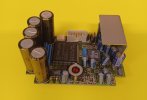
I have a 21252 in process on my workbench. Not too hard to open if you follow the directions. It uses a Hall Effect sensor to trigger the chuff. I don't think it's possible to disconnect the control board (in the boiler) from the sound board (in the tender). The Hall Effect cable and the reed-switch cable both connect to the control board and then there is a multi-conductor ribbon cable that connects the two boards. The only controls are the volume pot on the sound board and the power/sound switch on the control board. No DIP switches or jumpers on either one. Maybe someone with significant electronics skills could trace the control board circuits and work up some kind of minimalist replacement; but everything, power, lights, smoke go through the control board. Way beyond my talents.

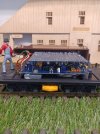
I'm halfway through removing the original boards and installing a Rail Boss 4+ and MyLocoSound with batteries. I had hoped to install the Rail Boss and use the original sound. But, the original boards take up all the available space. The Rail Boss is going into the tender in place of the sound board with the MLS mounted above it under the wood load. The space left by removing the control board and cutting away some of the boiler weight will be taken by batteries.

Don't mean to burst your bubble, but trying to use the original sound board would be a lot of work at the very least.

I have an LGB 2219S Pennsylvania 2-6-0 Mogul on order. It's supposed to be like new in the original box. I would be interested how you modified your moguls.

Disassembling the Engine

  • Whether you want to install a decoder, install a sound system, or just repaint the engine, you will want to disassemble it. Here's how. Remove the handrails. They pull out of the boiler, then you have to turn them to get the bend out of the cab. I had to use a pair of needle nose pliers to get some leverage to pull them out of the boiler.
  • Remove the three boiler pipes.
  • Remove the two brass rods to the pilot. Pull them out of the boiler first.
  • Remove the pilot. A single screw in the bottom holds it in place.
  • Remove the ash pan on the bottom by taking out one screw in the center.
  • Remove six screws from the bottom of the cab area. These hold the cab and the water tank/fuel bin in place.
  • Remove the water tank/fuel bin. It has two tabs that fit into the back of the cab. You will have to lift up the back of the cab to get these tabs out. Pull the plug from the sound board and remove the three screws and washers holding the speaker to free the water tank/fuel bin completely from the frame.
  • Remove two small screws in the side of boiler by smoke box.
  • Remove the smoke box by pulling it forward. Be careful not to pull the wires loose for the headlight and the smoke unit. You will need to keep the smoke box near the boiler tethered by these wires while you complete the next several steps There is a small black spacer at the front top of the boiler. Remove this and set it aside as you remove the smoke box.
  • Remove the two screws in the boiler side below the bell.
  • The cab and boiler are removed as a unit. Slide this unit forward and tip it up to get it past the engineer. Be careful not to break the wires going to the lights in the cab.
  • Remove two screws that hold the backhead in place and remove it. It takes some wiggling to get it past the engineer. Notice that the wiring tunnel on the floor that includes a simulated coal spill will also come loose at this point.
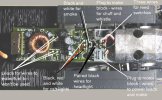
  • Make a diagram of the wires connected to the circuit board between the two weights or use the photograph below. Unhook the wires for the headlight, smoke unit, and cab lights from the circuit board. This will let you completely remove the smoke box, boiler, and cab from the frame.

  • In the photo, the front of the engine is to the right. There are four pins on the left next to the copper coil. The top two (black on left, red on right) go to power pick-ups in the trailing truck and the bottom two (brown on left and yellow on right) carry power to a plug in the rear bumper. These four pins are left disconnected in the decoder installation I will describe below. There are two plugs and three wires at the right edge of the circuit board that connect to the motor block. The top plug appears to connect to the chuff switch and also to a wire that signals the sound unit to ring the bell twice when the engine starts up. The bottom plug has four wires (two have been cut in the photo.) The green wire goes to the right motor pin, the yellow goes to the left motor pin, the brown goes to the right power pick-up, and the white goes to the left power pickup. The three wires appear to connect to reed switches in the motor block that ring the bell and toot the whistle when the train passes over magnets on either side of the track. To the left of these three pins are two pins that connect to the headlight in the smoke box. A pair of thin black wires connect to these pins. Next to the left are pins for two wires, white on top and black on the bottom, that connect to the smoke generator in the smoke box. Finally, there are three pins for white (top), red (middle), and black (bottom) wires that connect tot the inside and rear lights in the cab.
    • Remove three screws from the circuit board and remove the circuit board.
    • Remove four screws from the front (larger) weight and remove the weight.
    • Remove two screws and plastic washers under the large weight to remove the motor block.
    • Remove two screws at the ends of the bottom of the motor block and two screws in the top of the motor block. The top and ends of the motor block will now come off.
 

Attachments

  • 20260512_195422.jpg
    20260512_195422.jpg
    184.9 KB · Views: 11
  • Forney_circuit_board.jpg
    Forney_circuit_board.jpg
    77.2 KB · Views: 11
Last edited:
Don't mean to burst your bubble, but trying to use the original sound board would be a lot of work at the very least.

Based on your amazing write-up, I don’t doubt your conclusion about it being a challenge and a lot of work.

I have an LGB 2219S Pennsylvania 2-6-0 Mogul on order. It's supposed to be like new in the original box. I would be interested how you modified your moguls.

What do you mean? I installed a 65001 in the tender with a new Visaton speaker mounted to the floor with speaker holes drilled. One 65001 was an older unit with the external volume control. The other one had a built-in volume control to which I added an extension protruding thru the front of the tender. Power is from 2x9V batteries under a coal load I had 3D printed (I don’t think DSP&P ever used wood). I also obtained two hall effect sensors from Europe. I can look up the vendor, if you want. It has been referenced on this web site, which is where I found out about it. The magnet holder clamps onto the axle. Tedious to wire up and install (I actually broke one sensor and had to order a replacement from Amazon, which was a pain to solder). Anyway, after reprogramming the CVs, which also took some experimenting, I now get 4 chuffs per revolution synchronized to the wheels. Some people prefer just 2. Oh, I also added the bell and whistle sensor. With the batteries, the extra sound unit capacitor is not needed. Is that what you meant? :)

Disassembling the Engine

  • Whether you want to install a decoder, install a sound system, or just repaint the engine, you will want to disassemble it. Here's how. Remove the handrails. They pull out of the boiler, then you have to turn them to get the bend out of the cab. I had to use a pair of needle nose pliers to get some leverage to pull them out of the boiler.
  • Remove the three boiler pipes.
  • Remove the two brass rods to the pilot. Pull them out of the boiler first.
  • Remove the pilot. A single screw in the bottom holds it in place.
  • Remove the ash pan on the bottom by taking out one screw in the center.
  • Remove six screws from the bottom of the cab area. These hold the cab and the water tank/fuel bin in place.
  • Remove the water tank/fuel bin. It has two tabs that fit into the back of the cab. You will have to lift up the back of the cab to get these tabs out. Pull the plug from the sound board and remove the three screws and washers holding the speaker to free the water tank/fuel bin completely from the frame.
  • Remove two small screws in the side of boiler by smoke box.
  • Remove the smoke box by pulling it forward. Be careful not to pull the wires loose for the headlight and the smoke unit. You will need to keep the smoke box near the boiler tethered by these wires while you complete the next several steps There is a small black spacer at the front top of the boiler. Remove this and set it aside as you remove the smoke box.
  • Remove the two screws in the boiler side below the bell.
  • The cab and boiler are removed as a unit. Slide this unit forward and tip it up to get it past the engineer. Be careful not to break the wires going to the lights in the cab.
  • Remove two screws that hold the backhead in place and remove it. It takes some wiggling to get it past the engineer. Notice that the wiring tunnel on the floor that includes a simulated coal spill will also come loose at this point.
  • Make a diagram of the wires connected to the circuit board between the two weights or use the photograph below. Unhook the wires for the headlight, smoke unit, and cab lights from the circuit board. This will let you completely remove the smoke box, boiler, and cab from the frame.

  • In the photo, the front of the engine is to the right. There are four pins on the left next to the copper coil. The top two (black on left, red on right) go to power pick-ups in the trailing truck and the bottom two (brown on left and yellow on right) carry power to a plug in the rear bumper. These four pins are left disconnected in the decoder installation I will describe below. There are two plugs and three wires at the right edge of the circuit board that connect to the motor block. The top plug appears to connect to the chuff switch and also to a wire that signals the sound unit to ring the bell twice when the engine starts up. The bottom plug has four wires (two have been cut in the photo.) The green wire goes to the right motor pin, the yellow goes to the left motor pin, the brown goes to the right power pick-up, and the white goes to the left power pickup. The three wires appear to connect to reed switches in the motor block that ring the bell and toot the whistle when the train passes over magnets on either side of the track. To the left of these three pins are two pins that connect to the headlight in the smoke box. A pair of thin black wires connect to these pins. Next to the left are pins for two wires, white on top and black on the bottom, that connect to the smoke generator in the smoke box. Finally, there are three pins for white (top), red (middle), and black (bottom) wires that connect tot the inside and rear lights in the cab.
    • Remove three screws from the circuit board and remove the circuit board.
    • Remove four screws from the front (larger) weight and remove the weight.
    • Remove two screws and plastic washers under the large weight to remove the motor block.
    • Remove two screws at the ends of the bottom of the motor block and two screws in the top of the motor block. The top and ends of the motor block will now come off.
Definitely gonna save this in case I work up the mentality to tackle such a project. Changing out new motors was enough of a pain:)

Thanks!!
 
What do you mean?
OK, apparently your moguls didn't come with factory sound. I was hoping the factory sound would be good enough that I could save money on a third party card. I opened the tender to find all the space is taken up by the two level sound card which is a LOT bigger than the 65001. There is room under the coal load for a 4S1P 18650 Li-Ion battery pack and a Rail Boss 4+ RC if I relocate the 9V battery. The chuff trigger is already connected to the sound board, so I'll probably leave that alone. There are reed switches to trigger the bell and whistle which I'll have to interface somehow with the Rail Boss so I can trigger them manually and the Rail Boss will get the signals for automatic operation.

I'll probably leave it track powered for a while to see if I think the factory sound is adequate and if the conversion time is worth the money saved on a new sound card.
 

Attachments

  • 2219S Tender.jpg
    2219S Tender.jpg
    310.7 KB · Views: 5
Wow! That is quite the card. I wonder why it is so big relative to the 65001. Hope it all works out.
I think that may well be a very early card hence the size. We often forget how cards have reduced in size illustrated by N and 009 gauge locomotives having sound cards in available as bought.
 
Back
Top Bottom