
David1226
Registered

Part 1 of 2
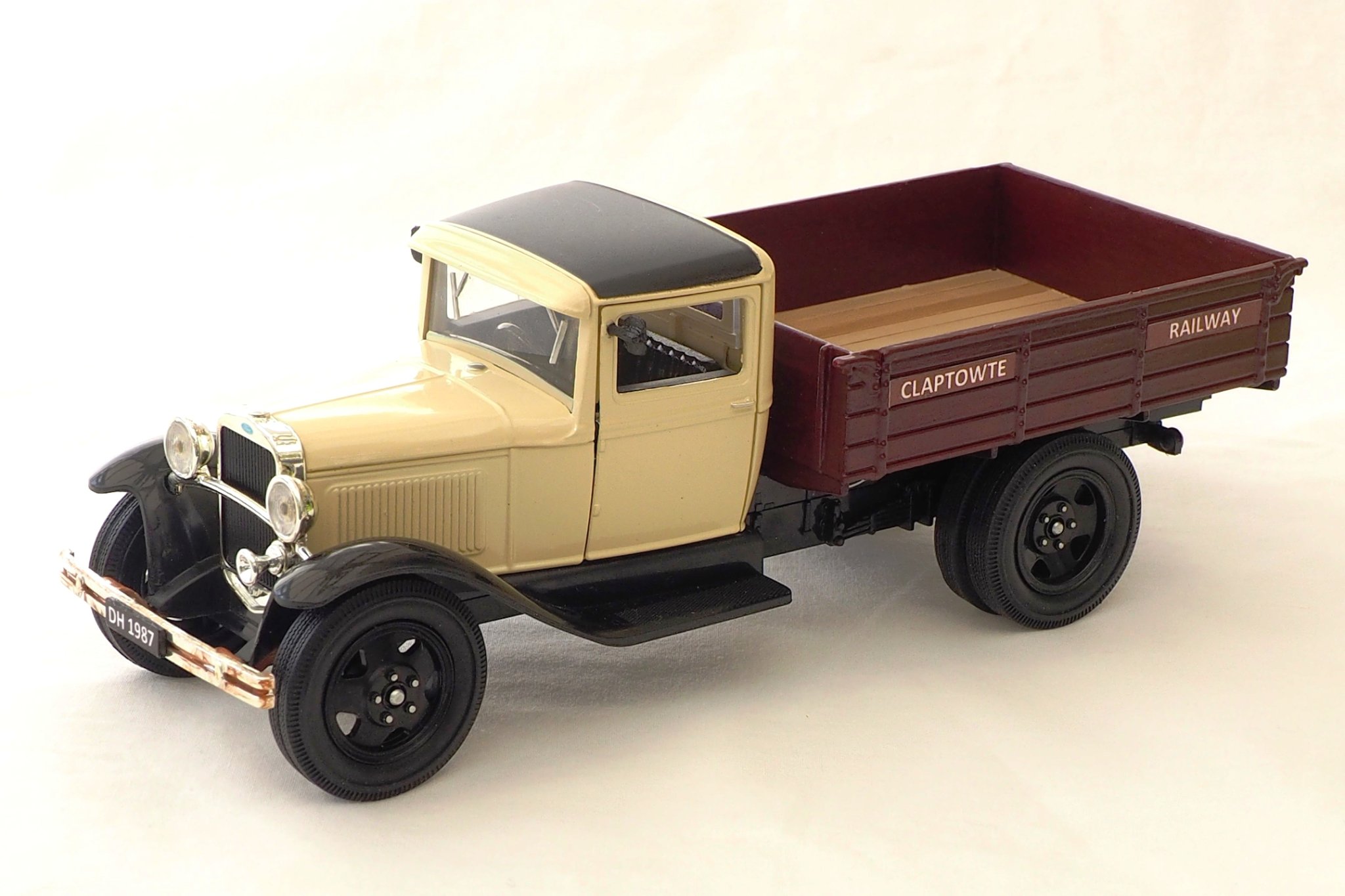
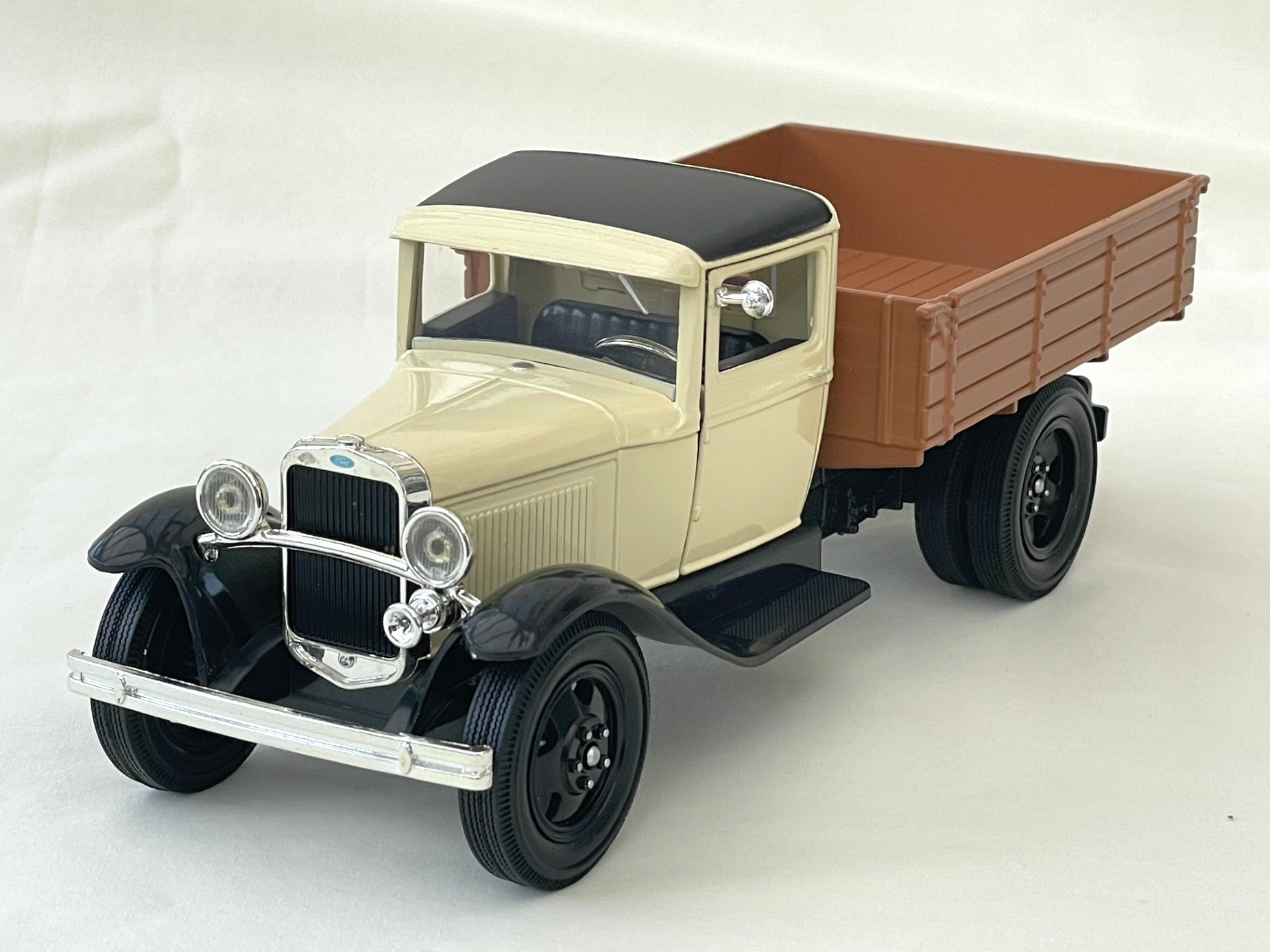
I was trawling through the 1/24 scale diecast model vehicles, on eBay, when I came across this delightful 1931 model Ford truck, by Motor Max, part of their Platinum Collection. I was absolutely enchanted by it and longed to have one, but could not think where I would have room to place it, to display it, on the Claptowte Railway. It eventually dawned on me there will be plenty of room along the front of Gernise End Station, next to the goods sidings, an ideal location for a goods truck. Not only that, I could park it next to the yard crane, as a little cameo, with the crane in the process of lifting a crate off of it.
The truck was acquired, courtesy of a Birthday present from my daughter, Karen. It is very much in US trim, so it was my intention to Anglicise it. The underside reveals a good many screws holding the model together, so I was confident that I will be able to dismantle it sufficiently to carry out the required alterations. The most obvious one was to move the steering wheel to the opposite side of the cab. The next most obvious alteration would be to move the rear view mirror on the door. Removing the mirror from the door would leave a hole in the door. Rather than do that, and to avoid the potential difficulty of producing an exact duplicate to fix to the opposite door, I decided it would probably make sense to fabricate a matched pair of new door mirrors.
The moving of rear number plate and light and the addition of a front number plate will be simple enough.
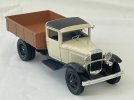
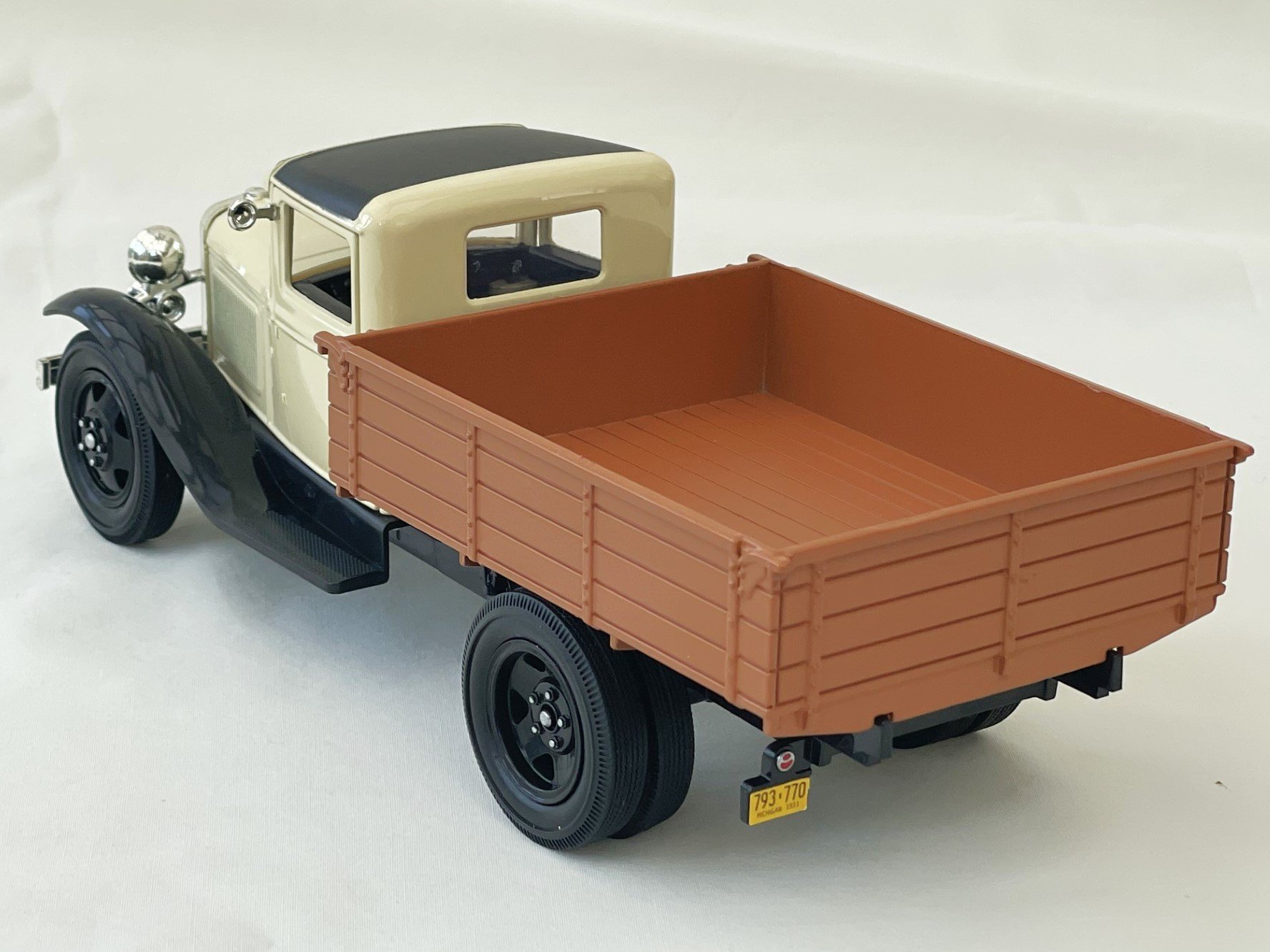
The unmodified model as purchased.
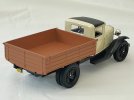
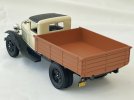
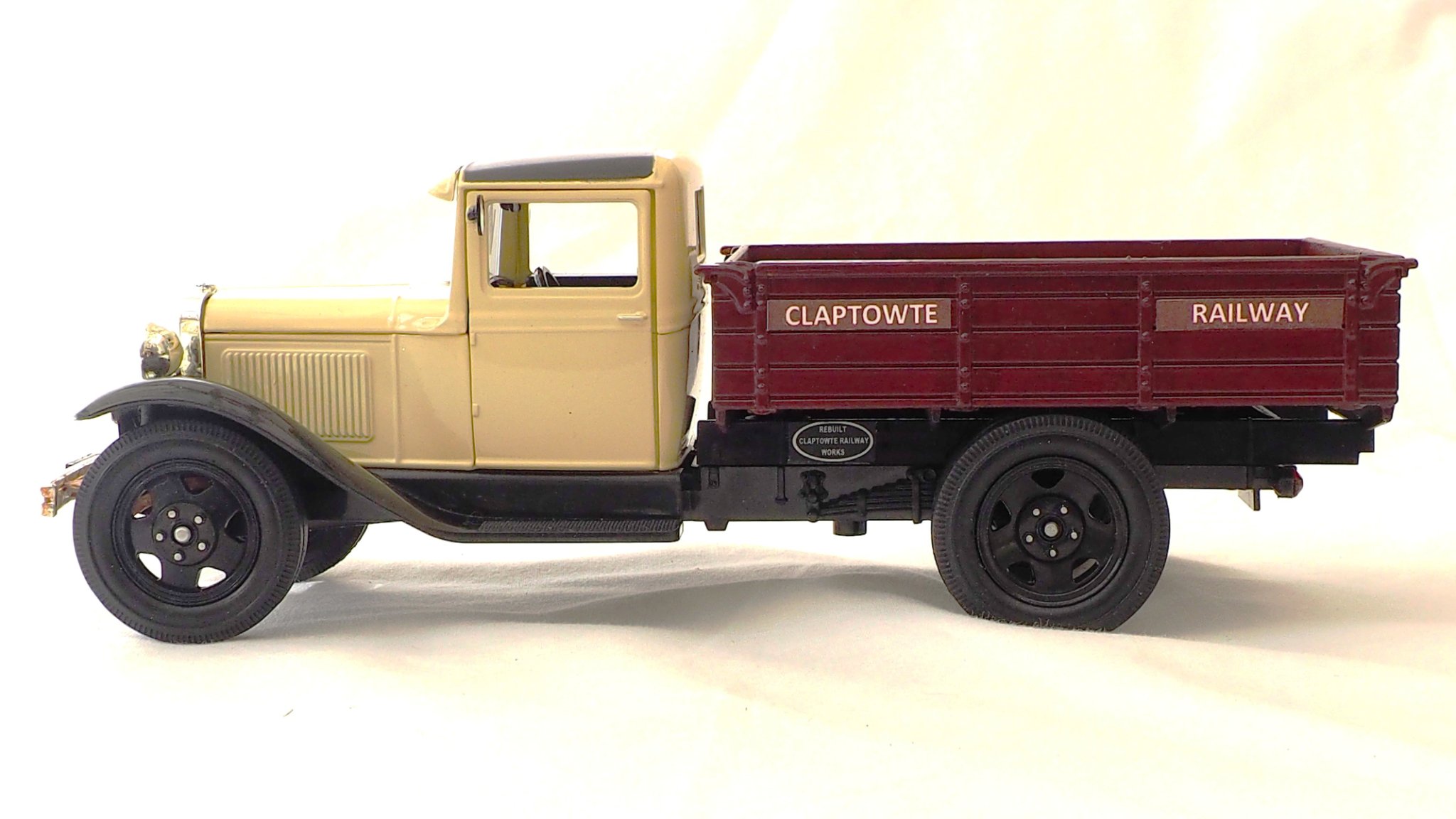
There were a good many screws, of different sizes, holding everything together. I rather assumed that the cab and chassis would be metal, and the dropside body would be plastic. As it turned out, the chassis was plastic, and the dropside body was diecast metal. I dismantled the model, to access the various parts that I wanted to modify. I wanted to repaint the planking on the load bed and I was not entirely happy with the colour of the dropsides, but could not decide what colour to paint them. It was while I was actually painting the load bed that I had one of those light bulb moments, the cab was already cream, if I was to paint the dropside body in BR Maroon, it would be the corporate livery of the Claptowte Railway, and it could be the railway’s own road delivery truck.
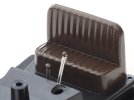
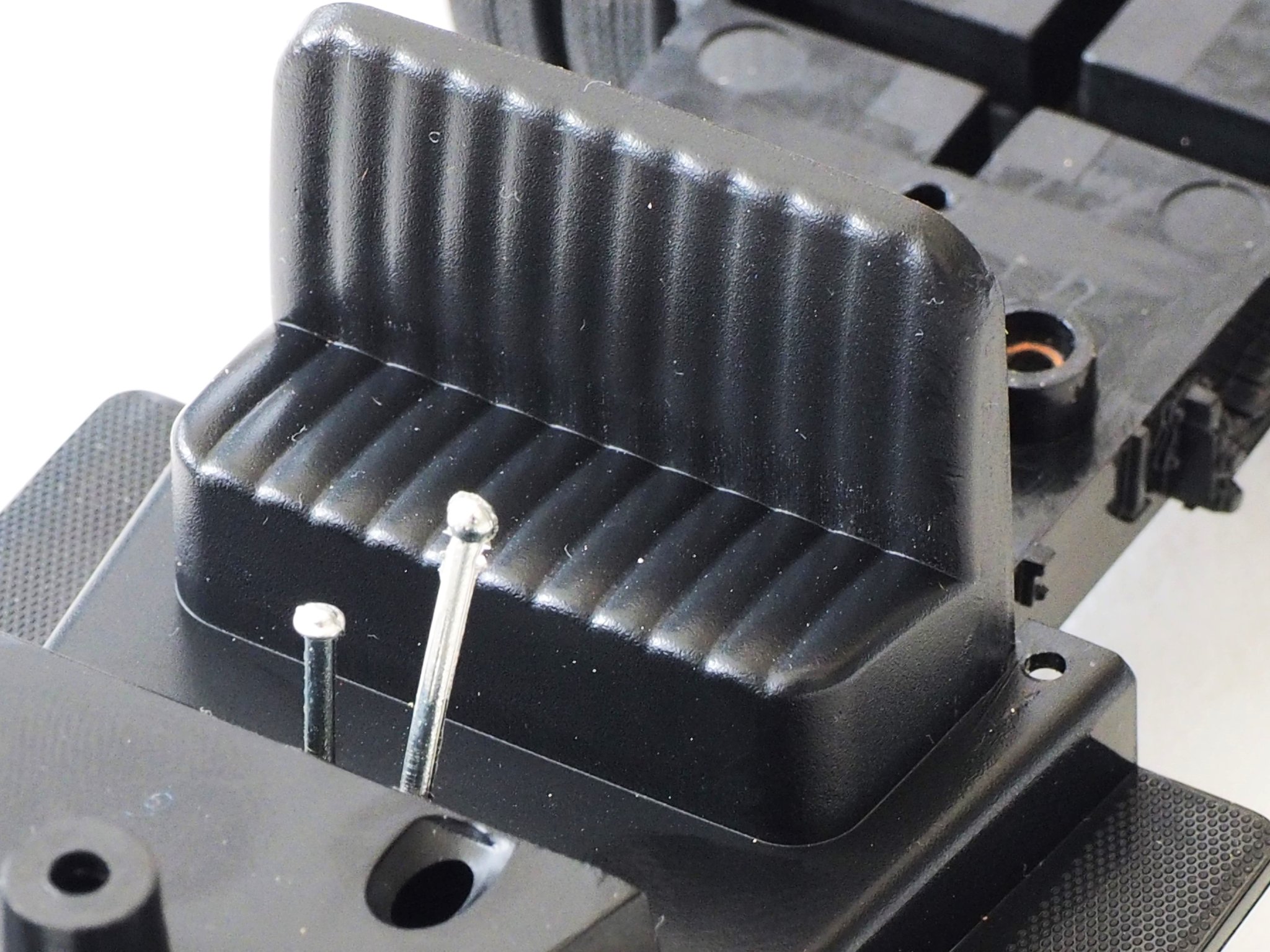
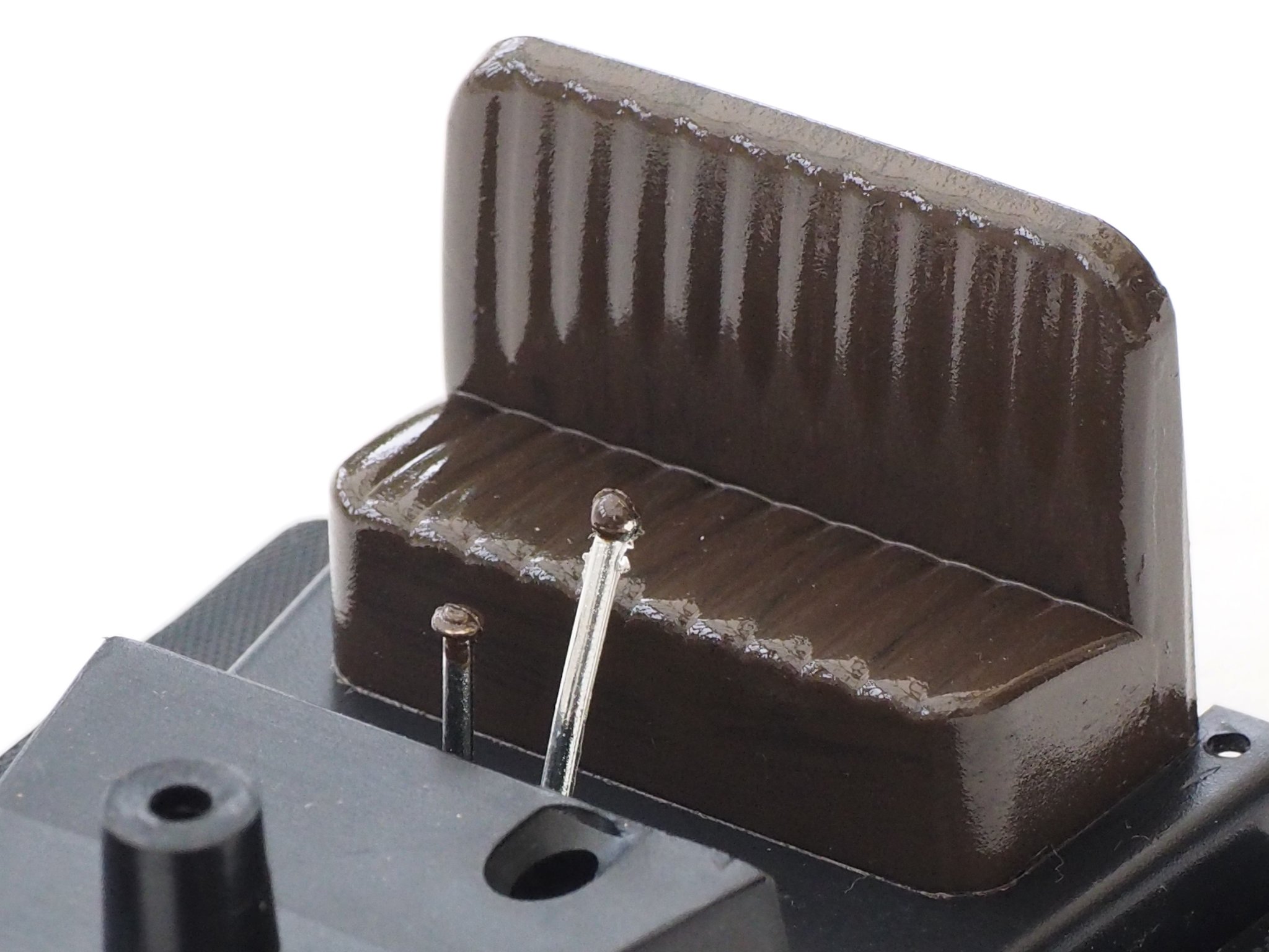
The first alteration was to paint the cab bench seat dark brown, more of a period leather seat colour than black
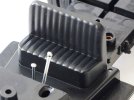
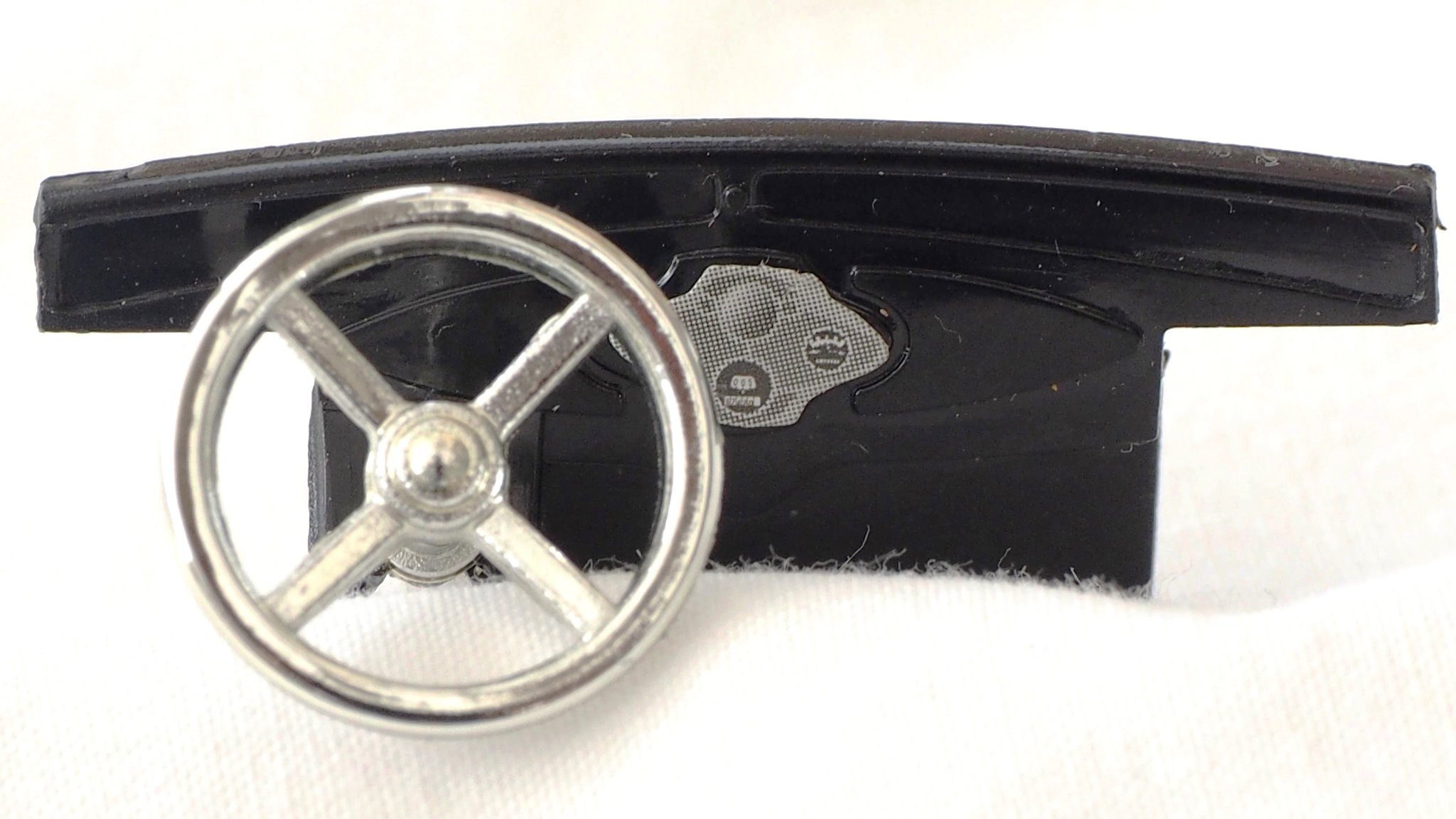
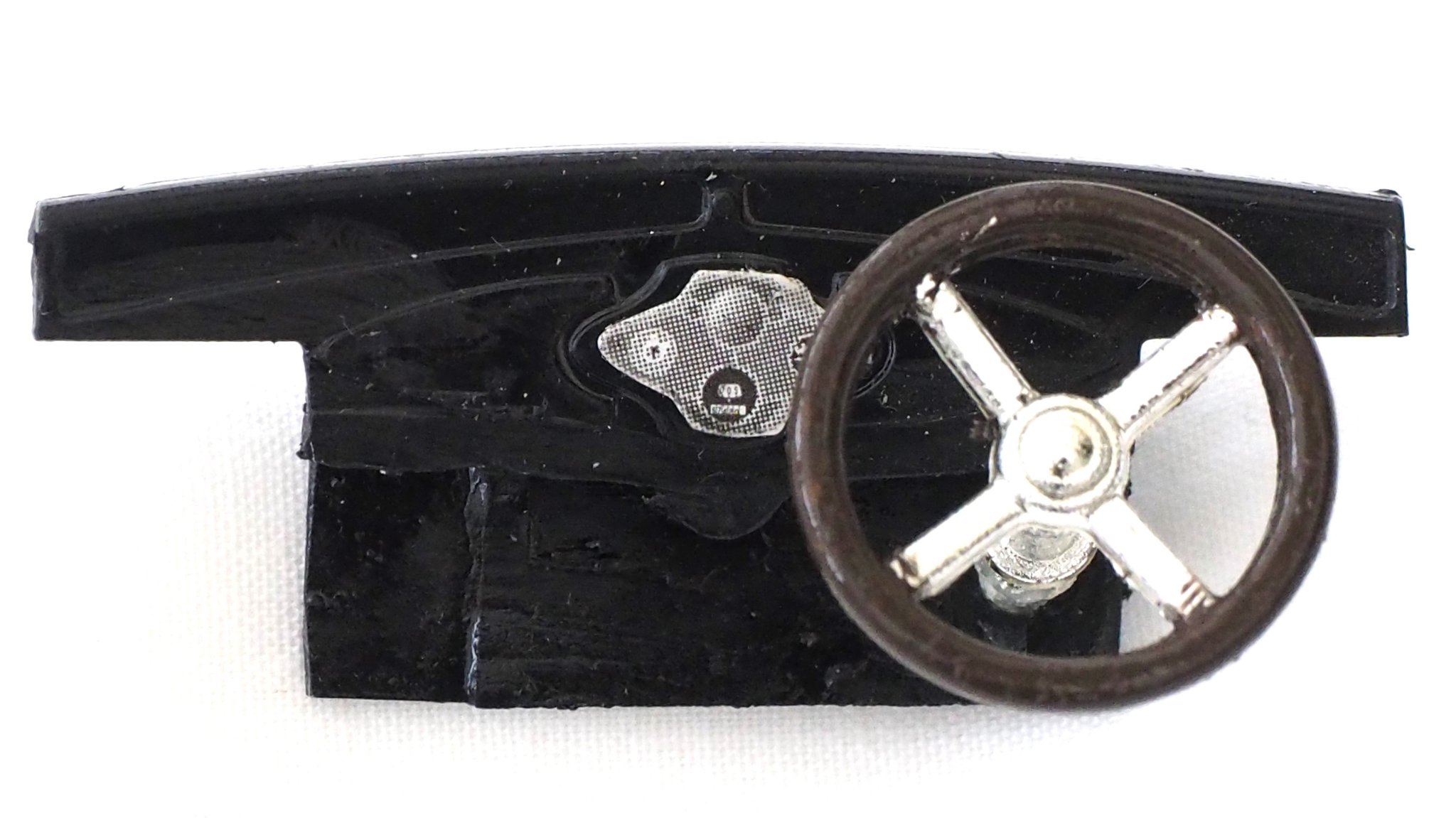
The next job was to move the steering wheel across to the right hand side, to Anglicise the appearance of the cab.
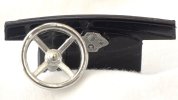
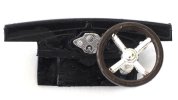
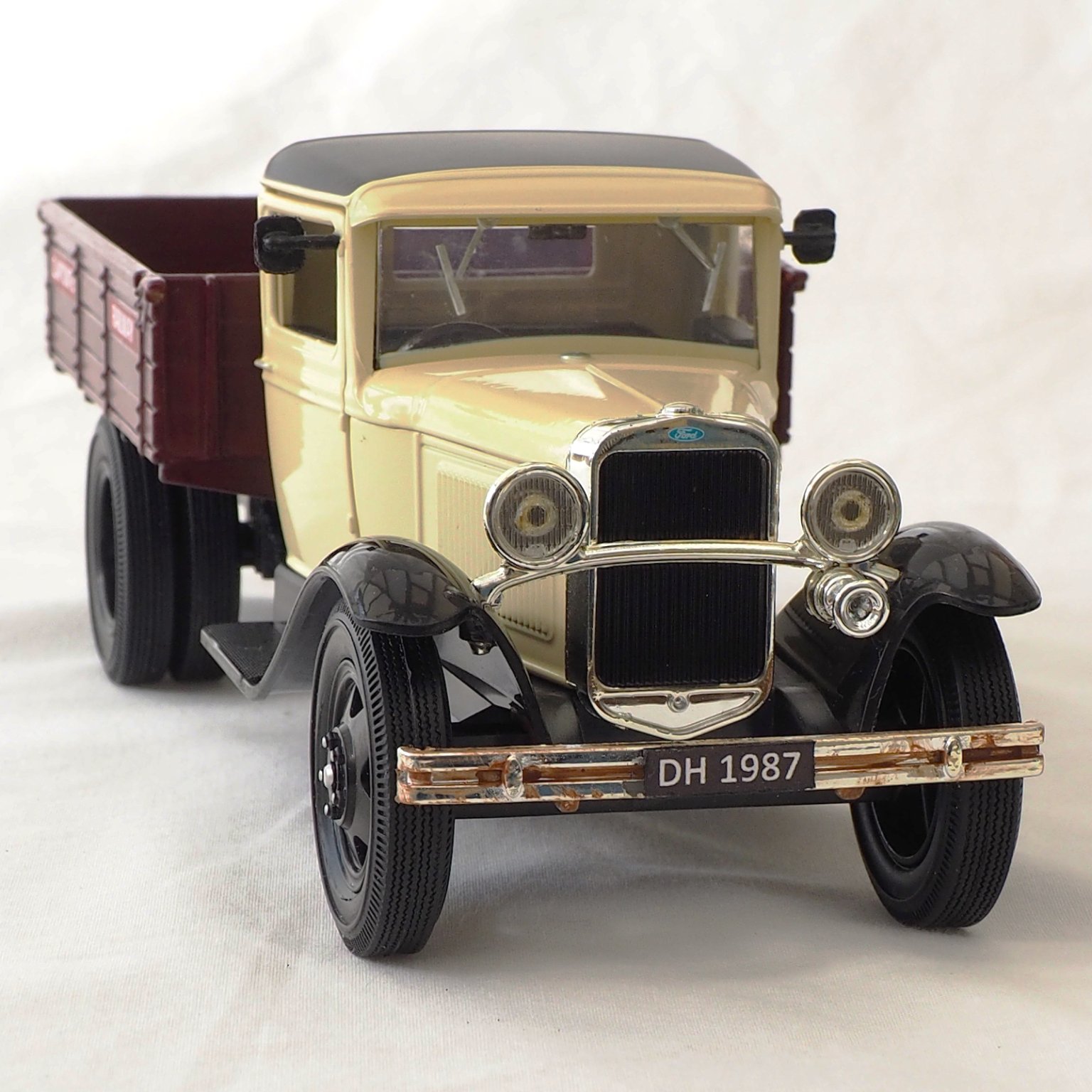
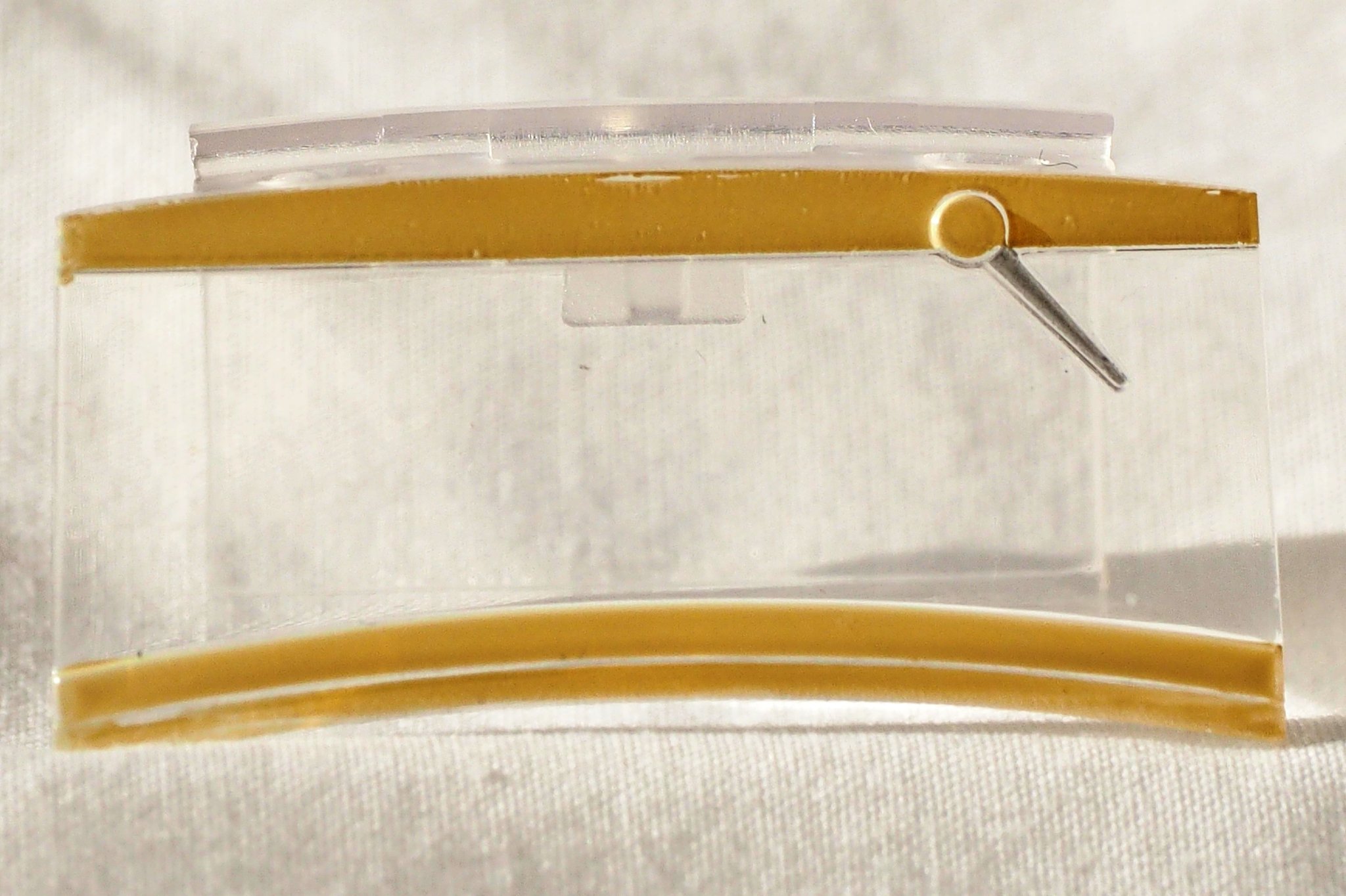
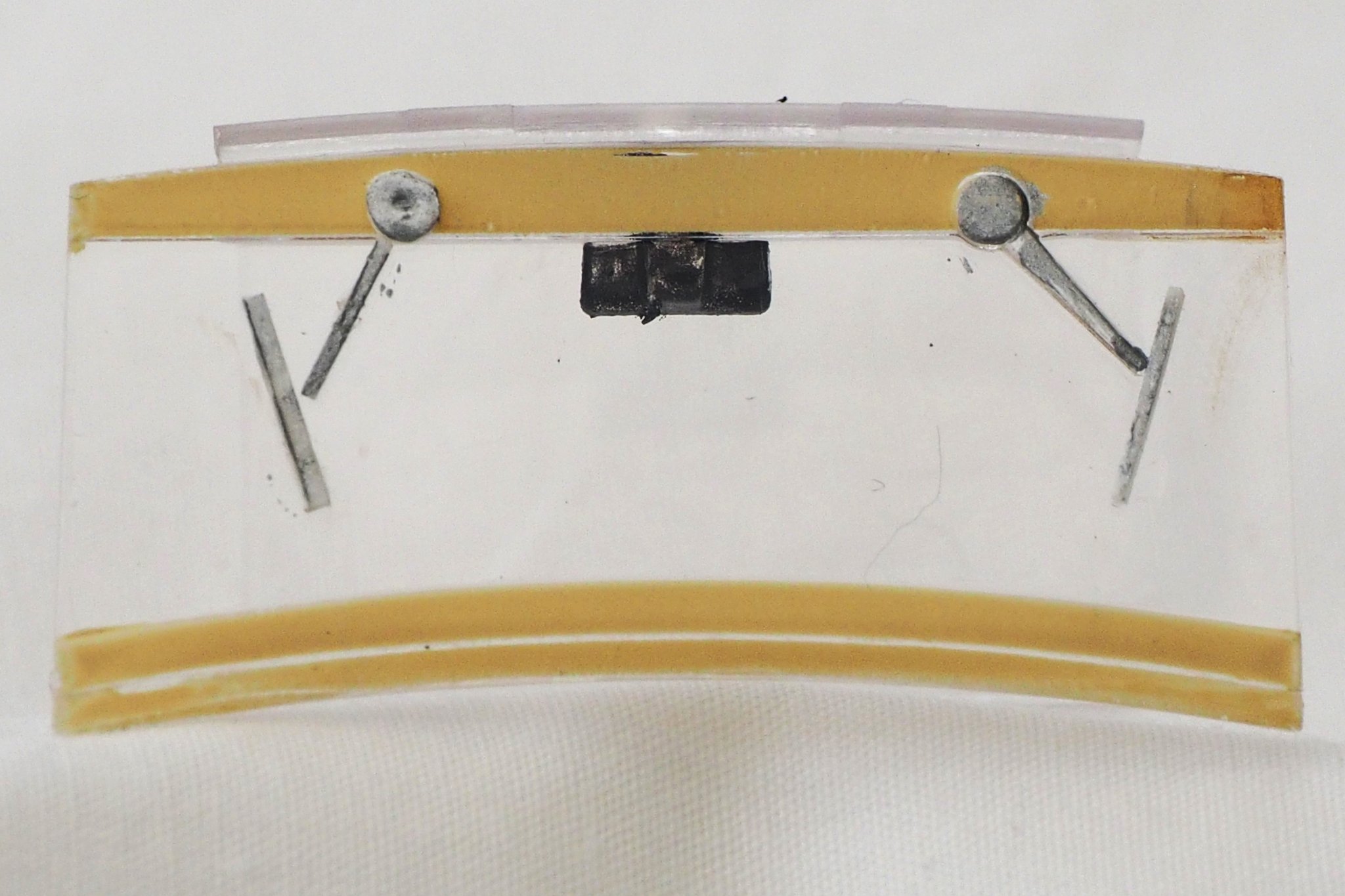
The windscreen had only one wiper arm, and that was on the left, so having moved the steering wheel, I needed another wiper on the right. I added a boss and arm, when it came to adding the wiper blades, as I was using superglue, I only had one shot. I muffed it, and glued the first blade in a less than ideal position, in order for them to match, I had to glue the second wiper blade at a similar angle, not perfect, but hey ho. I took the opportunity to paint the rear view mirror, which was part of the windscreen moulding.
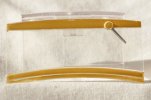
I removed the door mounted rear view mirror on the left door, fabricated a matched pair of mirrors from brass rod, plasticard and aluminium foil, painted them, and glued them into holes drilled into each door.
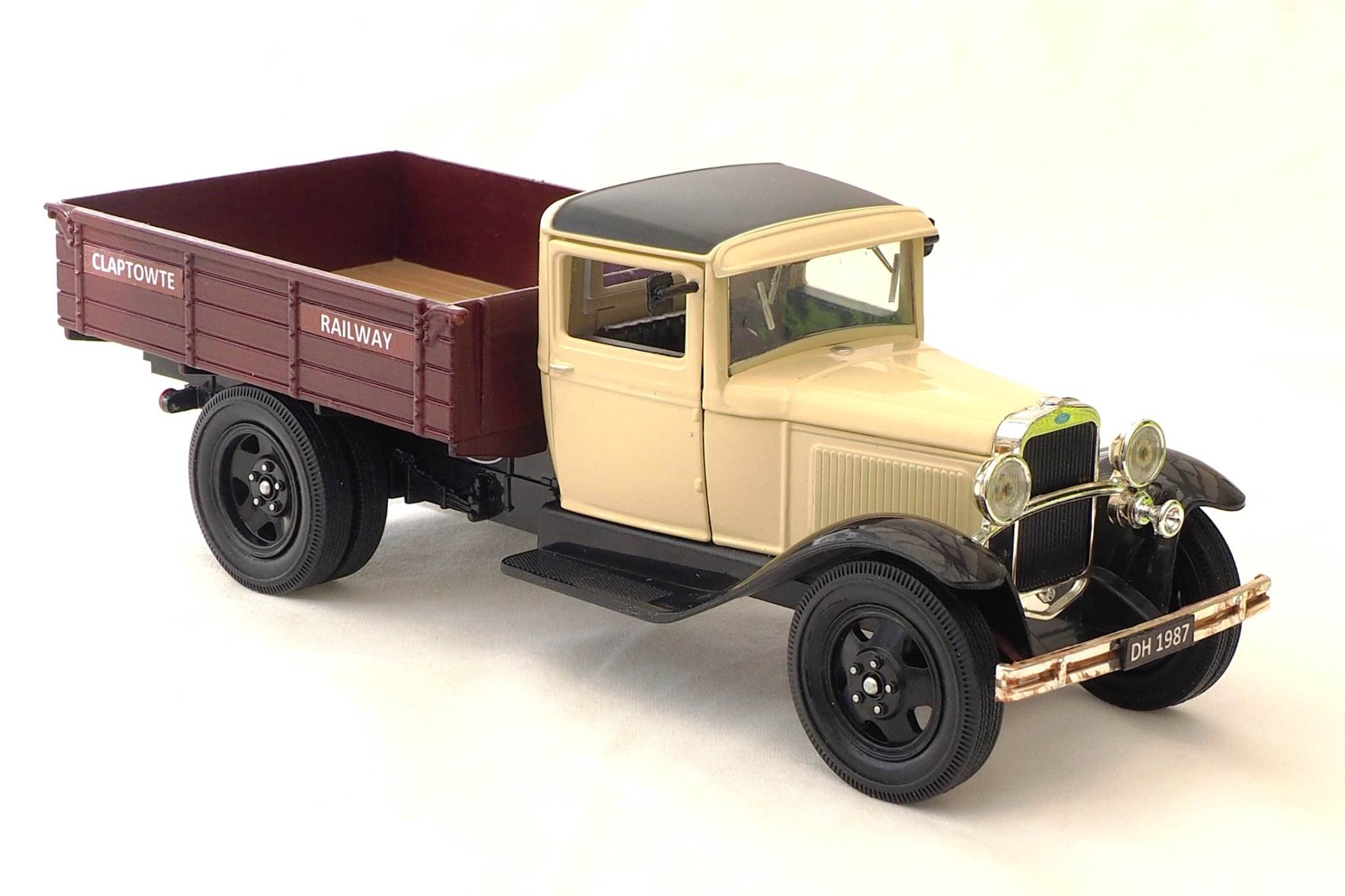
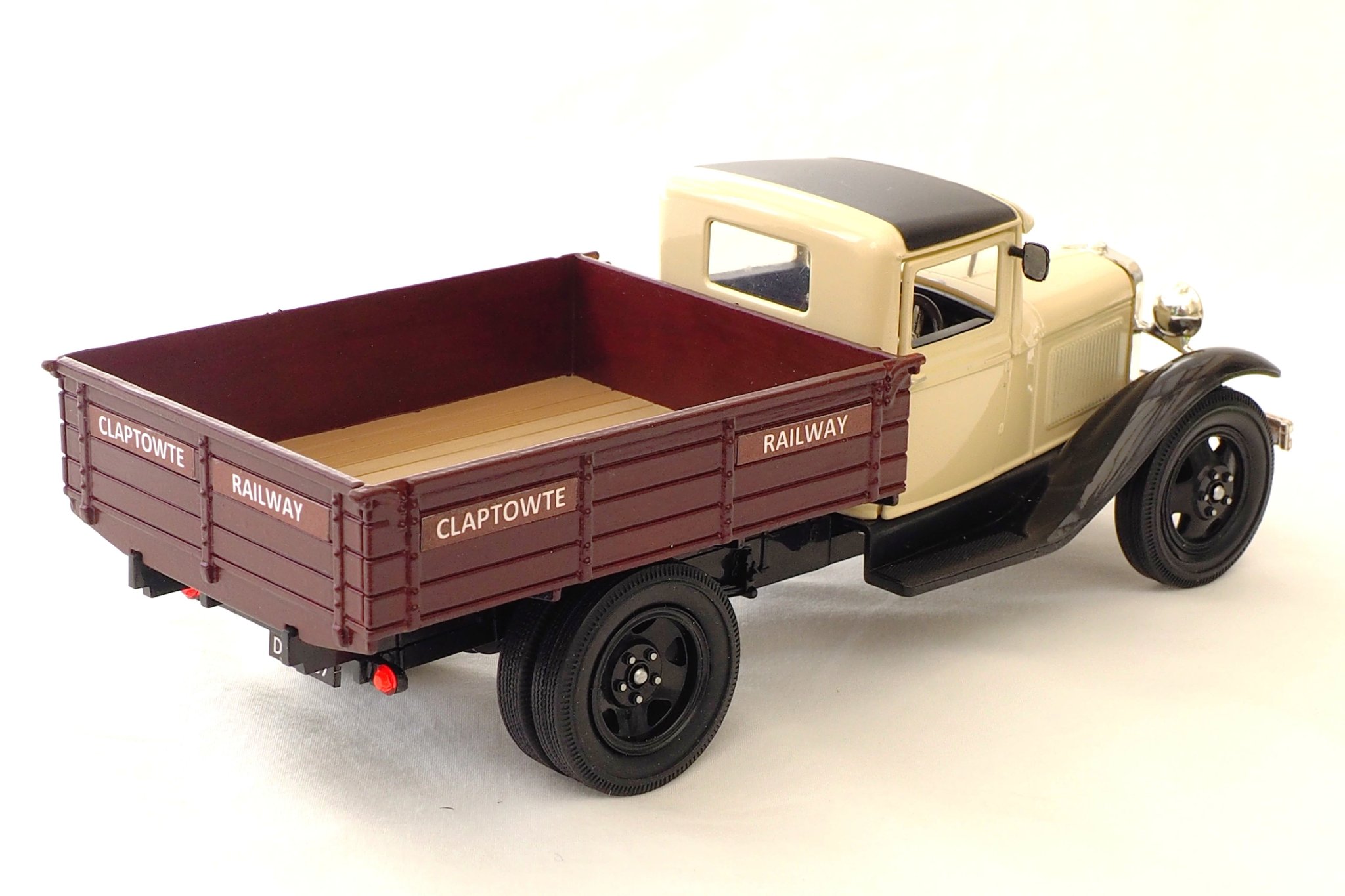
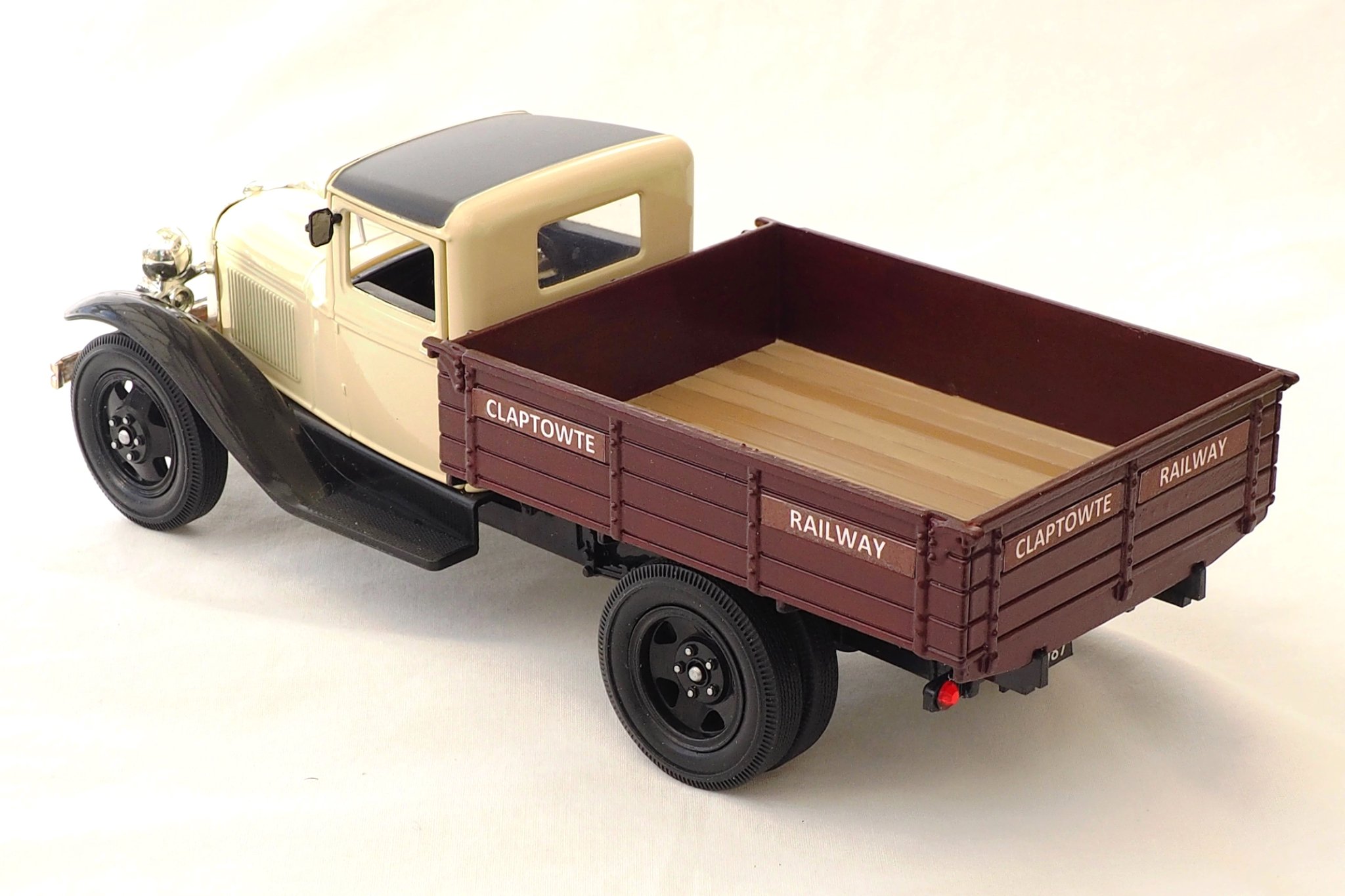
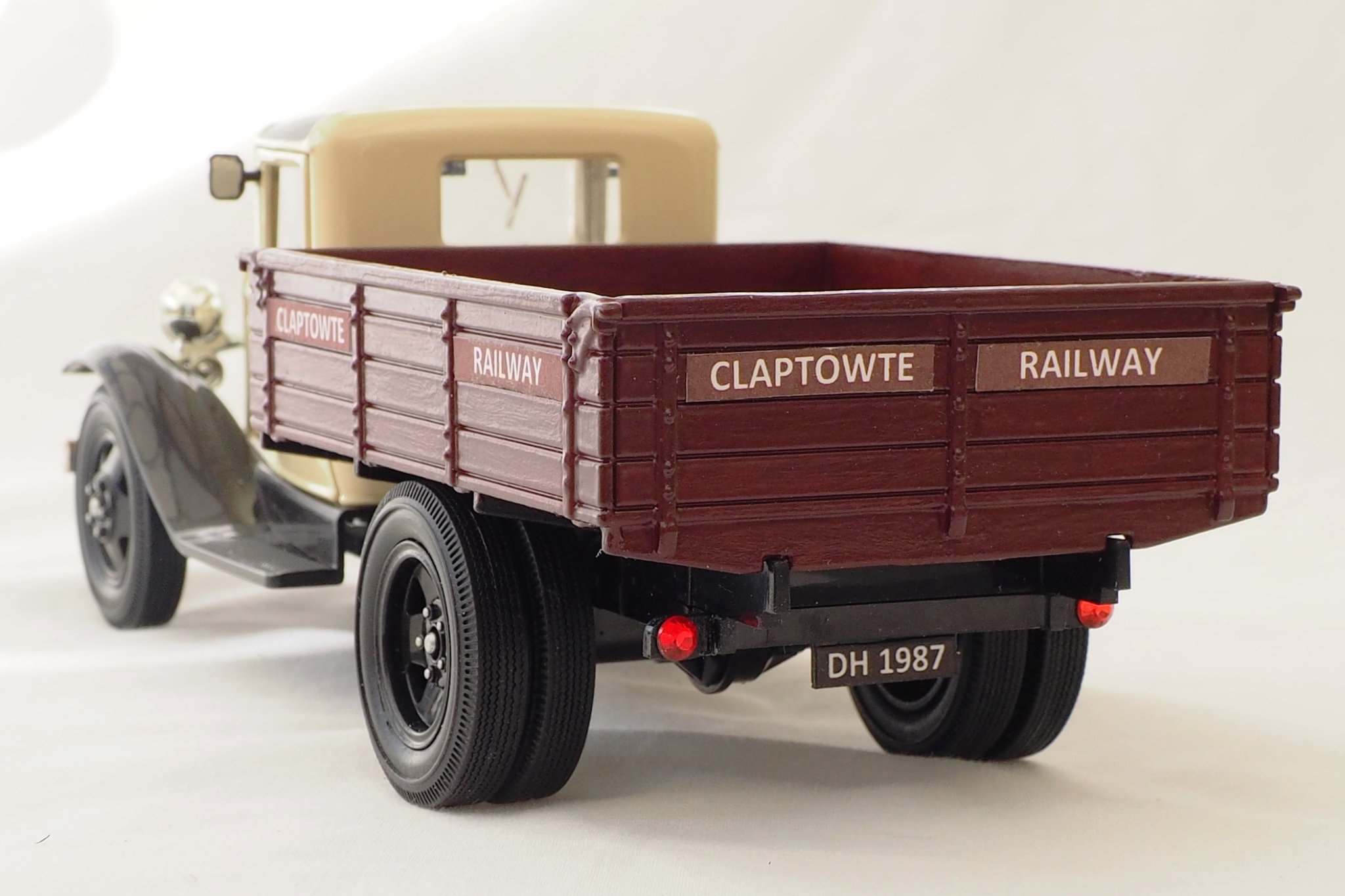
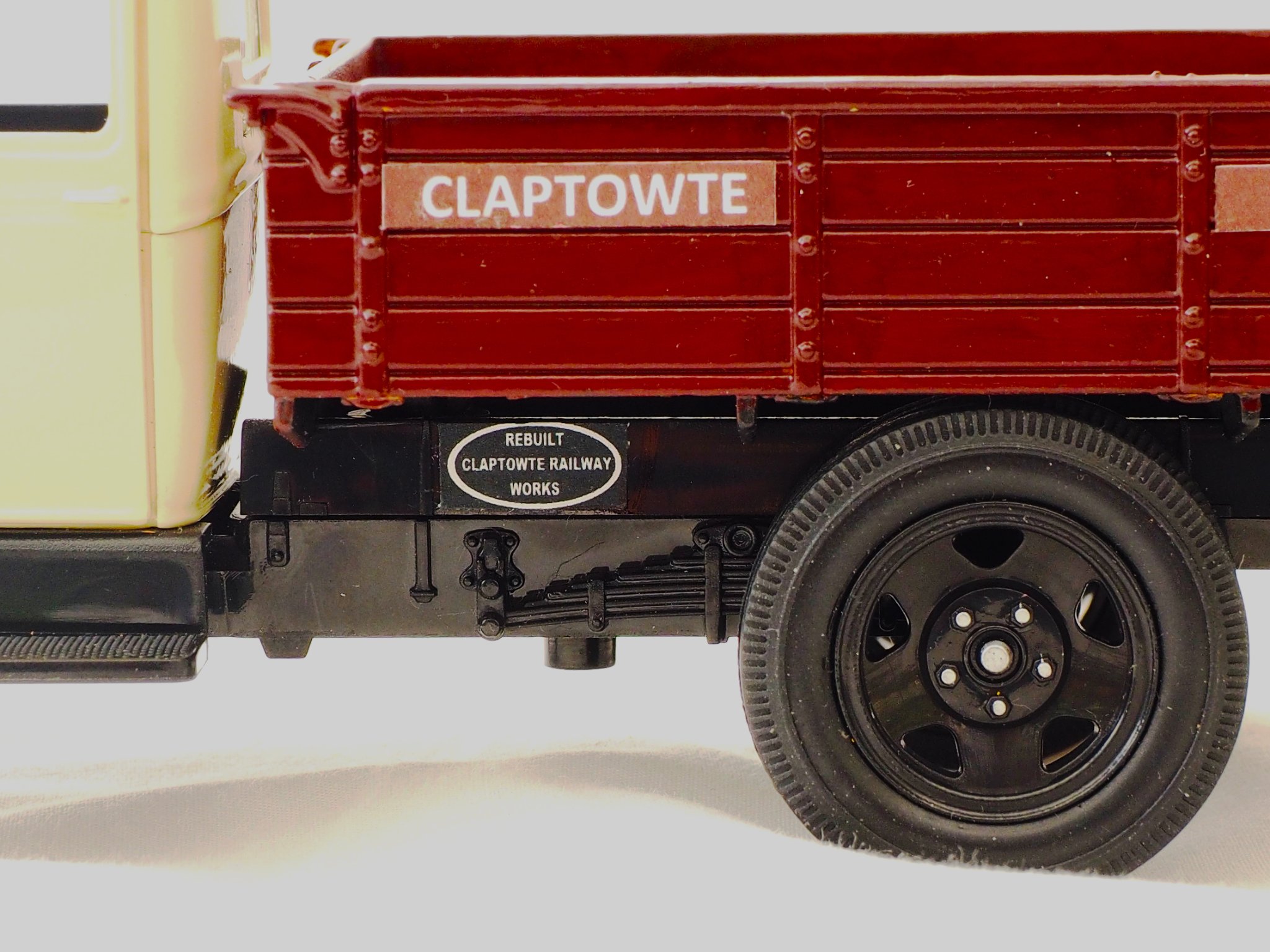
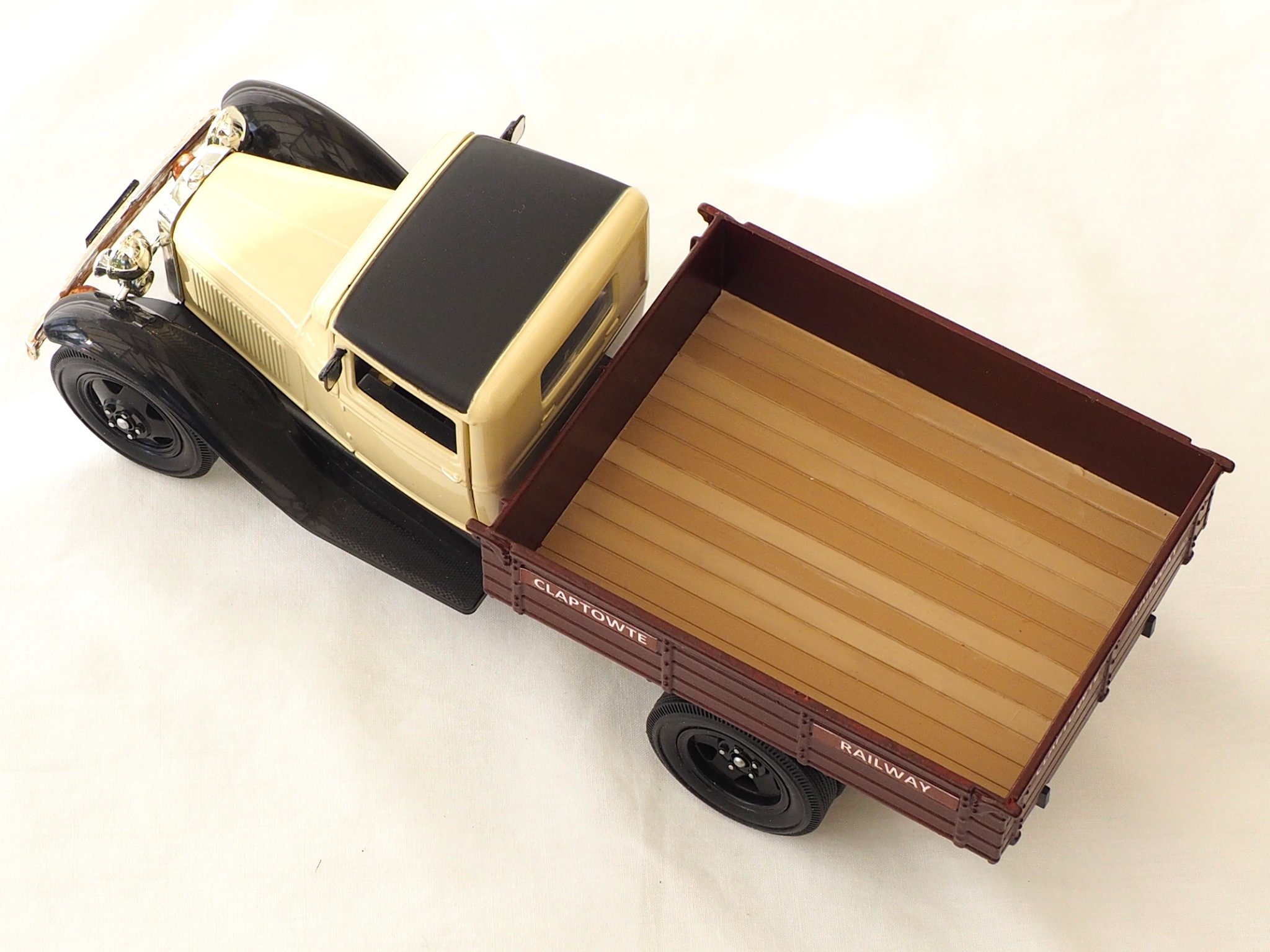
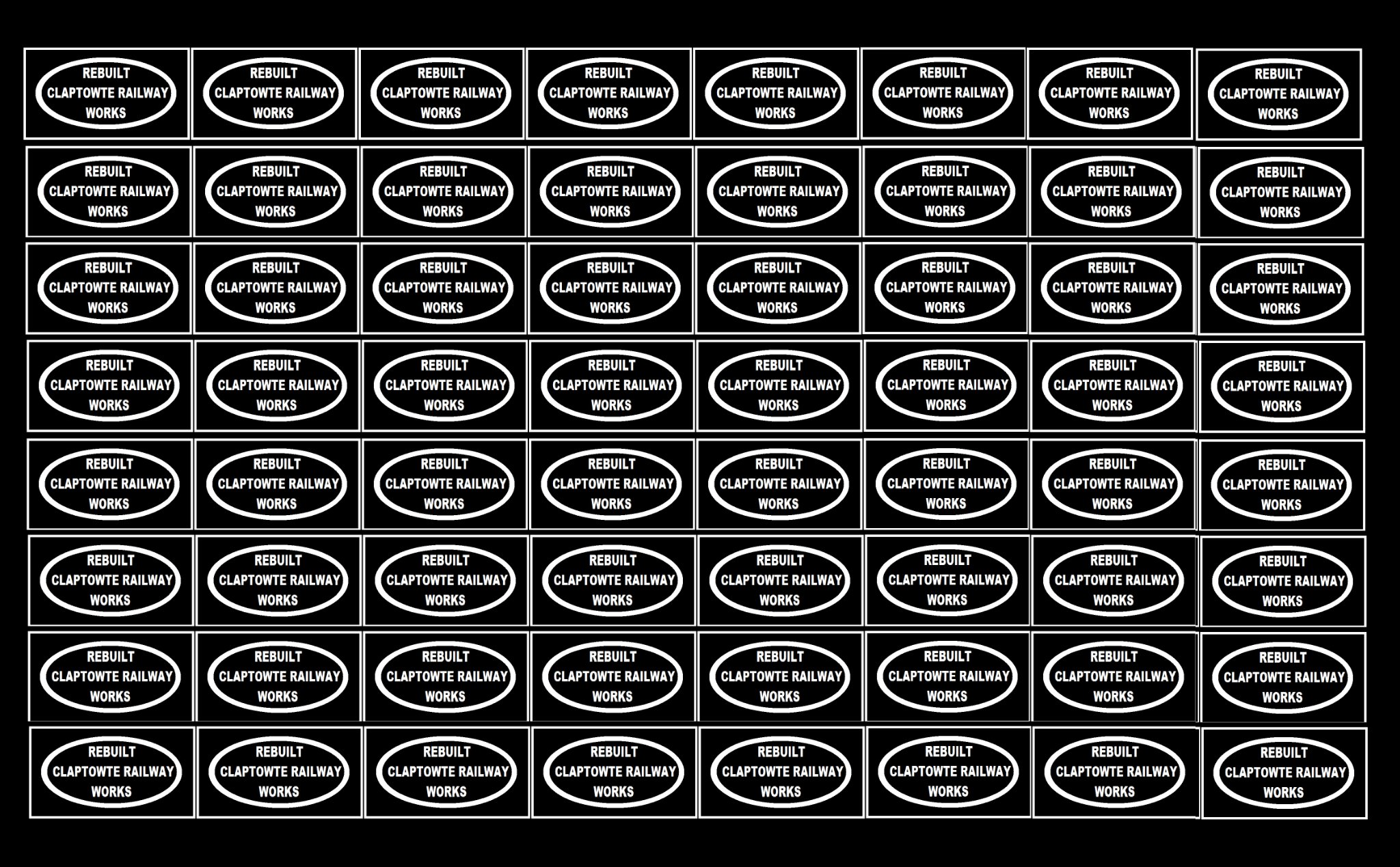
Dealing with the rear of the chassis, I cut off the American style number plate and carved off the moulded rear light located on the cross member, above it. Using an offcut of plasticard, I extended the cross member on the opposite side, to make it symmetrical. After painting it to match, I stuck on two self adhesive red jewells for a pair of rear lights. I stuck on some vintage style UK number plates, front and rear, printed on card, on the computer. After painting the dropside body, I stuck on Claptowte Railway signs, made in the same way, to the sides and rear of the dropside body.
David
I was trawling through the 1/24 scale diecast model vehicles, on eBay, when I came across this delightful 1931 model Ford truck, by Motor Max, part of their Platinum Collection. I was absolutely enchanted by it and longed to have one, but could not think where I would have room to place it, to display it, on the Claptowte Railway. It eventually dawned on me there will be plenty of room along the front of Gernise End Station, next to the goods sidings, an ideal location for a goods truck. Not only that, I could park it next to the yard crane, as a little cameo, with the crane in the process of lifting a crate off of it.
The truck was acquired, courtesy of a Birthday present from my daughter, Karen. It is very much in US trim, so it was my intention to Anglicise it. The underside reveals a good many screws holding the model together, so I was confident that I will be able to dismantle it sufficiently to carry out the required alterations. The most obvious one was to move the steering wheel to the opposite side of the cab. The next most obvious alteration would be to move the rear view mirror on the door. Removing the mirror from the door would leave a hole in the door. Rather than do that, and to avoid the potential difficulty of producing an exact duplicate to fix to the opposite door, I decided it would probably make sense to fabricate a matched pair of new door mirrors.
The moving of rear number plate and light and the addition of a front number plate will be simple enough.
The unmodified model as purchased.
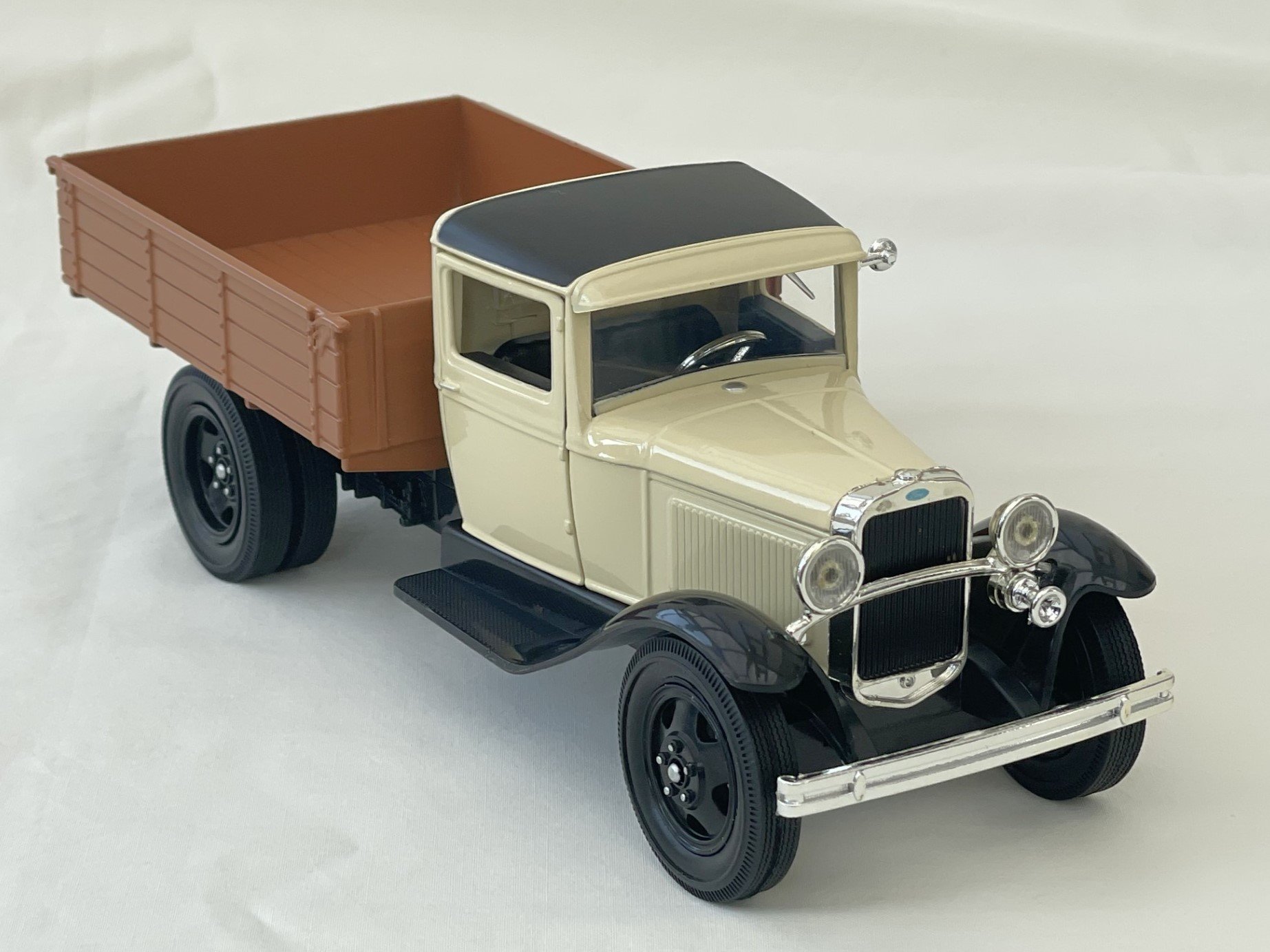
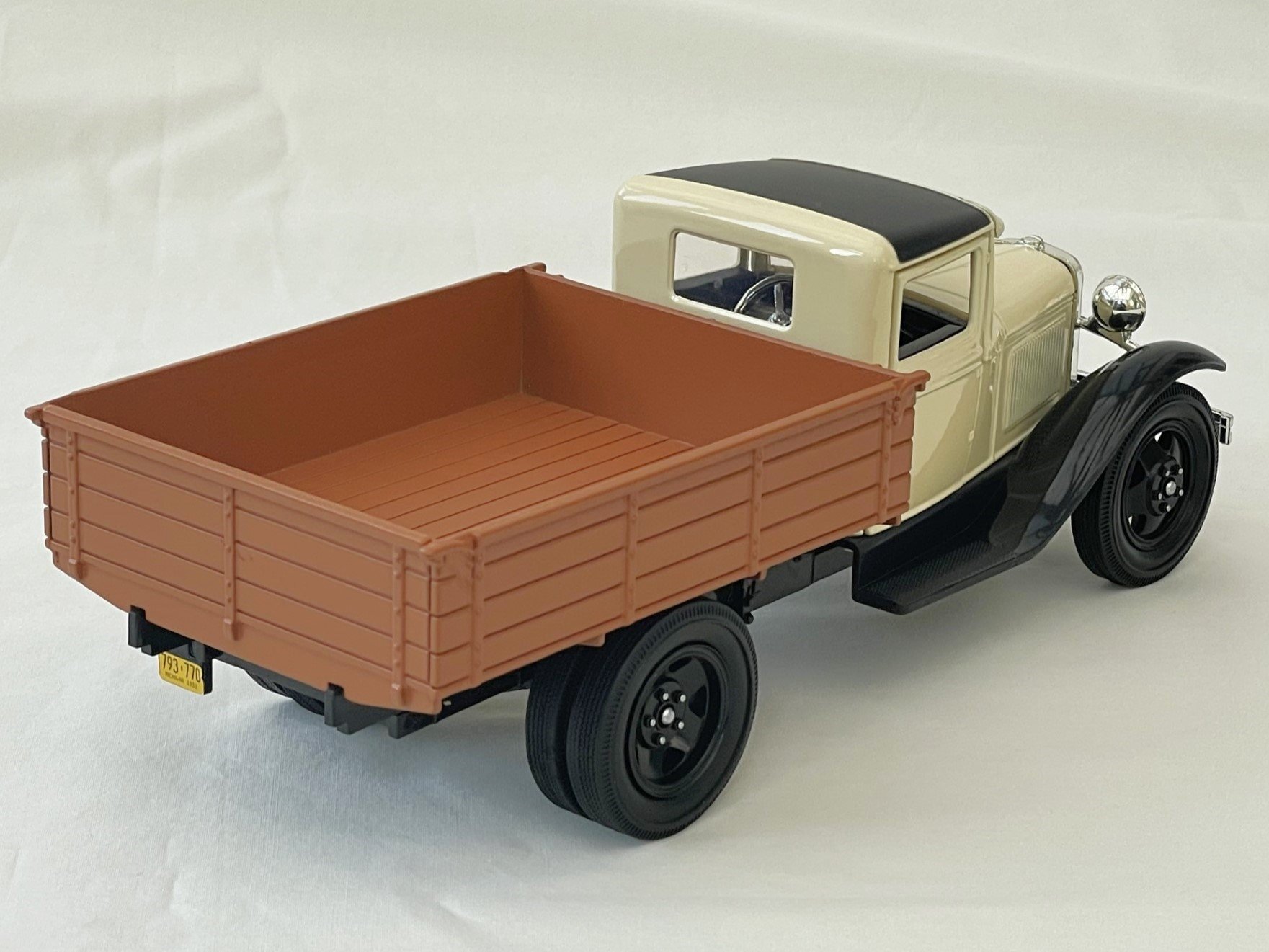
There were a good many screws, of different sizes, holding everything together. I rather assumed that the cab and chassis would be metal, and the dropside body would be plastic. As it turned out, the chassis was plastic, and the dropside body was diecast metal. I dismantled the model, to access the various parts that I wanted to modify. I wanted to repaint the planking on the load bed and I was not entirely happy with the colour of the dropsides, but could not decide what colour to paint them. It was while I was actually painting the load bed that I had one of those light bulb moments, the cab was already cream, if I was to paint the dropside body in BR Maroon, it would be the corporate livery of the Claptowte Railway, and it could be the railway’s own road delivery truck.
The first alteration was to paint the cab bench seat dark brown, more of a period leather seat colour than black
The next job was to move the steering wheel across to the right hand side, to Anglicise the appearance of the cab.
The windscreen had only one wiper arm, and that was on the left, so having moved the steering wheel, I needed another wiper on the right. I added a boss and arm, when it came to adding the wiper blades, as I was using superglue, I only had one shot. I muffed it, and glued the first blade in a less than ideal position, in order for them to match, I had to glue the second wiper blade at a similar angle, not perfect, but hey ho. I took the opportunity to paint the rear view mirror, which was part of the windscreen moulding.
I removed the door mounted rear view mirror on the left door, fabricated a matched pair of mirrors from brass rod, plasticard and aluminium foil, painted them, and glued them into holes drilled into each door.
Dealing with the rear of the chassis, I cut off the American style number plate and carved off the moulded rear light located on the cross member, above it. Using an offcut of plasticard, I extended the cross member on the opposite side, to make it symmetrical. After painting it to match, I stuck on two self adhesive red jewells for a pair of rear lights. I stuck on some vintage style UK number plates, front and rear, printed on card, on the computer. After painting the dropside body, I stuck on Claptowte Railway signs, made in the same way, to the sides and rear of the dropside body.
David